Ryan Petracek
Fictional. Generated by AI — not a real person, and no likeness of one is intended.
38, nurse in Philadelphia · rolled by @bryce.kellerman · card — no film
History
who has worn him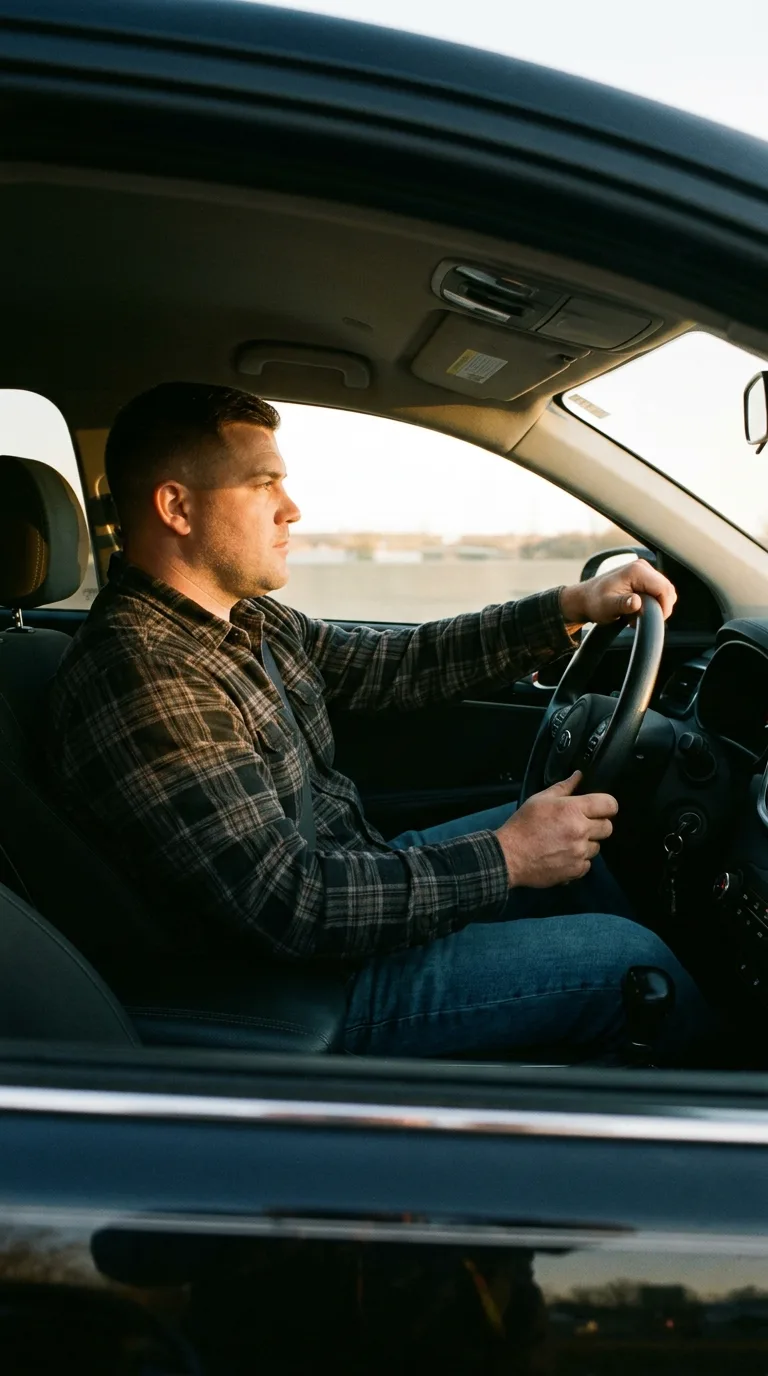
Rarest thing about him: Dip or chew — common, 1 in 31
Season 1seed 2122665652 · engine v11
Character card
lineage 9IC4OB
His body-swap story
@bryce.kellerman, wearing Marwan Kellerman, rolled the wheel on and woke up as Ryan Petracek, spent 4 minutes in him, then spun the wheel and woke up as Gordon Streicher
You are sitting on the tailgate of a truck that isn't yours, in a driveway in Nashville that isn't yours either, spitting into a can, and Marwan Kellerman's knees ache the good ache of nineteen hours of drywall mud and ladder work. It's Friday evening, the light going long and gold down the street, and you should be content. You have been content in worse men. But you keep thinking about Gregory Tomaszewski's hazel eyes across a fence line four spins ago — one day as him, one day only, gone before you'd learned the man's coffee order — and how the neighbor never once looked at you, at Gregory, like he saw anything worth seeing. You want to go back and be seen. Not as Gregory. As whoever stands next to him and doesn't need him.
So you open the site on a phone with a cracked screen that isn't yours, thumb still gray with joint compound, and you spin.
The road is dark and specific, three miles of it left, and his hands are where hands belong, ten and two, dash light pooling in his knuckles like a shallow gold water. Then the wheel isn't his to hold anymore — it's yours, and the car eases a foot toward the centerline on its own before pulling itself straight, smooth as a hand steadying a glass. Both palms come off the leather and resettle lower, wider, the grip of a man who has never driven this car a day in his life deciding, instantly, how he likes to drive it. The blinker clicks on. Wrong exit. Nobody's exit, technically, not anymore.
The shirt is what speaks first. Navy scrub cotton, soft from a hundred hot washes, damp at the collar with a day's sweat that isn't a memory yet, just a smell — bleach and hand sanitizer and the particular mintiness of the little wintergreen pouch tucked in his cheek — and then it is a memory, all at once: him standing in front of a mirror at 5:40 that morning, this exact shirt coming down over his head, the fabric catching for a second on the tattoo before falling past it, an eagle done twenty years ago at a shop on South Street that isn't there anymore, bold lines gone soft and rust-colored at the edges like a flag left out too long. He remembers liking that it faded. Liking that it looked like it had survived something.
The badge clip against his pocket gives up a name — Ryan — and a floor, six east, and the particular fluorescent flicker of the nurses' station at two in the morning, charts glowing blue, the taste of a shift's fourth coffee gone cold in a paper cup, a patient in 614 whose numbers he watched all night like a man watching weather roll in. He is good at this. His hands already know how to do it without him — find a vein, still a shaking arm, lie kindly and specifically about how much a thing will hurt. He loves it in the plain unexamined way you love a thing you have never once questioned doing.
The steering wheel gives him the drive itself, worn smooth under his palms these nine years of the same commute, radio low, a rowhouse three miles ahead with marble steps his grandfather scrubbed white on Sundays and he has never once bothered to. A woman's name comes up warm through the dash vents somehow — Danielle — her voice on the phone twenty minutes ago telling him she saved him a plate, and under that, threadless and small, the shape of a whole steady unremarkable love, two years deep, nothing that needs fixing.
And under his back, the seat gives him the neighbor. Gregory's porch light, visible some evenings from his own front steps, a nod exchanged over trash cans, a favor with a ladder once, nothing more — Ryan barely knew the man, a guy between jobs who kept to himself and then, abruptly, one strange day, didn't seem quite like himself at all, and then a day later was entirely fine, and Ryan never thought about it again because there was no reason to. You know exactly why he wasn't himself. You were inside him, wearing his gray-silver hair and his dimples and his hazel eyes for one day, one day only, standing at that very fence line hoping somebody's real life would look back at you and mean it.
Nobody did. Now you're standing in the man who lives next door to him instead, closer than you ever got as Gregory, and it still isn't the same thing, and some small ugly part of you already knows it never will be, and you spun anyway.
His knuckles want cracking — an old, unthinking tic, both hands, one after another, the sound loud in the quiet car — and you let them, because his body does it whether you decide to or not. You look down at those hands on the wheel, thick-fingered, a nurse's hands, careful and strong in a way that has nothing to do with you.
"Wrong exit," you say, out loud, in his voice, and put the blinker off, and don't yet decide how long you'll bother fixing it.