Russell Tabor
Fictional. Generated by AI — not a real person, and no likeness of one is intended.
60, tow truck driver in New York · rolled by @russell.tabor · card — no film
History
who has worn him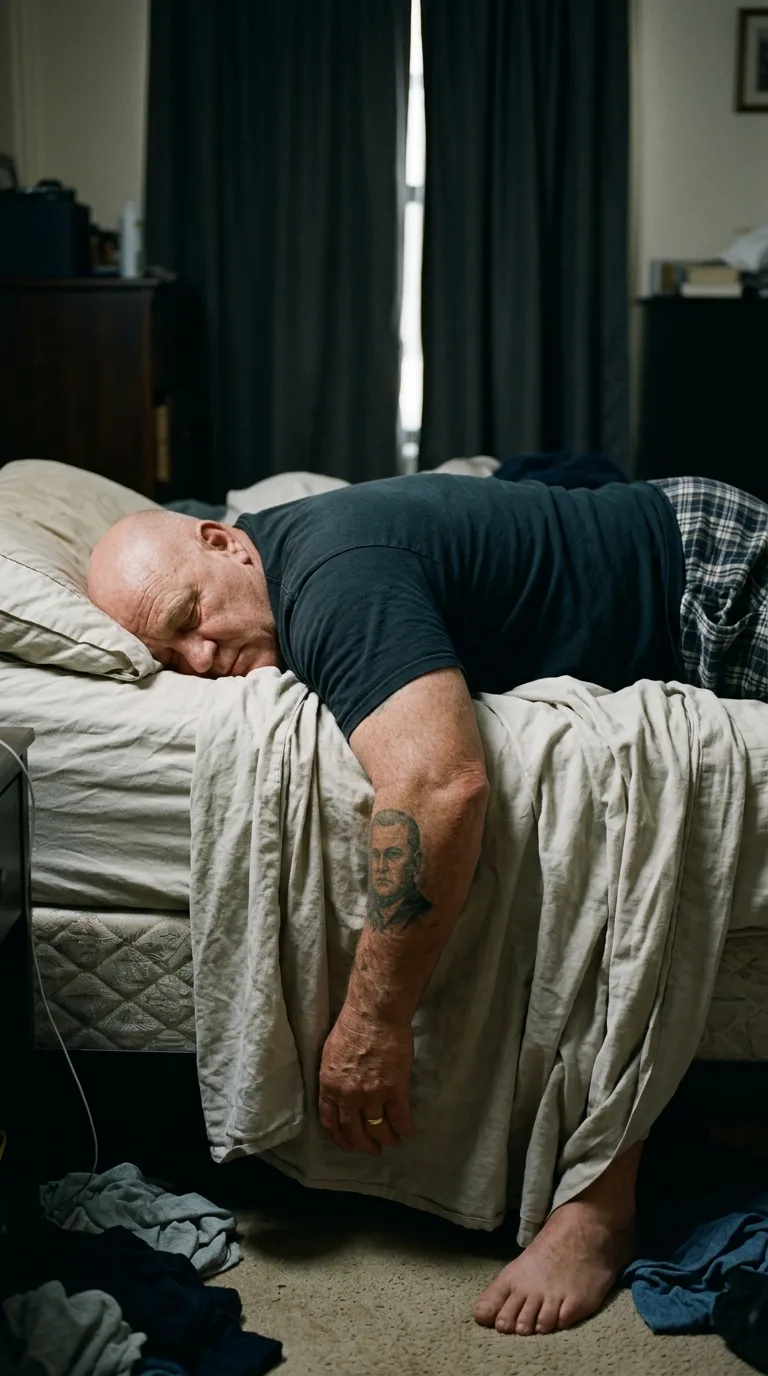
Rarest thing about him: Latter-day Saint — rare, 1 in 41
Season 0seed 50103490 · engine v10
Character card
lineage EH9MZN
His body-swap story
@russell.tabor rolled the wheel on and woke up as Russell Tabor — their first
The screen is the only light for a long time. It has been a long day of nothing — the kind that ends with you sitting up too late, thumb moving before thought does, and the site loads slow the way cheap sites do, a plain page, a wheel with a plainer name for what it does. You have wanted this since before you can date it. Every story you ever read about waking up as someone else, every film where two people trade faces, every thread that starts with *okay hear me out* — it has always been the one wanting you never got to act on, because there was never anywhere to put it. Now there is a place, and a price, and a button. You pay it without letting yourself think about what that means. You spin.
There is no falling, no tunnel, none of the things you privately expected. There is only a breath that isn't yours starting to be, mid-lung, ragged going even, like a held note resolving. Then weight — a lot of it, more than you have a name for, settled low and solid across a chest and a gut — and an arm that had been hanging off a mattress into cool air lifts on its own, folding up and in, the hand meeting its twin at the sternum. The body rolls onto its back like it has done this every night of its life, though something in the quiet at the back of it knows it hasn't. A gap in the curtains throws one bar of sodium light across the ceiling. Somewhere outside, tires on wet asphalt. You are lying still in a stranger's body, in a stranger's bed, and the stranger is gone.
You don't move yet. You let it come to you, because it starts coming the second skin remembers there's contact to report. The sheet under the small of the back — cheap cotton, worn soft — gives you nothing but weather, an ordinary week. But the T-shirt against your spine, damp with a night's sweat, gives you more: the smell of it is the smell of a laundromat two blocks from a house in Bensonhurst, quarters in a coffee can on the dryer, a woman's voice saying *you're gonna wear that shirt into a rag, Russ* — and there she is, whole, before you even have her name pinned down. **Denise.** Not the wife. The one before. Twenty-two years gone and still she arrives first, sharper than anyone currently living in this life, because that's how the first wife always works, isn't it — she gets the years you were nobody yet.
The ring finger, left hand, has a band on it, plain gold, and touching it with the opposite thumb — a habit this body performs without asking you — opens a second name over the first like a slide dropped into a projector. **Carol.** Nineteen years. A wedding at her sister's place in Staten Island with a caterer who was late and a father-in-law who cried more than she did. You get the whole reception in about four seconds — folding chairs, a cousin's toast that ran too long, Carol's hand cold from holding a lemonade glass, laughing at something you can no longer hear the words of, only the shape of her laughing.
The tattoo on the upper arm is under the sleeve of nothing right now — no sleeve, just skin, cool from the AC — but your fingers find it anyway, trace it without being told to, and it opens like a door that's been waiting. A portrait. Black and gray, a man's face rendered careful and grim in realism ink, high collar, old-fashioned. Your father, done from the one photograph that survived a house fire in 1987, the only likeness left of him, put on your arm the year he died because there was nowhere else to keep him where you could see him every day. The needle took six hours. You didn't drink through it — you don't drink, haven't in years before that even, something about a promise made in a chapel in Utah when you were twenty-six and trying to become a better man than the one your father was — but you smoked through the healing, three cigarettes a day for two weeks, the last cigarettes you ever had, because pain wanted something and the patch wasn't enough.
There's a shirt somewhere in this — you feel for it without opening your eyes, and the memory that comes isn't from tonight, it's a morning: the navy work shirt, the one with the collar gone soft from washing, sleeves rolled twice because rolled once they fall down over the wrists by lunchtime. Getting into it in a kitchen that smells like coffee Carol makes and doesn't drink herself, buttoning it one-handed while checking a phone with the other for the night's first call — a jackknifed box truck on the Gowanus, always the Gowanus — and the chains already loaded in the truck bed clinking faint through the floor when the engine starts under the building. Thirty-one years of that sound. Your knees know the height of a flatbed without looking. Your hands know the weight of a chain hook better than they know most people's faces. Your lower back knows exactly which four positions will make it complain and does them anyway because the job doesn't ask.
There's a son somewhere too, in the smell of this pillow maybe, or just in the ordinary fact of the shape of the body — a grown son, distant in the specific way sons get distant from fathers who worked nights their whole boyhood, a birthday card that arrived nine days late this year and how much that stung though you'd never say so out loud, to Carol or to him or to the bishop who asks after him at every ward function like he's tracking a stock price.
High blood pressure sits in this body like a low hum you've stopped hearing, a pill bottle on the nightstand your hand could find without light. Sixty years old, strong through the shoulders and gut in the way men get strong from decades of hauling chain instead of lifting weights, muscle wearing fat like a coat over it. Nothing hurts right now except the ordinary residue of the day this body already put in before you arrived in it, whatever that day was, wherever it goes when a man like this finally lies down.
You lie there another second inside all of it — the ring, the ink, the two wives layered one behind the other like photographs in the same frame, the son's silence, the shirts rolled twice — and none of it is memory you made. It is only what the wheel let you borrow by way of his own skin.
Then you open your hands in front of your face, in the dark, in a bedroom that isn't yours and never will be in any way that counts, and turn them over once, palm to back, feeling the calluses at the base of each finger that thirty-one years of chain hooks put there.
"Huh," you say, out loud, in his voice, to no one — and you have no idea, none at all, how long you get to keep saying things in it.