Russell Pemberton
Fictional. Generated by AI — not a real person, and no likeness of one is intended.
51, tailor in Phoenix · rolled by @colin.hasbrook · card — no film
History
who has worn him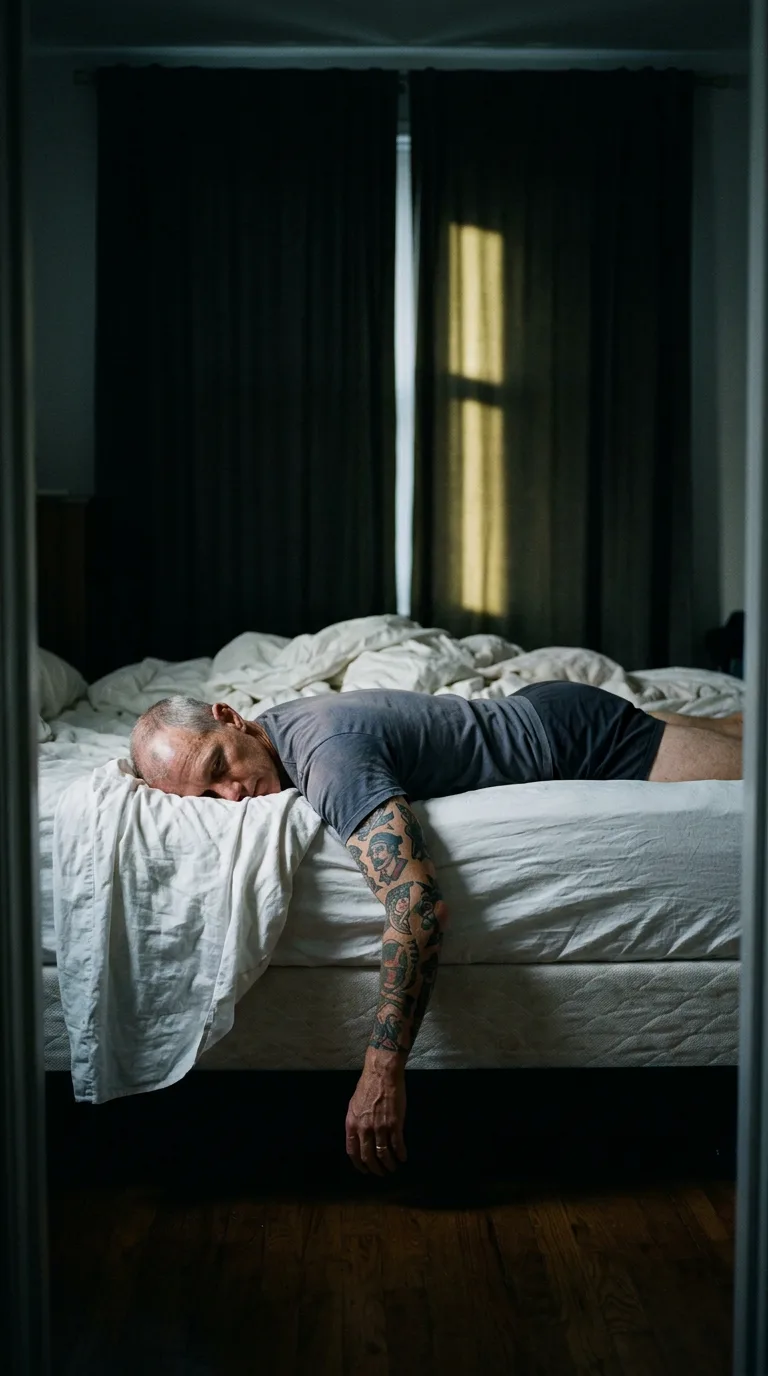
Rarest thing about him: Ear cartilage — legendary, 1 in 104
Season 0seed 1764552146 · engine v10
Character card
lineage 2NZHHJ
His body-swap story
@colin.hasbrook, wearing Marcus Tillery, rolled the wheel on and woke up as Russell Pemberton, spent under a minute in him, then spun the wheel and woke up as Carlos Bautista
The uniform is the last thing you feel before you stop being Marcus Tillery, and it is nothing — a weight on the shoulders you have worn six hundred times over, a badge you never once earned. You are standing in the doorway of the precinct locker room at the end of shift, keys in one hand, and the boredom of it hits you the way it always does eventually, this slow gray tide: another Nashville evening, another report, another forty-five years of pension math that isn't even yours to do. You didn't clock in this body for the paperwork. You spun for the wanting itself, the itch under the itch, and it is back again, right on schedule, the way it always comes back no matter who you're wearing. You set the keys on the bench. You don't say goodbye to him. You never do.
The wheel spins somewhere behind your eyes and the locker room is gone before you can blink.
You roll onto your back.
That is the whole of the arrival: not falling, not landing, just a correction, a body settling itself as if it had been lying wrong its whole life and only just noticed. The arm that hung off the mattress draws itself up and folds against a chest that is broader than the one you had a second ago, ribs wider, skin looser at the throat, and the ragged pull of someone else's breathing goes even in your mouth like a held door swinging shut on its own weight. Light comes through a gap in heavy curtains, a hard yellow blade of it lying across the sheets, and it is the wrong light for evening, too bright, too flat, thrown from an afternoon sun that has no business being up. You are on your back in a bed that smells like someone else's sweat and cedar and, faintly, menthol.
The sheets are what open first. Cotton gone soft with washing, cheap and old and beloved anyway, and through them comes a flash — not yours — of a woman's laugh from the other side of this same bed, years of it, her elbow finding his ribs in the dark, the specific comfort of a shape you have slept beside for over two decades. Denise. The name arrives with the smell of her shampoo still ghosting the pillow, though she isn't here now, at work herself, and some tenderness that isn't yours at all moves through your chest like weather.
You sit up, and the diabetes announces itself before anything else does — a thirst at the back of the throat that has been there so long it isn't noticed anymore, just managed, a rhythm of test strips and short walks and short tempers before lunch. Fifty-one years old in the joints: a low ache behind the knees, a shoulder that clicks when it rotates, the particular tiredness of a body that has stood at a cutting table for thirty years bent slightly forward, favoring the right side. The right arm is heavier than the left in a way that has nothing to do with muscle — ink, dense and old, bold lines gone soft at the edges the way American traditional work goes soft, and touching it with the opposite hand brings back the buzz of the needle at nineteen, a shop in a strip mall off Van Buren, a version of himself that thought he'd be a different kind of man than he became. He was wrong in the good way.
The pillow still holds the shape of his face and through it comes the shop: the light through the window of Pemberton & Son — no son yet, just the name he chose anyway, hopeful, twenty-six years old and half-broke — dust motes over the cutting table, chalk on his fingers, the smell of steam from the press. Thirty years of that room. A half-made jacket always waiting on the dummy like a patient man. He built it himself, every fixture, and it built him back: the hands that know a lapel's roll without measuring it, that can find a shoulder seam blind. Scraping by the whole time, and never once wanting different, because there was a particular joy in a client's face when a coat finally sat right on him, like the coat had been there all along, waiting to be found.
The wedding band on the left hand is warm from his own skin, and it opens into Denise whole — meeting her at a barbecue, her laughing at his sunburned neck freckles as if they were a personal insult, twenty-some years folding into this one room, this one bed, this one gap in the curtains. And beside her, quieter, an old ache: Carrie, the one before, the one he still thinks of on nights he can't sleep, no malice in it, just a door that never fully closed, the ordinary architecture of a long life. And past both women, a daughter — grown now, her photograph magneted to a shop mirror he isn't standing in front of, her voice on the phone last week asking if he was taking his metformin.
Under your feet, when they find the floor, is the specific give of old hardwood, and it brings the whole morning back at once, sleeve by sleeve: waking at eleven because he worked the shop until 2 a.m. finishing an order, pulling the gray tweed waistcoat over the white shirt still creased from the hanger, rolling the cuffs to the elbow the way he always does before he starts pinning, the tape measure looped twice around his neck out of forty years of habit before he's even measured anyone yet. The pin cushion strapped, a few already threaded through wool for later. He'd sat on the edge of this bed to do it, half-asleep, thinking about nothing, a dip tucked in his cheek before coffee because he never touches a drink but can't start a day without that burn.
Your jaw finds it now — the dip, gone stale hours into whatever afternoon this is — and your knuckles crack on their own, an old unthinking tic, both hands at once, before you even notice you've done it.
You look at your hands. Freckled to the wrist, a plain gold band catching the yellow bar of light, the ink starting at the shoulder and running to just above the elbow like a story someone else finished.
You turn them over, once.
"Denise?" you say, to the empty room, in his voice, before you remember she isn't home — and you don't know yet, sitting there in his good afternoon light, how long you intend to let that name mean something.