Rudy Alvarez Kincaid
Fictional. Generated by AI — not a real person, and no likeness of one is intended.
61, waiter in San Francisco · rolled by @declan.michael.farrow · card — no film
History
who has worn him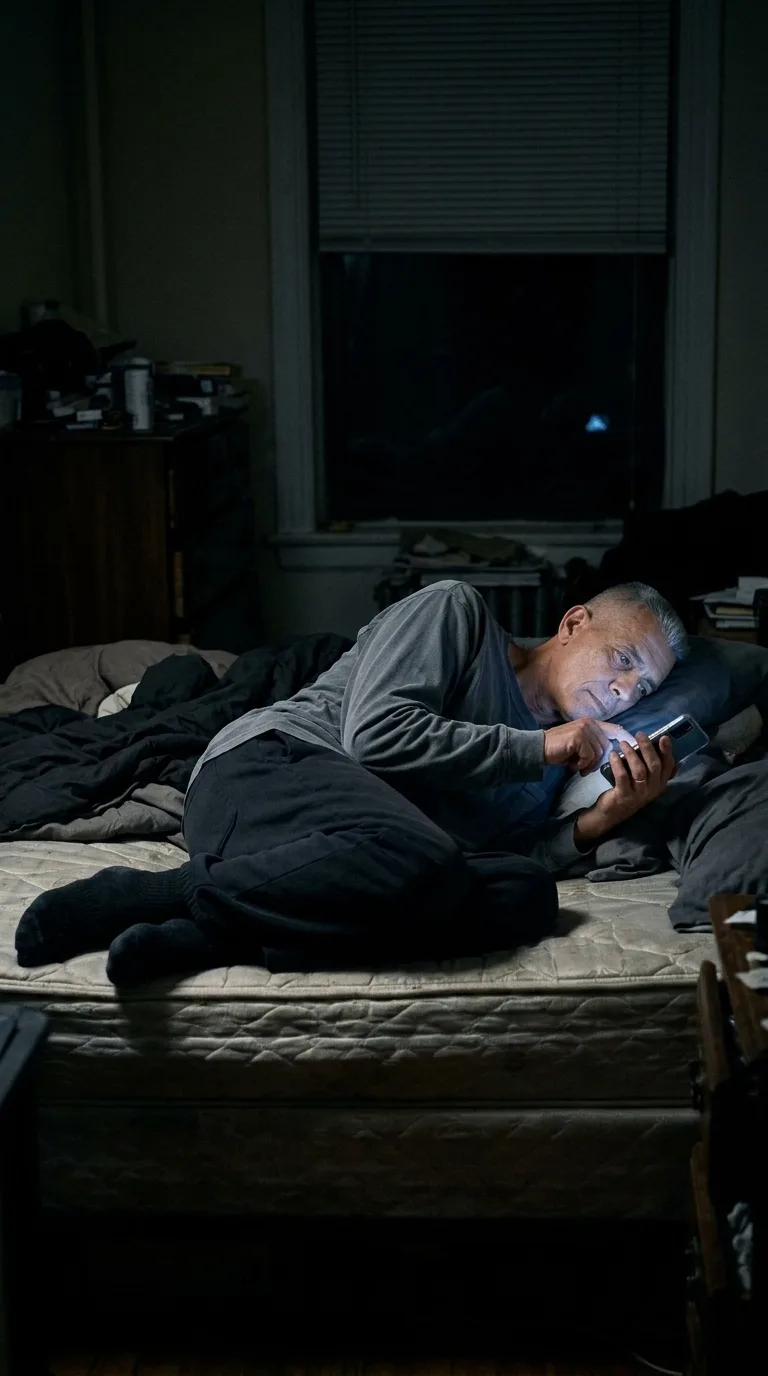
Rarest thing about him: Flips a lighter — common, 1 in 37
Face-off rating 1499 · not ranked yet
Season 1seed 1977953443 · engine v11
Character card
lineage 5OR92V
His body-swap story
@declan.michael.farrow, wearing Russell Allen Voight, rolled the wheel on and woke up as Rudy Alvarez Kincaid, spent under a minute in him, then spun the wheel and woke up as Gregory Neil Halvorsen
You are Russell Allen Voight, and Russell's knees are killing you on the edge of a bed in Detroit, in the dark, with the whole house asleep. A Thursday, the small hours. The beard is the problem. You have worn it for less than a minute and already it itches at the collar, a wiry brown weight you keep wanting to push off your face. Down the hall his daughter turns over in her sleep. A stranger's daughter. She is tall and she is nobody's to you, and the thought of her waking and calling you Dad through a door makes your stomach go tight.
He was a decent man. That was the trouble. His wife's breathing is easy and warm through the wall, and his mortgage sits in a drawer in the kitchen, and you could be that man for years and never be caught. But he is a manager who dreams about spreadsheets. You have already learned that much from the lanyard on the dresser, which you touched once and which hummed with a dull gray Tuesday-ness. You wanted to be someone whose mornings were not already decided. The laptop on the nightstand is lit. The page is open. The wheel is a slow turning color.
You pay. You spin.
Then the dark is a different dark, and your thumb is moving.
It is already in motion. It flicks a bright rectangle upward, past a photo, past a headline, past something he had stopped on, and the blue light is six inches from your face, hot on one cheek. You are on your side. The mattress is thin and has a dip in it exactly your shape. Your breath comes slow and a little sour. You have not blinked in a while, and you make yourself do it, and your eyelids feel dry.
You stop the thumb. The phone is cool glass, slightly greasy. The moment it settles in your palm, something opens.
A lighter. Not here, in the hand. The thumb knows it before you do: a steel Zippo with no flame in it, flipped open and shut, open and shut, in a church parking lot, in a kitchen at two in the afternoon between lunch and dinner, in a hospital corridor. He never smoked. He carries it for the sound. It is his father's. The snick of it is the only thing that has ever calmed him, and your fingers curl against the phone as if one were there.
The sheet under your forearm is cotton gone soft and thin. Against it, the memory of a ring: you turn your hand and feel the pale band of skin on the third finger, a place where the air touches too much. Nine years of metal and then none. Her name is Marisol. She said it kindly, in the driveway, in the cold white light below the bay window, and he said fine, and went down the steep slope to the garage he now lives in, and sat in the car with the engine off. Two kids. A son who still texts him. A daughter who answers in single words. You feel the arithmetic of it, the long ache of being picked last for the holidays.
The gray shirt on your ribs is the one he sleeps in. It carries the whole morning, the way a shirt does. You see his hands, not yours, working buttons on the white one at the bathroom mirror, left cuff first because the right one is stiff, tucking, tying the apron strings behind him twice, a bow he learned from a captain thirty years ago. The corkscrew slid into the pocket. Black shoes, the laces pulled to the same notch. Chairs upended on tables, legs in the air like a dead forest, the floor wet, the radio low. He likes that hour best. Nobody has asked him for anything yet.
Your back is sore, low and left, from carrying trays for forty years. Your feet throb inside the socks. You are thin, almost light, and strong in the wrong places: the forearms, the grip. He can hold four plates and a smile. You can feel that capacity sleeping in the hands.
There is money, a little, tucked away, and a pride about it. There is a church folding chair and a hymn he hums off-key. There is the glass of wine he allows himself on Sundays.
You lower the phone to the sheet. The light goes up your wrist. You turn your hand over, the pale ring-line catching blue, and you open and close the fingers, looking at them as you would a borrowed coat.
Then you look up, into nothing, and say it quietly, in a voice that is rougher than yours:
"Okay. Hello."
Your thumb twitches for a flame that isn't there. Somewhere under the quiet, the wanting is already a small, patient animal, turning in its sleep. You don't know how long it will let you have this.