Ruben Salcido
Fictional. Generated by AI — not a real person, and no likeness of one is intended.
46, butcher in Rural Texas · rolled by @marco.villagrana · card — no film
History
who has worn him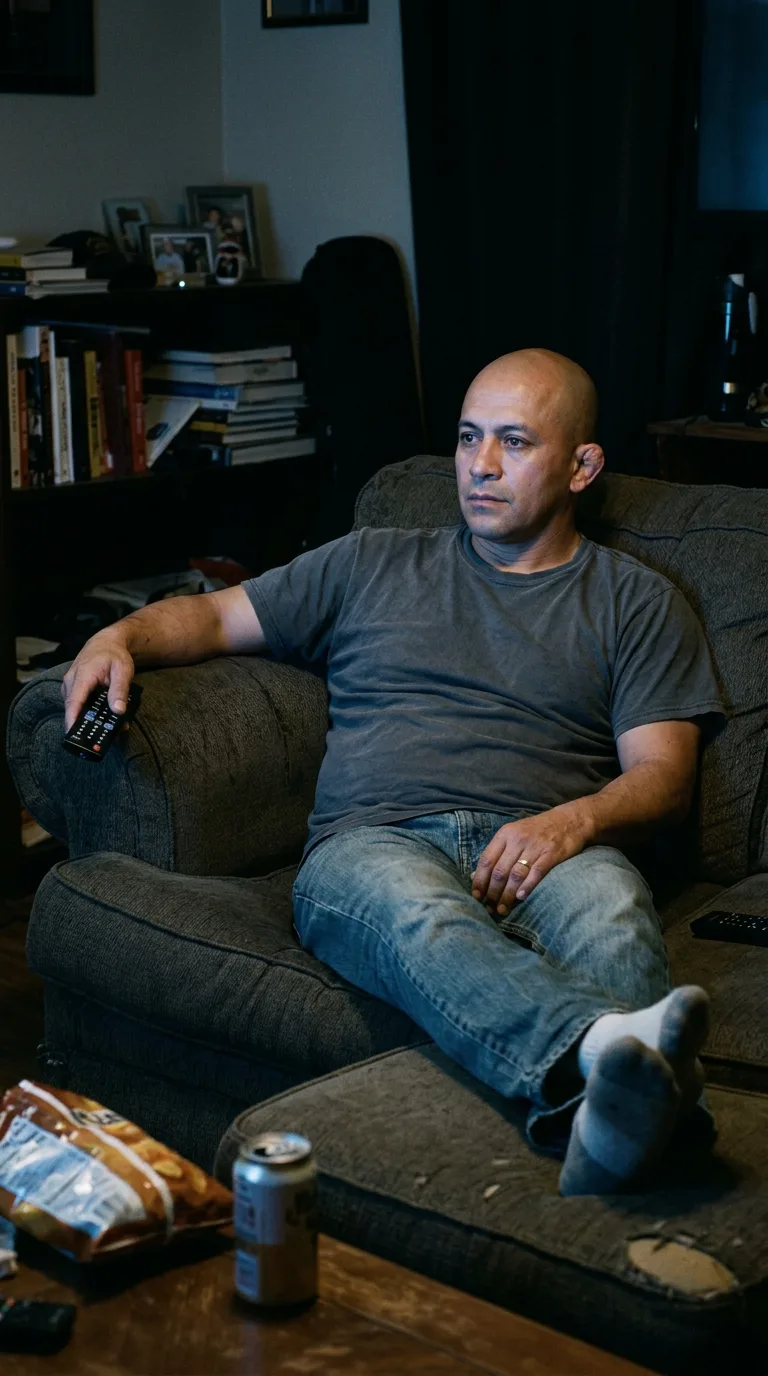
Rarest thing about him: Cauliflower ear — epic, 1 in 164
Season 0seed 413324840 · engine v10
Character card
lineage LJL8SV
His body-swap story
@marco.villagrana, wearing Corey Vansell, rolled the wheel on and woke up as Ruben Salcido
Corey Vansell's apartment smells like solvent and ramen and something under the sink going bad. You've been him for three minutes, standing in his kitchenette in the sodium light from the window, and already you know this was a mistake. Skinny fat, blond, twenty-one, hands that shake a little from something in his blood you didn't ask for. He'd just clocked out. He had a text open on his phone to someone named Dana that he hadn't sent in four days. You feel his small, particular disappointments arrive like silt — the shift lead who doesn't respect him, the truck payment, the tooth he's been meaning to get looked at. None of it is yours. None of it is worth keeping. You didn't spin eighty-two times to sit inside somebody's unfinished text message.
So you open the site again on his phone, thumb trembling not from nerves but from whatever this body's nerves already do, and you spin number eighty-three sitting on the edge of Corey Vansell's bed, and somewhere far south and two hours later in the clock but the same breath in the world, a light comes on behind another man's eyes.
The room arrives before you do — dark, blue-white flicker, the particular hush of a television with the volume low enough that it's really just company. You are sitting. There is a couch under you, broken in on one side, a body that fills a chair the way water fills a glass, no wasted space and no extra. A remote is loose and warm in a right hand you did not have a second ago. On the screen, something cuts to a bright frame — a commercial, a scene change — and in that flare of white light you feel yourself arrive all at once, spine straightening like a question got asked of it. The remote gets set down on the arm of the couch, careful, the way you'd set down something you didn't want to break. Beer smell. Sock feet up on an ottoman with a hole worn through the cushion. Chip bag crinkling somewhere near the floor, empty enough to be mostly air.
The ear registers first — a fullness on one side, a thickness that isn't pain exactly, just a wrongness so old to him it isn't wrong anymore. Then the weight of him: shorter than the machinist, denser, forty-six years sitting in the shoulders and the low back, a bald head that the lamp light slides off without catching. A wedding band, plain gold, warm from his own skin, is doing what it always does — nothing, just sitting there being married.
The T-shirt gives it up first, gray cotton gone soft as cloth does after five years of the same detergent — a flash of him buying six of them at the Walmart in Uvalde because Marisol said quit wearing your undershirts around the house like that, and the small private satisfaction of a man who found a shirt he liked and bought enough of it to never have to decide again. Then the jeans, worn pale at the thigh where his knife hand rests all day, and that gives you the counter — the trays of chuck and brisket, the saw quiet now behind him at shift's end, the particular ache that lives in his forearm and never fully leaves, the customers who ask for Ruben specifically because he'll tell them the truth about a cut. Twenty-two years behind that counter. His father's counter before that, three towns over, until the knees went.
The cauliflower ear comes alive under its own memory when your shoulder brushes the couch cushion just right — high school, a wrestling mat in a gym that smelled like a locker room forever, a rival from Eagle Pass he never beat but never quite lost to either, three years of grinding that ear down to gristle for a state medal he didn't get. He'd tell you it was worth it if you asked him, and some nights, alone with the seventh beer, he isn't sure.
The ring turns the memory further — Marisol at twenty-four in a dress her mother altered twice, the reception in somebody's backyard with string lights, and underneath that, quieter, never spoken of, Teresa, who left for Houston in '01 and who he still sometimes multiplies against, the life that would have been. He loves his wife. That's true and it sits right next to the other thing without needing to fight it. Their son is fourteen now, already taller, already better with a saw than Ruben was at that age, and it terrifies him with pride he doesn't have the words for.
The can on the coffee table, empty, gives you tonight itself — the fourth one, maybe the fifth, poured out in the dark because Marisol took the boy to her sister's and the house is too quiet without the TV doing the work of another person. He drinks like this most nights now. Nobody in the mainline church he goes to on Sundays would guess it from the outside. He carries it the way he carries everything, which is to say alone, and not well, and without saying so to anyone, including himself.
The socked feet on the ottoman remember the boots coming off an hour ago, the relief of it, the particular tired that comes from standing on concrete since five in the morning. This morning: pulling the shirt on in the gray dark, one sleeve then the other, not looking at himself in the mirror because there wasn't anything in it he needed to check.
You look down. The hand on your knee is thick through the knuckles, nicked white in three places from a blade that got away from him over two decades, and it is already drumming, four fingers, a rhythm he doesn't know he's keeping. You watch it like it belongs to somebody smarter than you, more finished than you, a whole life poured into a shape you only just climbed into.
You lift your eyes to where the light would be, if there were a light. "Guess I'm still here," you say, low, to no one, and the cauliflower ear catches the TV glow like it's listening too.