Ruben Salcedo
Fictional. Generated by AI — not a real person, and no likeness of one is intended.
64, sales rep in Houston · rolled by @colin.hasbrook · card — no film
History
who has worn him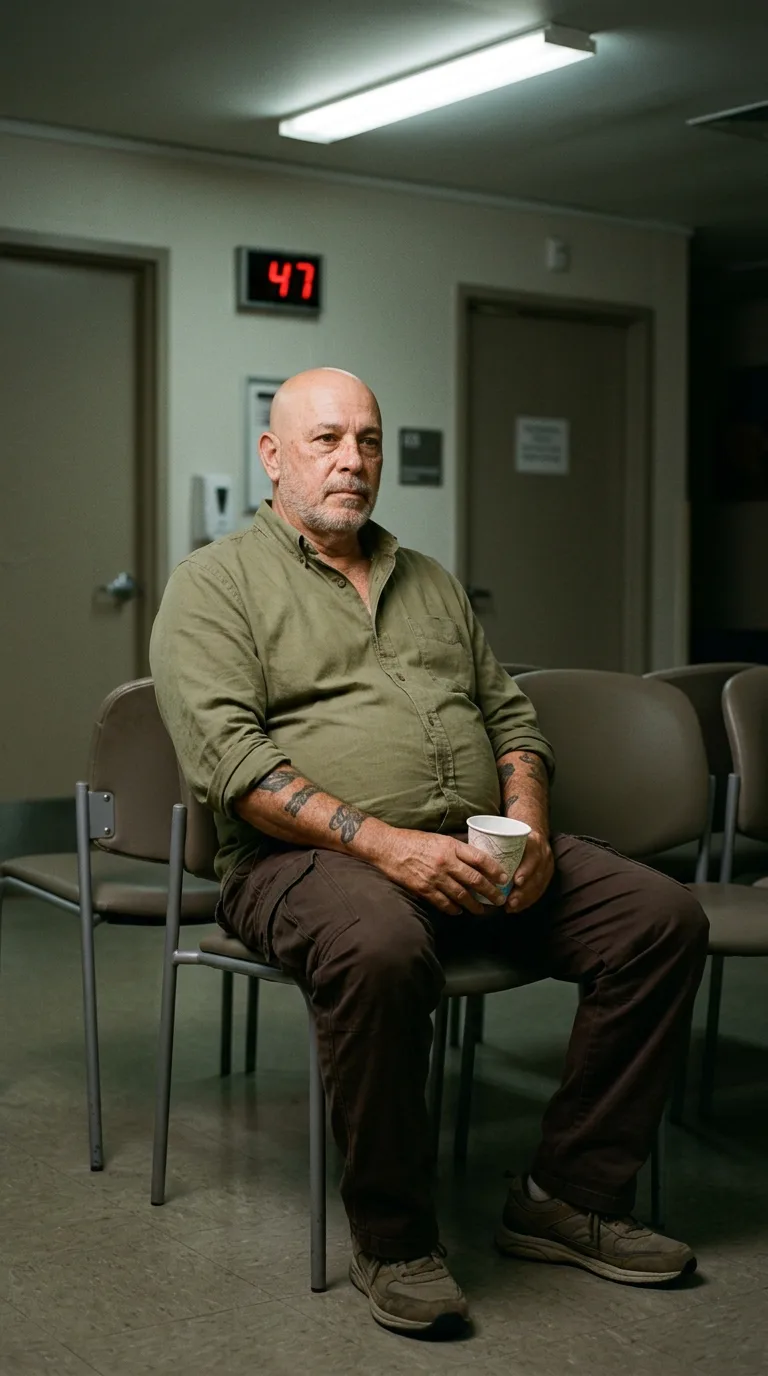
Rarest thing about him: Sales rep — rare, 1 in 63
Season 0seed 973379935 · engine v10
Character card
lineage 2NZHHJ
His body-swap story
@colin.hasbrook, wearing Nolan Yurchak, rolled the wheel on and woke up as Ruben Salcedo, spent under a minute in him, then spun the wheel and woke up as Marty Feingold
You have been Nolan Yurchak for four minutes, and already you hate the mirror in his apartment.
It's not the face — the face is perfect, that's the problem. It's the light. Everything in this Pittsburgh loft is arranged to flatter a jaw you didn't earn, and there's a rack of identical white tees hung by some assistant who color-codes nothing because there's only one color, and you stand there in his beautiful body feeling like a hanger. Twenty-eight years old, brown eyes, a beauty mark someone probably calls "iconic" in a casting note, and you can feel, underneath the muscle, that this man has never once been tired in a way that mattered. Four minutes ago you spun and got him and thought, finally, and now the finally has already worn through at the elbow like a cheap sleeve. There's a photographer's assistant texting him about tomorrow's call time. There's a girl's name saved as a heart emoji. There's nothing here that needs you. That's the thing about the good ones — they're wallpaper. You paid for a body and got a waiting room with better lighting.
So you go back to the site on his phone, thumb print and all, because his thumb is the one you have, and you spin again before you can talk yourself out of wanting to.
The chair takes your weight wrong — lower than you expect, a metal frame creaking under a heavier man — and your knee is bent mid-bounce and it stops, dead, like a video paused. There's a paper cup warm in your hand. A board on the wall clicks from 47 to 48. Somewhere a woman's voice is saying a name that used to belong to somebody, but you're not listening yet, because you're busy learning that your back has a screw of pain low on the left side, patient, permanent, like it's always been filed there waiting for you to notice.
The shirt is what opens first — olive green, one long-worn softness against your shoulders — and it gives you a Tuesday, early, a bedroom with the blinds already up because Marisol likes the light. You're buttoning it one-handed, favoring the left, because bending to tuck it in sends something bright up your spine, and you've done this ten thousand mornings, this exact economy of motion, sleeve first, collar second, the little grunt you make reaching behind for the second button that nobody but you and maybe Marisol has ever heard. She's in the kitchen. She's saying something about the appointment, don't skip it this time, Ruben, and you — he — said okay, mi amor, and meant it, mostly.
The cup in your hand gives you thirty years of Houston: parking lots shimmering off asphalt at five p.m., a company card in a wallet that used to be thin and isn't anymore, the particular flavor of exhaustion that comes from smiling at strangers for a living and being good enough at it that you never had to do anything else. You have sold flooring and copier leases and industrial adhesive and now, for the last nine years, medical devices to men in hospital procurement who look at your lanyard before they look at your face. You are good at this. You like being good at this. There's a version of you that could have stopped fifteen years ago — the number in the bank says so, a wife's ring you never bought because there is no wife, only Marisol and her two kids from someone else and the quiet unspoken math of whether you'll ever officially do it — but stopping never occurred to you, not really, because the road is the only church that never asked you to explain yourself. The actual church, the one with your mother's rosary still in the glovebox of the truck you don't drive anymore, asked plenty, and you go anyway, most Sundays, hungover more than you'd tell the priest.
The metal chair under you gives you last night — a bottle of Herradura down past its shoulder, alone at the kitchen table with the TV on low, because Marisol was at her sister's and the silence in a house gets loud after a certain hour, at a certain age. Your knees remember every flight of stairs you've climbed with a sample case. Your back remembers being thrown once, decades ago, off a loading dock in Pasadena, and never quite forgiving you. Your bald head remembers sun, hats forgotten in a dozen truck cabs, and your hands — thick, spotted, a callus worn into the pad of the right index finger from thirty years of the same pen — remember every business card they've ever pressed into someone else's palm like a small bet on being liked.
The waiting room smells like hand sanitizer and the particular cold of a strip light that never turns off. Forty-eight on the board. Somebody's name — his name — was called and nobody answered, and a nurse somewhere is saying it again, a little louder, a little more annoyed, into a room that isn't listening back.
You look down at your hands. They are wide, spotted, freckled clean across the backs the way his nose and cheeks are freckled — sun damage worn in so long it reads as identity — and there's a thin white paper cup crushed slightly at the rim from how hard you were holding it a second ago, before you were you.
You look up, past the number board, toward wherever the voice is calling from, and you say, out loud, to no one waiting to hear it:
"Forty-eight. That's me."