Rubén Castillo
Fictional. Generated by AI — not a real person, and no likeness of one is intended.
50, sanitation worker in Mexico City · rolled by @ruben.castillo · card — no film
History
who has worn him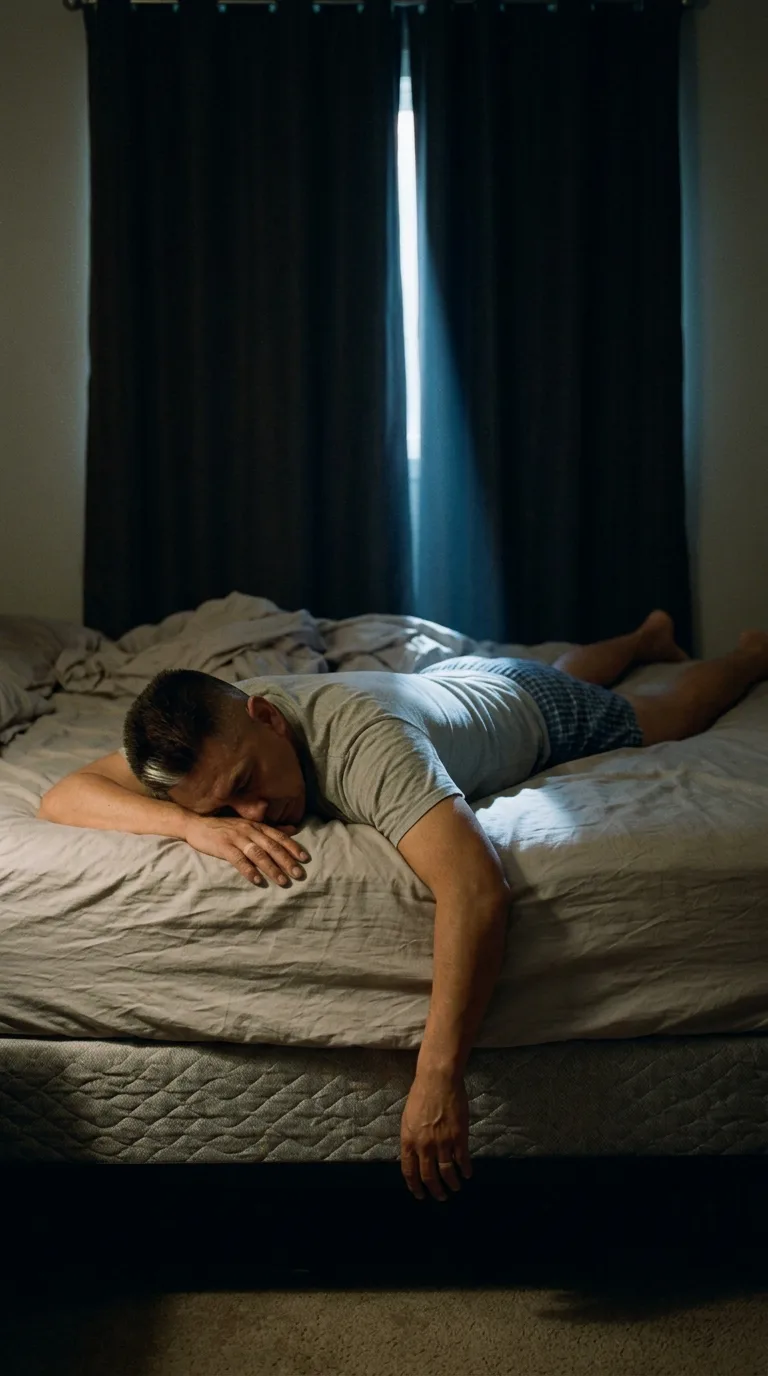
Rarest thing about him: Mexico City — epic, 1 in 421
Season 0seed 126633799 · engine v10
Character card
lineage WXWQVH
His body-swap story
@ruben.castillo rolled the wheel on and woke up as Rubén Castillo — their first
The evening had been nothing, which was the point of it. Scrolling with the sound off, the blue light doing its usual work on you, when the ad came back around again — vessel.cards, a wheel rendered in slow gold, spinning for nobody. You had wanted this for years, the way some people want a country they've never seen: every possession story you'd ever read at two in the morning, every film where someone opens their eyes and the hands are wrong. You had never believed it could be bought. You paid anyway, the way you do anything you don't quite believe in, and the wheel turned, and there was a soft sound like a coin dropping into water, and it stopped.
There is no travel. There is no warning. There is a breath that was ragged going into it and even coming out of it, and it is not your breath, it has never been your breath, and now it is. The arm that was hanging off the mattress draws itself up. The body rolls onto its back. Hands fold at the chest, over a gray T-shirt gone soft with washing, in a posture this body has never once slept in, not in fifty years, not once — and you would have no way of knowing that, except that already, underneath you, something like an objection is trying to surface and finding no one home to raise it.
Streetlight through a gap in the curtain lies across the ceiling in one thin blade. It is not streetlight, you understand a second later — not really — it's the gray hour before dawn doing its best impression of one, in a country you have never been to, in a body that has clocked in before sunrise more mornings than it has slept past it. The air smells like wet stone and traffic exhaust and, faintly, jacaranda, sweetish and going brown, the way flowers smell after they've already fallen.
The memories don't arrive all at once. They come the way the facts said they would — through the hands, through what the hands are near — and the first thing these hands are near is the pillow, damp with someone else's sleep, and off that comes a flash of a woman's voice, tired but not unkind, saying his name across a kitchen a long time ago. Alicia. Not now. Not for eleven years. But her name arrives anyway, stitched into the pillowcase like a stain that won't quite launder out.
You lie there in him — Rubén, the name surfaces on its own, the way a name does when it's yours and you've never had to reach for it — and the ceiling gives you nothing, but the sheet under the folded hands gives you plenty. Three kids. A boy who calls on Sundays from Tijuana, working construction, worried about his knees the way his father is worried about his back. A daughter in this city, twenty minutes by pesero, who brings the grandkids by on Saturdays and pretends not to notice when he winces getting up from the low chair. A third whose face comes through blurred, someone younger, someone he sends money to and doesn't ask questions about, because that's the deal they've settled into.
The back pain arrives before you're braced for it — not sharp, not now, just a low permanent hum along the lumbar, the specific ache of a man who has spent three decades lifting things the wrong way at six in the morning because the truck doesn't wait for good form. Your hand — his hand — finds, without you asking it to, a phantom weight: the grip of a bin lid, the cold rail on the back step of the truck, the particular give of asphalt underfoot through boot soles worn thin at the heel. The body knows this job in its shoulders before you know anything about it at all.
The ring finger is bare, and touching it — thumb finding the pale strip of skin there out of some old habit that isn't yours but is happening anyway — brings back a whole marriage in one useless, generous rush: a wedding in a courtyard much like this one, twenty-two years of it, a fight about money that became a fight about everything, and then, eventually, no fight at all, just two people signing something at a table with a fan going. Alicia kept the apartment near Coyoacán. He kept this one, with the jacaranda outside and the curtains that don't quite meet.
And under the fingers now, not memory but present tense — the sheet, his own chest rising, the T-shirt collar worn to softness at the seam. This morning's clothes, still hours off, wait folded on the chair: the orange coveralls, reflective tape gone dull with washing, the collar dark with old sweat no detergent has ever fully argued out of the fabric. Some other morning, a hundred identical mornings, come through the memory of putting them on — one arm, then the shoulder, then the zip dragged up past a chest that has gotten heavier and slower with every year of this, gloves stiff and cracked pulled on last, over hands that already, even now, want something to click. A pen. Any pen. The habit outlives the desk job he never had.
Faint amusement, someone else's, not far under the surface: a man who believes in something without a name for it — not the church his mother kept, but something, some order to the fact that a truck keeps running and a family keeps needing and a jacaranda keeps dropping its purple mess onto cars every spring whether anyone deserves it or not.
You bring the hands up in front of your face — his face, this face, the streetlight-that-isn't finally admitting dawn, showing you brown eyes gone unfamiliar from underneath, that one white streak lying across the crown of dark hair like a road someone forgot to pave. You turn the right hand over. There's the tan line. There's the pen-click habit already twitching in the fingers with nothing to click.
You say, out loud, into the empty room, in his voice and none of your own:
"Quién eres."
Not a question exactly. There isn't time to make it one. Somewhere behind that sentence is the next wheel spin, unscheduled, unpromised, maybe years off, maybe not — and until then the truck is coming at six, and the back will ache getting up to meet it, and none of that belongs to you yet, but it does now.