Rubén Castellanos
Fictional. Generated by AI — not a real person, and no likeness of one is intended.
44, baker in Atlanta · rolled by @frank.dombrowski · card — no film
History
who has worn him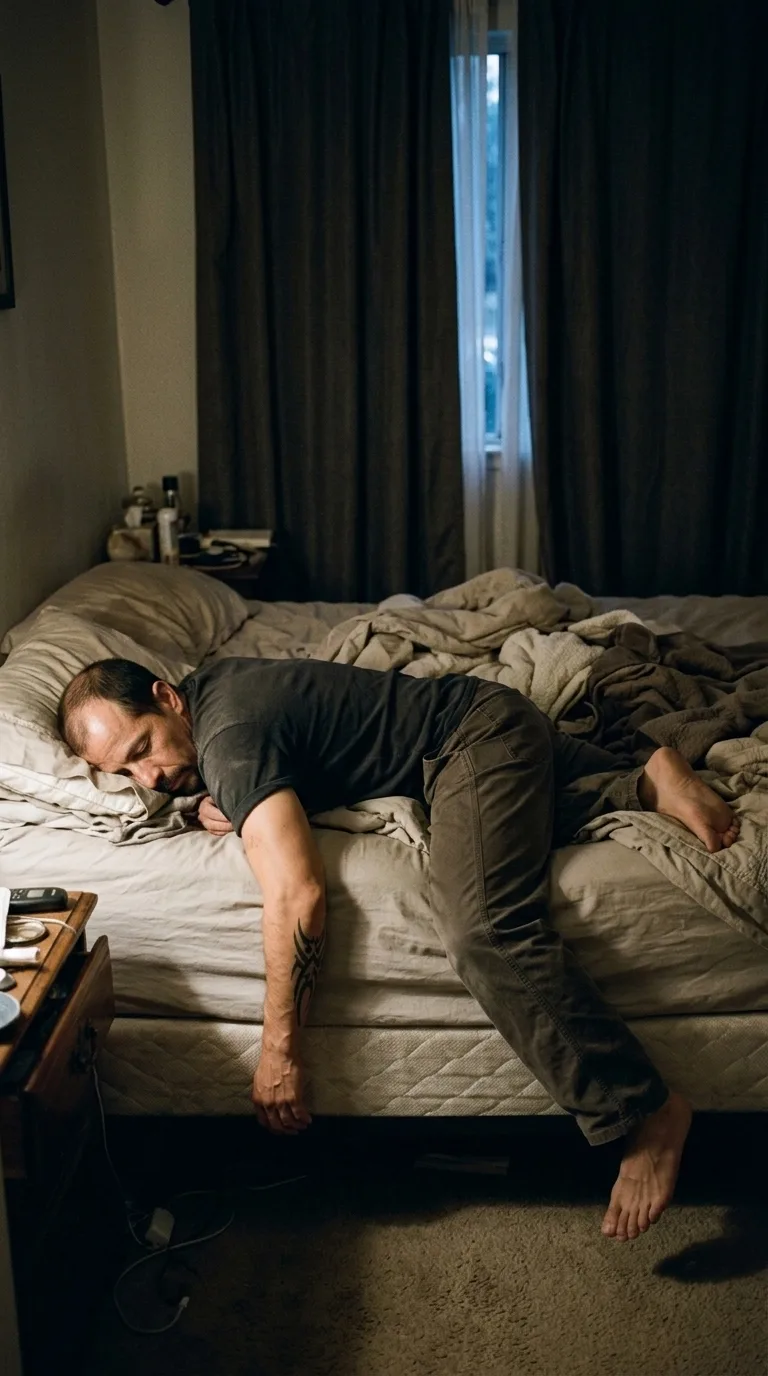
Rarest thing about him: Baker — uncommon, 1 in 1,051
Season 1seed 930181481 · engine v11
Character card
lineage Q2CSHL
His body-swap story
@frank.dombrowski, wearing Harlan Pruett, rolled the wheel on and woke up as Rubén Castellanos, spent 4 minutes in him, then spun the wheel and woke up as Efrén Maldonado
You are standing in a kitchen in Eastern Kentucky, in the dark, in a man who has been yours for seven minutes. Harlan Pruett's beard is wet at the edges because you drank from the tap with your mouth open, the way you have seen him do it in the flashes. The groundskeeper's body is good. The shoulders carry weight without complaining. Fifty-two years of mowing and mauling have made the knees honest.
Nothing is wrong with him. That is the part you would not say out loud. His wife's coat hangs on the hook, and your hand went to the sleeve and the whole of a winter came up, tender and unasked for, and it was not yours, and you stood there loving someone you had never met. It was too much like being known. So the phone is already in your hand, the page is already open, and the wheel is already turning, ticking over the names.
Then you are lying down.
The sheets are damp and tangled under your cheek. Your face is pressed into a pillow that smells of someone else's sleep. One arm hangs off the mattress and the blood has pooled in the fingers. His breath was ragged, and you make it even, and it is a strange thing to do on purpose. You drag the arm up and roll onto your back. Streetlight comes through a gap in the curtains. Heat sits on the room, thick Atlanta summer that the window unit has given up on.
You fold your hands on your chest. It is not how he sleeps. You can tell, somehow, from the way the body resists it.
The shirt comes first. Cotton, soft from washing, rolled at the sleeves, and the cuff under your thumb gives you a morning: his own hands, a quarter to four, pulling it over his head in the dark of a bathroom, the apron string already tied in his mind. Then the jeans, stiff at the knee, floury in the seams. He fell asleep in them. He was too tired to take them off, and the tiredness comes up through the cloth, enormous and ordinary. Two kids. Their shoes by a door. A girl's laugh in a car, not the mother of them, the one after.
Your tongue finds the gum. There is no gum. His jaw is working at nothing, chewing, chewing, a habit with no object, and the muscle knows the rhythm better than you do. Under it, the dough. Your palms remember the weight of it, forty pounds going slack and then tight under the heel of the hand, the trays cooling at five, the first loaf's crust crackling as it breathes. The pride of that is quiet and entirely his. A recent ex still lives in the corner of his phone on the nightstand, a name he has not deleted. You do not touch it. The mattress under your spine holds the dip of a body that is not here, and something in the chest aches at it, low and old.
He is strong. The back is tight from standing. The calves hum. The scalp is cool where the hair has thinned, and when you lift a hand to it, the freckles on the cheek rise against your wrist like a map. You are slow with him. He does not know. There is nothing left of him to know.
You lift your hand into the streetlight. The black tribal ink wraps the inner forearm, sharp-edged, and you turn the hand over, once, palm to knuckle, and look into the dark.
"Okay," you say, and his voice is lower than you expected. "Okay. Hello."
You do not know how long this one lasts. Your thumb is already moving, looking for the phone.