Rubén Aguayo
Fictional. Generated by AI — not a real person, and no likeness of one is intended.
54, farmhand in El Paso · rolled by @connor.waskiewicz · card — no film
History
who has worn him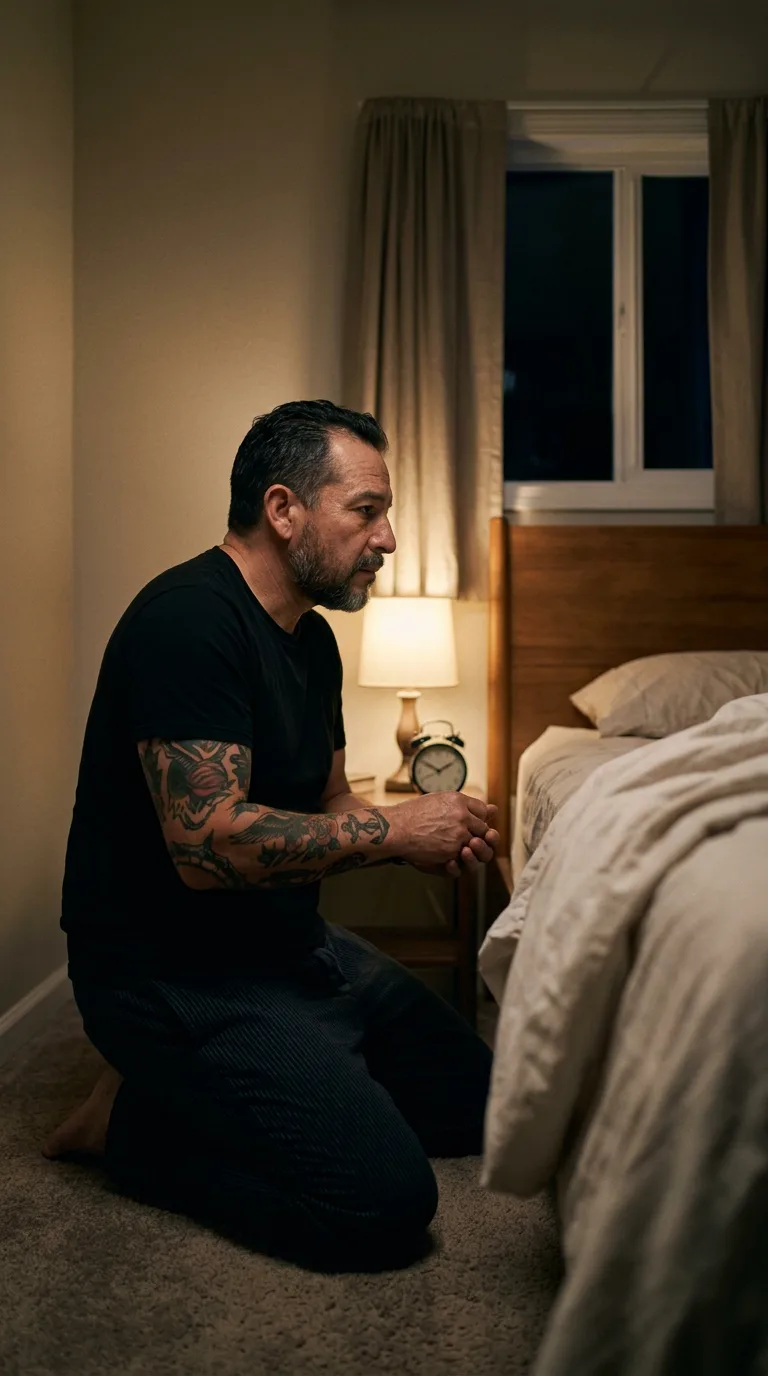
Rarest thing about him: Full sleeve — common, 1 in 53
Season 1seed 55708981 · engine v11
Character card
lineage 2NZHHJ
His body-swap story
@connor.waskiewicz, wearing Casey Miller, rolled the wheel on and woke up as Rubén Aguayo, spent under a minute in him, then spun the wheel and woke up as Marlon Etheridge
The block door of D-wing clicks its four minutes of quiet, and you stand there in Casey Miller's boots, twenty-seven years old and stupid with borrowed time, and you already know you're not staying. That's the tell you've learned after this many spins: the wanting comes back fast when the body's got nothing left to give you. Casey Miller has a moustache you don't like scratching at, a nose broken once and set wrong, and a job walking a hallway of men who hate him on principle. Four minutes in his skin and you already miss having something to do with your hands. So you find the phone in the break room, the one somebody left logged into the site, vessel.cards, the wheel sitting there in its lazy spin like it's been waiting on you specifically, and you don't even dress it up as a decision. You just press.
The knees hit bedspread first. Not concrete, not a cell floor — a soft give under folded legs, and a smell of fabric softener and something cooking hours ago, onions gone cold in a pan. Your hands are laced together loose in front of you, and they are not Casey's hands, they are thicker, older, a black-and-color sleeve running up the right forearm that catches lamplight when you shift. You had been rising — the body remembers rising, some rhythm underneath you that says *amen* and starts to lift — and now it folds back down instead, forehead easing toward the bedspread like gravity just doubled. A smile goes out of the mouth mid-breath, unfinished, the way a word dies when someone else takes the sentence.
The room comes in around you before he does: lamp warm and yellow, curtain half open on a window black with a desert night, a clock on the nightstand reading close enough to midnight to matter. Then the t-shirt against your back gives you the first of him — worn thin at the shoulder blades, softened by a hundred washes in hard El Paso water, and with it a whole evening: boots off at the door, dust shaken from a straw hat onto the porch rail, the ache low in the back that comes from bending all day between rows. Rubén Aguayo. The name arrives with the shirt the way a smell arrives with a photograph, whole and unasked-for.
Your knees against the bedspread bring the rest of it up slow. Fifty-four years standing in dirt that isn't his, working a farm that pays him in cash and respect and not much else, six days most weeks, up before the birds because the crew boss likes it that way and because Rubén likes being out there before the heat turns mean. Hands that know the weight of a crate before they pick it up — carrots and potatoes and the soft give of a tomato that's a day from bruising, sorted without thinking, a whole education living in the fingers that never made it up to the brain. The leg starts bouncing under you, knee to floor and heel restless against carpet, an old habit that outlasted the last cigarette by eleven years — he can still taste the ones he quit, some mornings, a phantom itch behind the teeth.
The clothes remember more than he lets himself. The bandana folded in the drawer, red, worn for dust and not for style, and the memory that comes with it isn't dust at all — it's a woman's hands retying it looser around his neck one October, laughing at how he always cinched it too tight, and the sting of her leaving two winters after that for reasons he still turns over some nights kneeling right here, hands together, not really asking God for her back, just checking if the ache's still there. It always is, a little. He never remarried. Never had the kids he used to picture loud around a table. Some Thursdays that's the whole prayer: not a request, just an accounting, whether the life still adds up.
The freckles are his mother's, scattered warm across a nose broken by nothing more dramatic than forty years of sun, and the beard is going gray only where her father's did, right at the point of the chin, like the family keeps aging in the same order. The tattoos came in three sittings twenty years apart, an eagle then a rose then an anchor he can't fully explain except that he liked the shop and liked the man doing it and liked, for once, having something on him that was only his to look at.
He goes to church on Sundays mostly out of habit that turned real somewhere in his forties, sits in the fourth pew, doesn't raise his hands during worship but means the quiet parts more than he'd say out loud. Tonight's prayer wasn't serious — a day that went fine, a boss who didn't yell, a check that'll clear — and he was already half laughing at himself for bothering God with nothing, rising off his knees light as anything, when the floor came back up to meet him.
You look at your hands. Thick fingers, a nail split and healing on the middle one, dirt worked so deep into the creases that no amount of washing gets it all, a tan line at the wrist where a watch usually sits. You turn the right one over, sleeve of ink shifting in lamplight, eagle and rose and anchor all still exactly his.
"I'm still here," you say, to the empty room, in his voice, and you don't know yet if that's a prayer answered or the start of a different one.