Roland Beaumont
Fictional. Generated by AI — not a real person, and no likeness of one is intended.
36, undertaker in New York · rolled by @colby.marsh · card — no film
History
who has worn him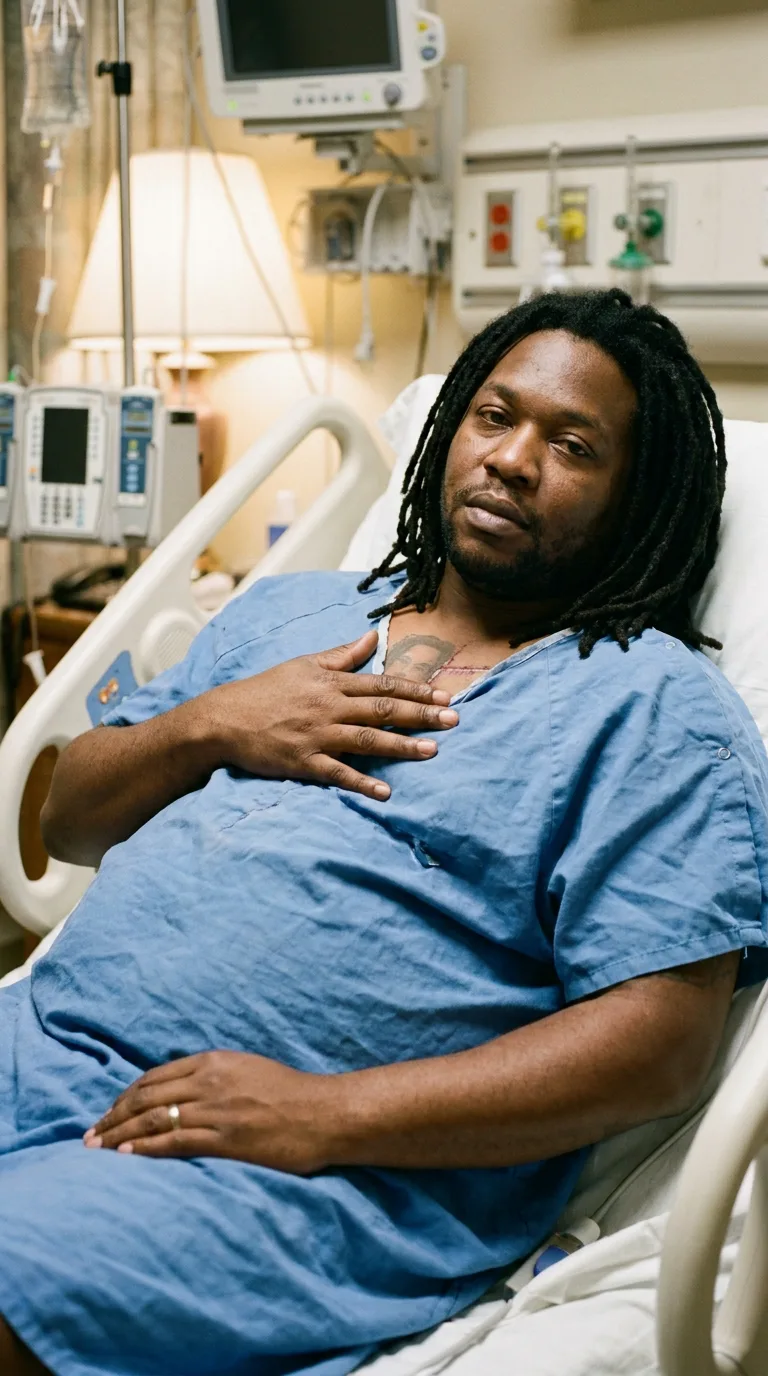
Rarest thing about him: One, chest — rare, 1 in 21
Legacyseed 685206869 · engine v5
Character card
His body-swap story
---
You were the one who wouldn't sit still.
That's what he used to say, standing in the doorway of the viewing room with his hands folded in front of him the way undertakers learn to fold them, watching you swing your legs off the last chair in the last row. *Boy, your leg's gonna bounce us right through the floor.* And you'd stop for four seconds and start again, and he'd laugh, quiet, because you don't laugh loud in a room that's shaped for grief.
Twenty-two years later, in a room that smelled like nothing at all, a nurse told your mother that they got the heart out in time and that somebody in Brooklyn was going to have a chance. Your mother said, *tell them he never sat still,* which is not a medical fact and nobody wrote it down.
But it went with you anyway.
---
You come up out of the dark inside a hospital bed you have never seen, at four in the afternoon on the eleventh day, and the first thing you know is your own weight. That's the strange part. Not the pain — the pain is a locked door somewhere behind the drugs — but the *weight*, this soft round belly resting on the thighs, the pull of it, the way it settles when he leans. Twenty-five pounds he did not used to carry. Nobody told him he'd get it back, either, but that's what happened: nine months of dialysis-thin waiting, one night of somebody else's bad luck, and now an appetite and prednisone and his wife bringing him plantains and rice in Tupperware, and a body that has begun, quietly, to fill out again.
He is thirty-six years old. His name is Roland Beaumont. He buries people for a living, in a funeral home off Nostrand where the chairs go in rows of eight and the carpet takes the sound out of everything, and he has three kids and a wife and a low balance and forty-one thousand dollars of medical paper coming for him and a house he owes more on than it's worth. All of that is in his head and now all of it is in yours, arriving like a dropped box of photographs, and you don't get to choose which ones you pick up.
He has his hand pressed over the scar at the collar of his gown. He does that. He's been doing it since he woke up, the way a man touches a wallet he thinks he lost. Under the palm there's a thing going *thmp — thmp — thmp,* and it is not his rhythm.
It's yours.
You feel him notice.
You feel him hold his breath to hear it better, and count, and get to nine, and lose it, and start again. And then — this is the moment, this is the whole thing — his lungs give up their own pattern and fall in behind the beat under his hand, in, out, in, on the count of that other clock. Like a man stepping into a stranger's stride so they can walk together down a narrow sidewalk.
That's the door. He opened it himself. He would have called it a coincidence if you'd let him say it.
---
He is spiritual but not religious, which turns out to be a very convenient thing to be, and you use it. You let him think the thing sitting in his chest is *him now.* You let him think the reason he keeps looking at the window at 4:40 is the light.
The nurse comes in. She says, *Mr. Beaumont, how're we doing,* and you hear a voice come out of the throat you're in — deeper than yours ever was, thicker, patient — saying *We're good.* You didn't decide the *we.* It just came.
Under the sheet, the right leg starts to bounce.
She glances at it. She's seen a thousand men in that bed. She says, *That's a good sign, energy's coming back.*
---
Here is what you didn't expect: how tired he is. Not the surgery. The other thing, the one he's been treated for since he was twenty-eight, the low grey weather he takes forty milligrams a day to hold at bay, and it's in the body — it's in the shoulders, it's in the way the head wants to hang forward when nobody's looking. You spent your last two years angry at him for going quiet on you, for the six-week stretch of unreturned calls, for missing your birthday and then showing up in a suit with no explanation. You thought that was choice. You're wearing it now and it isn't. It's a coat with the arms sewn shut.
You didn't expect the ex-girlfriend, either. Camille. She's in there near the front of the box, closer than she ought to be for a married man, four months out and still an open tab: the message drafted and never sent, the one that says *they gave me a heart, I thought you should know.* You read it with his eyes. You put the phone face-down. His wife is coming up the hall with the Tupperware and the eleven-year-old and you are going to do better than he was doing, because you have exactly one advantage over every other man alive, which is that you know what it costs to leave someone holding a phone.
---
They discharge him on a Tuesday into rain. Brooklyn under sodium light, the brownstone stoop wet and orange, his wife's hand under his elbow like he's made of glass, and you take the steps slow because the sternum is wired shut and because you want to stand in that light a second longer. Three kids in the doorway. The youngest doesn't come down. He's been told his father was sick and he's decided the safest thing is to stand behind the door.
You crouch — it hurts, you do it anyway — and you say his name.
And the kid comes.
You hold the back of his head with a hand that has a plain gold band on it and skin thicker than yours ever got to be, and over the boy's shoulder you can see the shape of the rest of it: the viewing room with the chairs in rows, the families, the folded hands, the ledger with too much red in it, thirty, forty more years of being a man who is good in the worst hour of other people's lives.
There's no way out of it and no end date on it. You're not looking for one.
You were the one who wouldn't sit still. He said so. He's going to spend the rest of his life not sitting still, and every time that leg goes off under a desk in a room that smells like lilies, some part of him is going to think, without knowing why, of a boy on the last chair in the last row.
He'll call it the heart. Let him.