Rohit Venkataraman
Fictional. Generated by AI — not a real person, and no likeness of one is intended.
35, manager (mid-level) in Small-town Ohio · rolled by @daniel.jiahao.wu · card — no film
History
who has worn him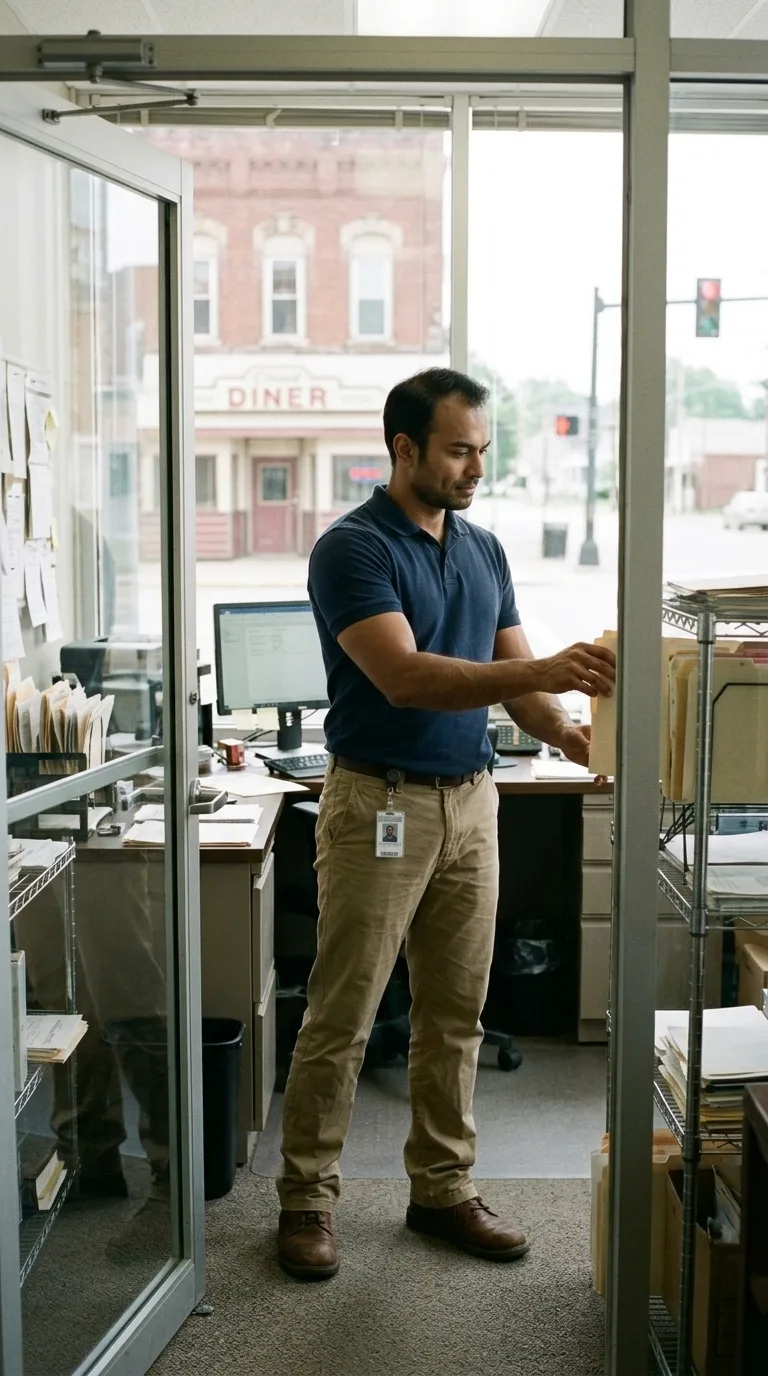
Rarest thing about him: Hindu — common, 1 in 82
Season 1seed 1992474116 · engine v11
Character card
lineage IXKM39
His body-swap story
@daniel.jiahao.wu, wearing Walter Dale Pruitt, rolled the wheel on and woke up as Rohit Venkataraman, spent 5 minutes in him, then spun the wheel and woke up as Nolan Whitehorse Begay
You are standing in a kitchen that is not yours, in a body that is not yours either, and the body is tired of you. Fifty-seven years in it, less than a minute of them yours. The shaved scalp, the nose that was broken once and set a little west, the belly that sits on the belt like a settled argument. You have a spatula in a fist the size of a catcher's mitt. Somewhere a ticket printer is chattering. The line cooks are waiting for the head chef to say something.
You cannot. Not because he can't, but because you have found out what a kitchen is: a hundred small decisions with no one to hand them to. You wanted to be a man who knows how. You are, and it is no fun at all. The knowledge sits in the wrists, and you are only a guest in the wrists. So you leave. You do not say anything to the line. The wheel is already turning behind your eyes, and the ticking of it is the only sound you want.
Then you are in a glass office, and your arm is extended into a shelf.
There is a manila folder between your fingers, mid-slide, and you have put it in the wrong slot. You feel it before you see it: a wrongness in the motion, like a stair that isn't there. You pull it out. You put it back slowly. Correct. Then you check the next one. And the next, ten times, each folder lifted, read, seated, though your hands tell you this has not needed checking in years.
The light is flat and white through the front glass. Across the street a brick building, a diner sign with nothing behind it, a stoplight stuck on red over an empty road. The door of the office stands open behind you, held by its slow arm. Your chest is wide and dense. You are short, and the shelf is exactly the right height. Your heels are planted in a pair of brown leather shoes worn soft at the creases.
The shirt comes first. The navy polo clings across the shoulders, and the cotton against your back opens like a drawer: a bedroom with the blind half up, his thumbs working the placket buttons, the two he always leaves open, a radio murmuring a cricket score from a phone propped on the dresser. The sleeves go over his arms, left, then right, the cuffs snug on the biceps because he lifts, four mornings a week, in a garage gym with a space heater. He tugs the hem down. It is a good shirt. He bought three.
The khakis. The belt, brown, its tongue worn to a groove at the fourth hole. Pulling it through the loops brings a kitchen, a small one, a steel tumbler of tea going cold, a call on speaker with a mother who asks whether he has eaten and whether there is anyone. He says there is work. She says work is not someone. He laughs, and the dimples go in deep, even now, in his cheeks, you can feel them, two small hollows that his face makes without being asked. He used to drink with the men from the plant on Fridays. He stopped, gradually and then entirely. Nobody noticed it was gone, and that is the whole sad small comedy of it. There is a bank balance he checks like a pulse, a number that took ten years of staying put to reach. He does not spend it. It is not for anything. It is for being someone who has some.
The badge on your hip swings against your thigh, and the plastic is warm. In it his own picture, a little younger, and a name you do not read yet. You touch the folder tab. A flash: the district manager, a woman, saying "you're the only one who actually checks," and the pride in him, thin, hungry, and proof of how little else there is.
Your jaw is rough. Two days of stubble. Your scalp feels the air at the temples where the hair has retreated. Your knees ache dully, the old ache of a man who lifts and sits. The carpet gives a little under the shoes. The room smells of paper, toner, and old coffee.
You lower your hands from the shelf and look at them. Thick fingers, dark hair on the knuckles, clean nails, a callus at the base of each palm from the bar. You turn them over. Palms. Turn them back. They are yours, the way a coat from a hook is yours.
You lift your eyes to the glass, to your reflection laid over the empty street, the dimples showing even now, even for you.
"Okay," you say, and his voice is lower than you expected. "Let's see what you were saving."
Already something in you is listening for the click of the next wanting, the small bored itch, and you do not know whether it is four minutes off or forty years.