Roger Heimlich
Fictional. Generated by AI — not a real person, and no likeness of one is intended.
63, contractor in Small-town Ohio · rolled by @connor.waskiewicz · card — no film
History
who has worn him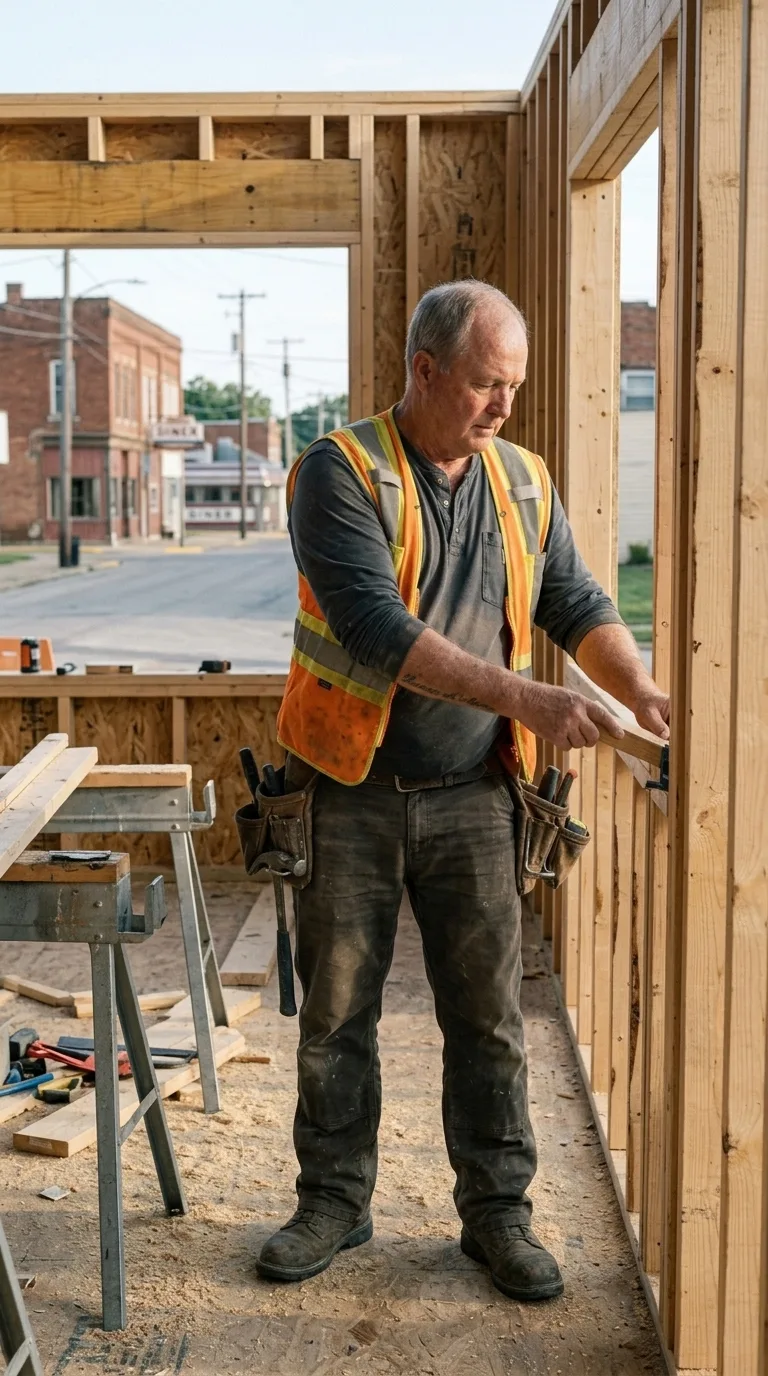
Rarest thing about him: Turns a ring over in his fingers — common, 1 in 26
Season 1seed 517181261 · engine v11
Character card
lineage 2NZHHJ
His body-swap story
@connor.waskiewicz, wearing Dwayne Combs, rolled the wheel on and woke up as Roger Heimlich, spent under a minute in him, then spun the wheel and woke up as Alan Pierzchala
You are standing in Dwayne Combs's kitchen with the coffee gone cold in a mug that has a chipped handle, and you are done with him. It isn't that he is bad. His back is bad, a low steady ache that has been talking since you stood up, and the cough sits under his ribs like a stone. But that isn't it. Last night his daughter called, and you let it ring, because you didn't know her voice, and you didn't know what to call her. You stood there in his socks and watched her name go dark on the screen. Nobody tells you that the thing you get is only the body. You loved a stranger's kitchen for a minute, then you were a thief in it. You open the page. You pay. The wheel turns, and you let it.
The saw is gone from your hand, or rather it was never there. There is a length of two-by-four, and you are laying it against a stud, and your arm is already moving the way it has moved ten thousand times. Then it goes wrong. Half a second, the nail set an inch off, a motion that belongs to someone and is now only yours. You stop. You do it again, slowly, correctly. Sawdust hangs in the light. Somewhere out past the open framing a stoplight is changing over an empty street.
The vest first. It's stiff at the zipper and smells of dust and old sweat, and the second your shoulders settle into it, it gives you a morning: his hands in the dark of a hallway, pulling the sleeves of the gray henley over his wrists one at a time so as not to wake her. Her shape under the quilt. The buttons at the throat, always left open, a habit from his father. Then the belt, the leather pouch heavy on his hip, the hammer hanging where the hand finds it. The boots he laced sitting on the edge of the bed, one knee complaining. He thought: just get through today. He thought it every day, lightly, like touching a rail.
You press the board and the wood remembers. Not a thought, a feeling: a porch he framed for his son, the boy holding the other end of the tape, squinting, twelve years old and proud. Sixteen inches on center, the boy said, as if he had invented it. The pride goes through your chest like warm whiskey, and then you taste the whiskey itself, the real thing, the evening glass that has turned into three, the quiet way she counts them and doesn't say. You find a thumb rubbing a gap in your left hand, a plain band going around and around on the finger. The metal is warm. A name and a date on your upper arm sit under the sleeve, and when the cloth shifts against it you feel a grief with no picture attached, just weight, an old one, kept clean, kept private. A church bell somewhere in him, Sunday, a pew that creaks. Your lungs want a cigarette that he gave up years ago, and the wanting is a ghost with good manners.
Your knees ache on the plywood. Your belly sits soft over the belt, and the freckled skin of your forearms is hot and loose and strong. Your scalp feels the air at the crown.
You lift your hand off the stud and turn it over. It's wide, nicked, the ring a pale groove. Not Dwayne's. Not yours.
You look up, at the street, the brick, the red light holding for nobody.
"Well," you say, and the voice is low and a little rough, "hello, Roger."
Already the question is there, quiet and patient behind your teeth: how long, before the wanting comes back.