Rigoberto Alvear
Fictional. Generated by AI — not a real person, and no likeness of one is intended.
56, farmer in Los Angeles · rolled by @colby.marsh · card — no film
History
who has worn him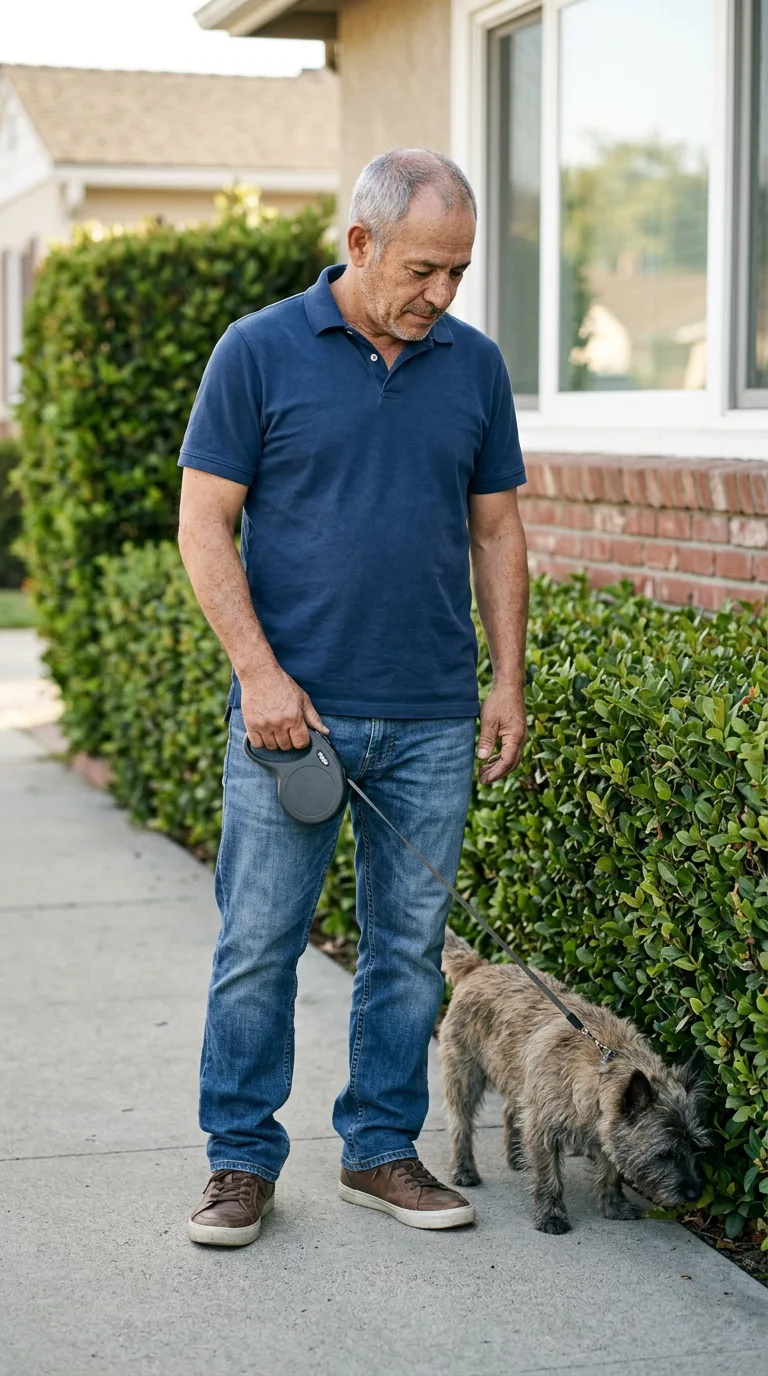
Rarest thing about him: Cigars only — rare, 1 in 23
Season 0seed 1011675025 · engine v10
Character card
lineage PYNCV3
His body-swap story
@colby.marsh (admin), wearing Brian Kowalik, rolled the wheel on and woke up as Rigoberto Alvear, spent 1 minute in him, then spun the wheel and woke up as Wendell Tuakana
Brian Kowalik's kitchen smells like the granite cleaner the housekeeper uses, and you have been standing in it for one minute, and one minute is enough. Heavy shoulders, black hair, a wedding ring that isn't a wedding ring because Brian never married, a mortgage on a spec house he's flipping at 6% under market — you got a full accounting of the man's finances the second his hand touched the phone on the counter, and none of it interests you. He's thick through the middle in a way that makes bending down for the phone charger a small negotiation with gravity. His chest feels tight in a way you don't like, though nothing is wrong with it; it's just a body you never asked for and don't want to keep learning. You spun for a farmer or a poet or anybody who wasn't a man who talks about cap rates in his sleep, and you got him instead, and one minute was the exact amount of time it took to decide that boredom is its own kind of reason. You open the laptop still warm from his last search — comps, comps, comps — and you go to the page with the wheel on it, and Brian Kowalik's thick finger, not yours, taps to pay.
The wheel spins somewhere that isn't a place, and then it isn't Brian's kitchen anymore. It's outside, low gold light, a green wall of hedge, a smell of cut grass and warm concrete. Your hand — smaller than it was, older, spotted along the back — is at the end of a retractable leash, and the leash has gone slack, and a small dog with a wiry coat is elbow-deep in the hedge, sniffing something ecstatically. The hand winds the leash twice without being told to. The body takes a stride the dog has to scramble to match. You are standing in tan boots you didn't lace, in a polo shirt with a collar that sits a little damp at your throat, and freckles are scattered warm across the bridge of a nose that isn't yours yet, and the sun is going down somewhere you don't recognize.
The shirt is the first thing that talks. Polo cotton, worn soft at the collar from years of the same drawer, and it gives you a version of this morning — no, not morning here, dusk, but this shirt's morning, hours ago and a world away in Los Angeles time, pulled off a hanger by a man named Rigoberto Alvear who checked the mirror once and didn't linger, because forty years of getting dressed teaches a man not to. Under the shirt, the body: fifty-six years old, five-seven, a gut that isn't bad for the years on it, forearms roped from something the wheel didn't have to tell you was decades of fieldwork. A dull throb behind the sternum that isn't pain exactly, just pressure, a blood pressure cuff's worth of years, medication in a bathroom cabinet somewhere he takes without ceremony. The leash handle in his palm gives you calluses — real ones, ridged, earned, the kind that come from irrigation pipe and hoe handles and truck steering wheels at four in the morning — and under the calluses, a leg that has already, without asking you, started to bounce, quick and small, even standing still, even now.
The boots give you land. Not this sidewalk — a gate at the end of a dirt row, light going copper over furrows, the smell of turned earth and diesel, forty years of that same hour arriving at the end of every day like a bell. He owns the land now. Owns more of it than anyone who knew him at twenty would believe, a name on deeds that would surprise the men who used to pay him by the day. Cigar smoke drifts up out of the memory — not habit, ritual, one after a good harvest, one on his birthday, never more, because he decided a long time ago what would and wouldn't own him. Sober fifteen years by the same decision. A quiet, hard-won architecture to the man: what he lets in, what he doesn't.
The dog's leash gives you her — the girlfriend, asleep right now in the house behind you, whose dog this actually is, who laughs at how he talks to it in Spanish like it's one of the grandkids. Two kids, grown, calling on Sundays. And under that, unbidden, an old ex-girlfriend's kitchen decades gone, a fight about money before there was any money, her face when he left, a debt he never quite finished paying in his own head even after paying every other one.
And then, because your hand is still on the leash and the leash is still attached to the dog and the dog is still attached to the hedge, you get the other thing, the reason you're wearing this particular gray head and not some stranger's: Kevin. Small, soft, nervous Kevin Matsuda, delivery van, Ohio, freckles like this man's own scattered on a face half a country and half a generation away. You wore Kevin seven spins ago. Two days ago by your count. You know his apartment, his mother's casseroles in the freezer, the girl at the pharmacy counter he's too shy to ask out — and you know, from the inside, that Kevin talks about "Tio Rigo" the way some men talk about their own fathers, an old family friendship thick enough to survive states and years, and that whatever the actual blood between them is or isn't, Rigoberto Alvear is the man Kevin calls when something goes wrong at two in the morning. You have stood on both ends of that phone call now, in two different men's shoes, three minutes and one minute respectively, and there is something almost funny in that, if you let yourself feel funny about anything.
The leg keeps bouncing. The dog finally finishes with the hedge and looks up at you — at him — ears back, reading something in the stillness that shouldn't be there. You look down at your hand on the leash, freckled, spotted, sixty-year-old skin over a fifty-six-year-old hand, and you turn it over once like you're checking it's real, and it is, more real than Brian Kowalik's ever felt in the one minute you wore him.
You lift your eyes off your palm, into the low sun, past the hedge toward the house where a woman you don't know yet is still asleep, and you say, to no one, in a voice gone a half-step lower and rougher than Brian's ever was:
"Okay. Let's go home, then."
The dog, satisfied, starts walking. So do you. Nobody's decided yet how long this one gets to last.