Richard Allen Tolliver
Fictional. Generated by AI — not a real person, and no likeness of one is intended.
54, sales rep in Atlanta · rolled by @declan.michael.farrow · card — no film
History
who has worn him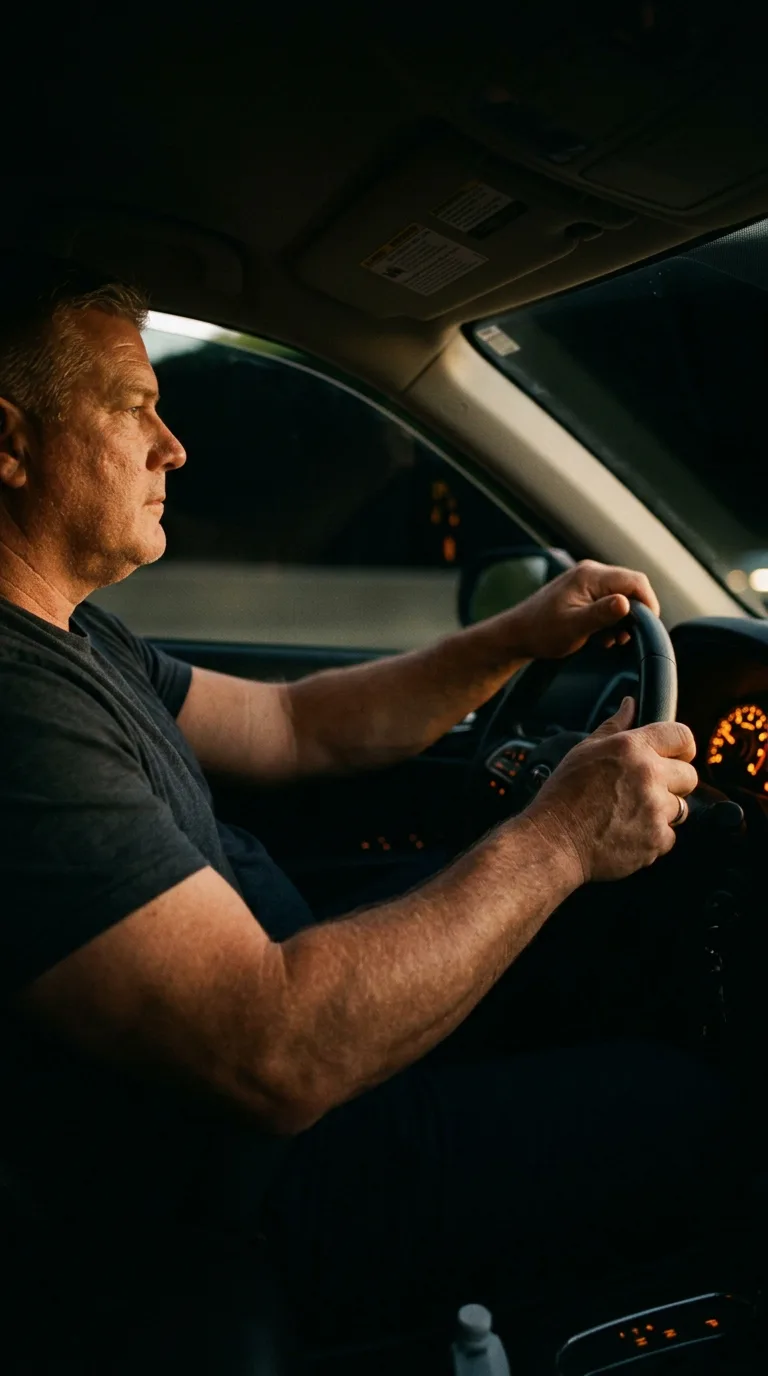
Rarest thing about him: A tremor in the hands — common, 1 in 79
Season 1seed 1021447078 · engine v11
Character card
lineage 5OR92V
His body-swap story
@declan.michael.farrow, wearing Casey Lindqvist, rolled the wheel on and woke up as Richard Allen Tolliver, spent under a minute in him, then spun the wheel and woke up as Victor Hiroshi Nakamura
You are standing at a flat-top grill in Phoenix, in the middle of the afternoon, in a body that is twenty-three years old and five-foot-three and has been yours for eight minutes. Casey Lindqvist. The chinstrap itches. A ticket printer chatters. Someone calls for two over easy, and your thumb is already on the site, on the wheel, in the heat, because he works. He works fine. The knees don't hurt and the burns are small. It is not him. You stood in the walk-in for a second with the cold on your face and understood that you wanted to be heavier, older, somebody with a house and a long evening ahead. Something with a ring on it. You pay. You spin. The grill noise drops out like a plug pulled.
Dark. Road. The hum of tires comes up through the seat and into your spine. Your hands are on a wheel at ten and two, and the dash glow lies orange on the knuckles. The car has drifted a foot toward the line, and you pull it straight in one smooth motion, because the hands know how. Then they let go. Both come off the wheel and settle lower and wider, and you, not he, put the turn signal on for an exit that is not his. The tick of it is loud.
The body is heavy and broad. Weight sits low in the belly and the thighs, and the belt holds it like a hand. The chest is thick, the forearms are corded and freckled, and the seat has shaped itself to him over years. The air conditioning blows on a jaw so smooth it feels wet. A tremor lives in the fingers, fine and constant, like an engine idling. You watch it in the dash light. It isn't fear. It's his.
The wheel is under your palms again, and its stitched leather gives you something. A kitchen with a yellow light over the sink. A woman's back at the counter, her hair pinned up, and a feeling in your chest like a held breath let out: home, the best of it. Then two small voices arguing over a cereal bowl, and a pride so plain it almost hurts the ribs.
The lanyard lies against your sternum with its plastic tag. Your thumb finds the edge and the day comes with it. A hotel lobby, carpet the color of weak tea, a regional buyer who kept checking his phone while Richard laid out numbers for forty minutes. He did not drink at the dinner after. He asked for water and the man laughed, and he laughed along, and the hands shook around the glass and he hid them under the tablecloth. Shame, small and old, like a stone in a shoe.
The shirt is cotton, soft from washing. This morning comes through the sleeves one at a time. Left arm first, the way he has always done it. The pinch of the cuff over the wedding band, which he turned twice with his thumb out of habit. The jacket on the hanger by the door. His wife said something about the gutters. He said Saturday. It was a promise, a small one, kept more often than not.
Under that, quieter and further down, something he never told anyone. A woman, recent, a coffee that went on too long in a parking lot, her laugh, his own hand almost reaching across a table. Then church the Sunday after, the hymn number on the board, his voice loud and cracked on the second verse as if volume could pay for something. He did not reach. He wanted to. It's all in there, and it isn't yours.
Twenty-five thousand put away, maybe more, in an account he checks the way other men touch a pocket. Three miles. The knees ache faintly. The back wants out of the seat.
You lift your right hand off your thigh and turn it over. The palm is wide and creased and trembling. The ring catches the glow. Then you look up into the dark windshield, at the face reflected there, gray at the temples, brown-eyed, a stranger's.
"Well," you say, in a voice lower than any you have owned. "Hello, Richard."
The signal ticks. The exit sign comes up green. You do not know how long you get to keep him.