Ricardo Fonseca
Fictional. Generated by AI — not a real person, and no likeness of one is intended.
61, social worker in Philadelphia · rolled by @colin.tarwater · card — no film
History
who has worn him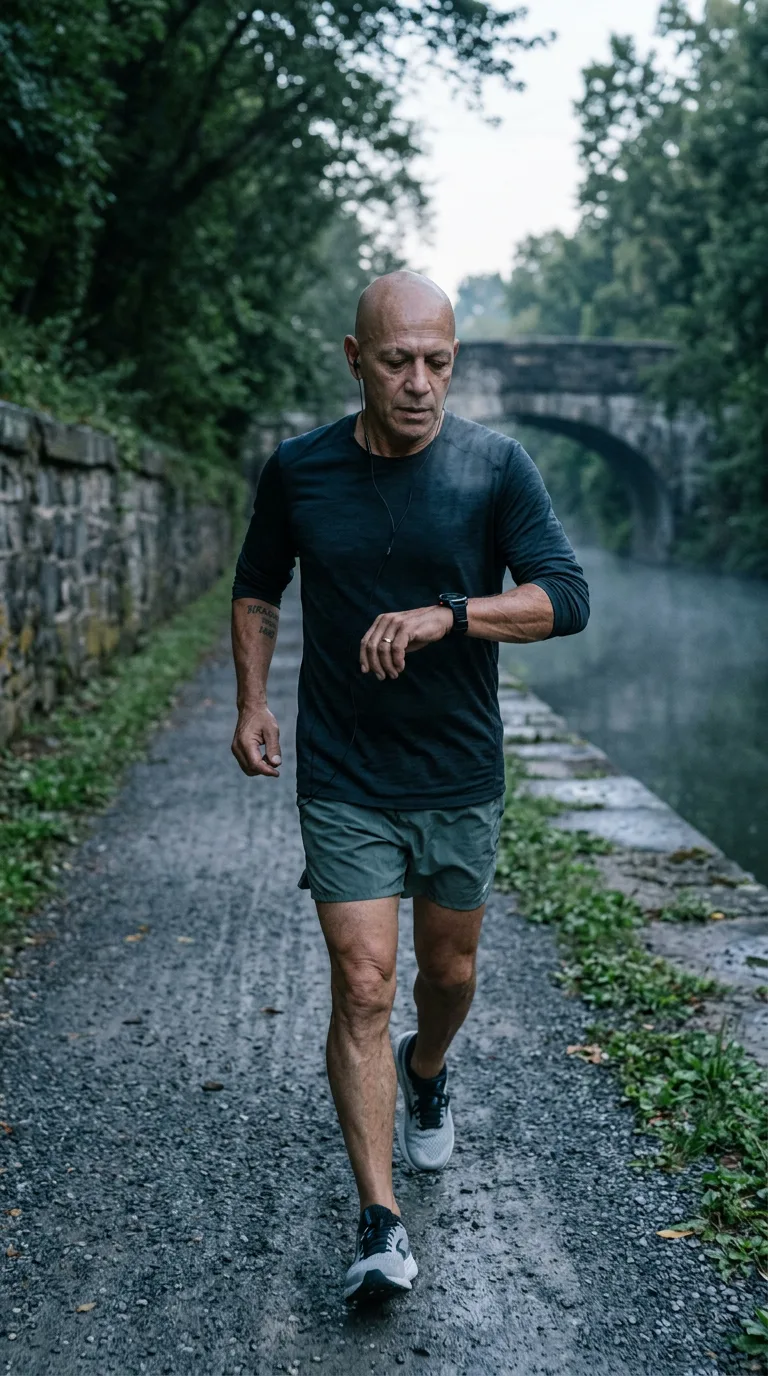
Rarest thing about him: Bisexual — legendary, 1 in 100
Season 0seed 595231592 · engine v10
Character card
lineage COEU7T
His body-swap story
@colin.tarwater, wearing Wesley Karam, rolled the wheel on and woke up as Ricardo Fonseca, spent 1 minute in him, then spun the wheel and woke up as Liam Osterhoff
—
The wire won't strip. You have watched Wesley Karam do this ten thousand times, muscle memory so deep it should be automatic, and your borrowed hands fumble it like a man wearing gloves two sizes too big. Blond hair sticks to your forehead. Hazel eyes water in the bad light of a job site trailer at some hour before real dawn. Four minutes and already you know: this one you cannot drive. Twenty-three years old and his body knows current, knows a panel box the way a tongue knows the roof of a mouth, and none of it will pass through you. It's not fear. It's rejection, like a transplant. You set down the pliers with his hands — hands that ache faintly, a beauty mark on the wrist catching the trailer light — and you think, not this, and you reach for the site with the decision already made, the way you always do, boredom arriving like relief.
The wheel spins somewhere that isn't anywhere. Then you're mid-stride on gravel, and the stride breaks.
Two steps of nothing landing, and then the run resumes on the other foot. A watch buzzes against your wrist — his wrist — clocking a split that was never yours to run. Earbuds feed you a woman's voice reading a mile time into a skull that isn't shaped like the one you left. Fog off a canal. Cold going into lungs that are bigger than the ones you just had, that pull harder, that have thirty-eight more years of use in them and don't feel it yet. Your feet — his feet — know this gravel. That's the first thing that comes through, before any picture: the feet already understand where the soft shoulder gives way to stone, adjusting half an inch without asking you.
Then the shirt. Long-sleeved, damp at the small of the back, and touching it gives you a closet in a rowhouse, gray light through a window with a crack in the corner pane, his hand — thick-fingered, a wedding band cold against the fabric — pulling this exact shirt off a hook at an hour when Marisol was still asleep with one arm thrown over where he'd been. He'd dressed in the dark so as not to wake her, the way he's dressed in that dark for eleven years of these runs, ever since the cardiologist used the word borderline and his mother's diabetes came due like a note he'd been avoiding. He runs not for his heart exactly. For his knees against the sidewalk playing dominoes with his father. For the wedding, whichever kid's wedding comes next — Danny's already gone and married, but Elena's getting there, and the baby, Marisol Jr., they call her Mari, isn't a baby anymore either.
The tattoo on the arm gives you more, sleeve pushed to the elbow for the run: RICARDO — no, not his own name, his father's, Ricardo Sr., and a date that is a death date, ink he got at forty-nine sitting in a shop on Ninth Street crying without any shame about it at all, because that's a thing he learned late, that a grown man can cry in a chair with a stranger's needle in his arm and it doesn't cost him anything.
The watch face gives you the job — not directly, but adjacent, a muscle-memory readiness, the particular alert stillness of a man who has stood on a lot of walkways waiting to be buzzed in, holding a folder against his hip, listening for a child crying on the other side of a door before anyone answers it. Twenty-nine years of that. He has seen the worst afternoons in this city and gone home and eaten dinner anyway, because Marisol used to ask him to leave it at the door and eventually he learned how.
Marisol. The name comes with weight, with argument, with the specific gravity of thirty years married to the same woman, three kids raised, a fourth almost-adopted niece who just calls him Tío and means Dad. And under that, quieter, not spoken of at dinner: Denise. College. A year that still sits warm and separate in him, not a wound, not a secret exactly, just a room in the house nobody uses, the door shut but not locked. He does not compare them. He has never let himself compare them.
Legs eating the path. Sixty-one years old and the body is honest about it in ways it wasn't at forty — a stiffness low in the right hip on the first quarter mile that works itself out by the second, blood sugar he is careful about before these runs, a granola bar always in the car for after. Strong through the chest and shoulders in a way that has nothing to do with vanity and everything to do with showing up at a gym three mornings a week for twenty years because his father died fat and slow and he decided, quietly, not to. A cigar on the porch on Sundays only. No drink at all, not since Danny was small, a choice made once and kept without drama ever since.
The pen — no pen here, but the ghost of the click is in the fingers anyway, an idle tic they perform on nothing, on air, tapping his own thigh mid-stride.
You look down mid-motion at hands you have never seen belong to you: broad, brown, a plain band on the left one, a faded ink name on the forearm catching the gray dawn light. They are not shaking. They are a stranger's hands doing exactly what they were built to do, running.
You say it out loud, to no one, to the fog over the water, in his voice, which surprises you every time it isn't yours:
"Okay. Okay — that's better."
And somewhere far off and unscheduled, the wheel is still there, waiting, and you don't know yet if this is the one you keep.