Raymond Yoshida
Fictional. Generated by AI — not a real person, and no likeness of one is intended.
55, landscaper in Rural Texas · rolled by @connor.waskiewicz · card — no film
History
who has worn him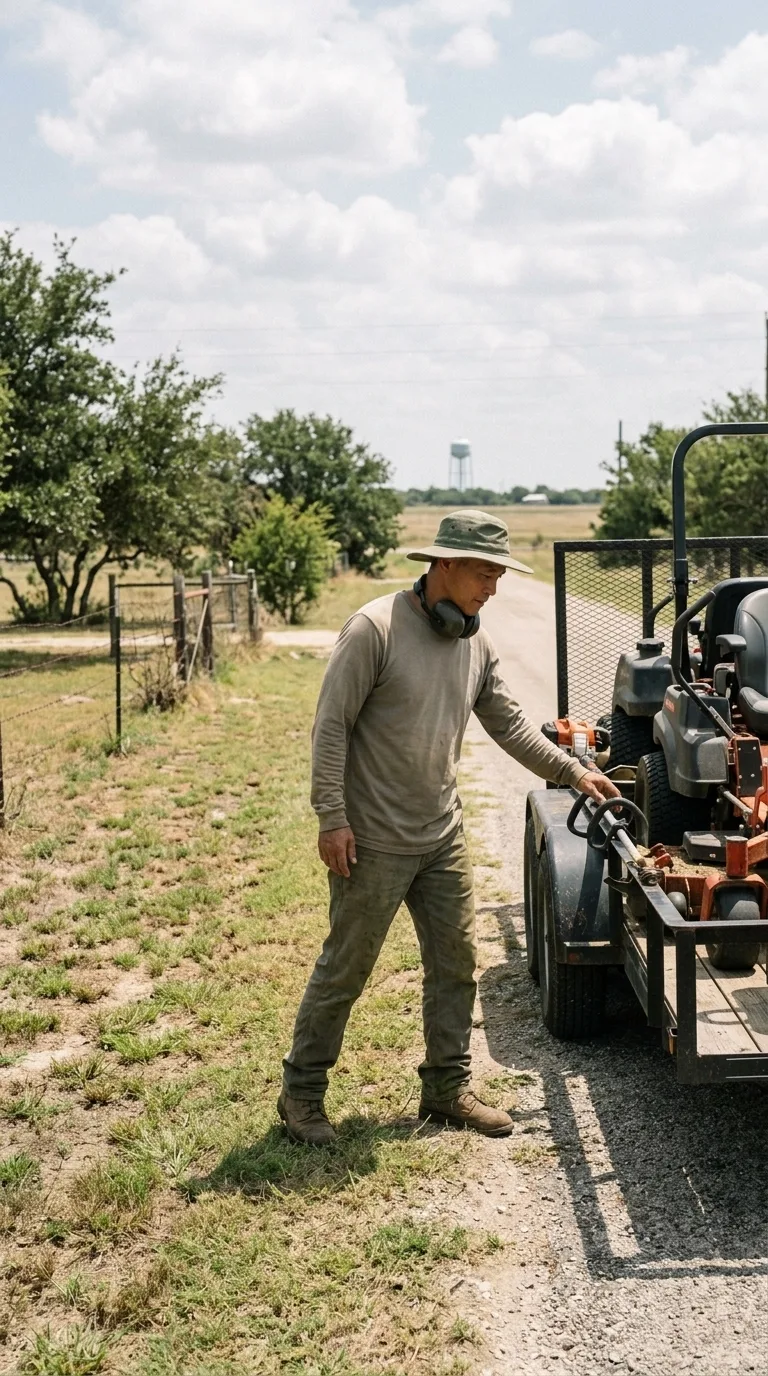
Rarest thing about him: Covers the gray — common, 1 in 34
Season 1seed 948274374 · engine v11
Character card
lineage 2NZHHJ
His body-swap story
@connor.waskiewicz, wearing Gordon Haskell, rolled the wheel on and woke up as Raymond Yoshida, spent under a minute in him, then spun the wheel and woke up as Jamal Fenwick
Gordon Haskell's hands are on a lathe handle when I decide, and they are already tired of me. Fifty-seven years of cold coolant and a burn scar that tugs whenever I reach. His knees ache in the damp. The shop smells of cutting oil and hot metal, and I have been him for less than a minute, and already I know every drawer of him. The tolerances. The sad little radio. There is nothing in him I haven't touched. Nothing in him I can't do. That is the trouble. I stand at the machine and it is only a machine. I want to be someone I can't predict. I let go of the handle and open the page.
The wheel turns. It does not ask.
Heat first. Then the weight of a trailer gate in my right hand, the steel warm as a skillet. I am standing on gravel at the edge of a dry lawn, and my wrist has just done something wrong, the latch thrown a half-second early, and I correct it. Slowly. Right. Then again, ten times, each one looked at.
His hands do not need the looking. I do it for him.
The hat brim shades my eyes. Earmuffs ride my collarbones, the plastic sweat-slick. Beyond the barbed wire a water tower stands white against the cloud, and cicadas saw at the heat.
The shirt first. Long sleeves, gray with old work, cotton gone soft as skin. It gives me a morning: his thumb pushing through the cuff in a dark kitchen, a woman's voice behind him asking if he took the pills. He says yes. He didn't. He says it gently. Then the cuffs, tugged down against the sun, because his arms burned once, years ago, and never forgave him.
The trousers, stiff with green at the knee. Belt notch worn through. He stood on one leg to pull them on and the hip complained, and he laughed at it, fifty-five, the body keeping its receipts. The boots lace in my memory with a double knot he learned from his father, who knelt in a doorway and tied them for him in another country, in another language, with a hand like a rope.
Then the ring. My left thumb is already turning it, around and around against the finger, a habit older than I am. It brings her whole. Not the wife now, the first one: a courthouse, rain on the glass, both of them too young to be afraid. The divorce, quiet, a table with two pens. Two children on a back seat, one asleep against the other. Years later the second wedding, smaller, and his grown daughter fixing his collar and saying, Dad, hold still. The ring is the same ring. He moved it, somehow, from loss to loss to this. I stand in the sun feeling what it cost him to keep it plain.
Under it all the body is honest. Strong shoulders, a back that has been bent over mowers for decades and speaks of it now, a low ache over the kidneys. Lungs clean, never smoked. A Saturday headache from the last big night. Palms like leather. He has under five thousand dollars to his name and carries himself like a man who owns the ground.
I lift my hand. Turn it over. Palm, knuckles, the pale band where the ring sits.
I look up, past the trailer, into whatever is looking back.
"Well," I say, in a voice that is not mine yet. "Let's see how long you last."
I do not know whether that is for him, or for me.