Raymond Kettleman
Fictional. Generated by AI — not a real person, and no likeness of one is intended.
64, retired in Pittsburgh · rolled by @colin.tarwater · card — no film
History
who has worn him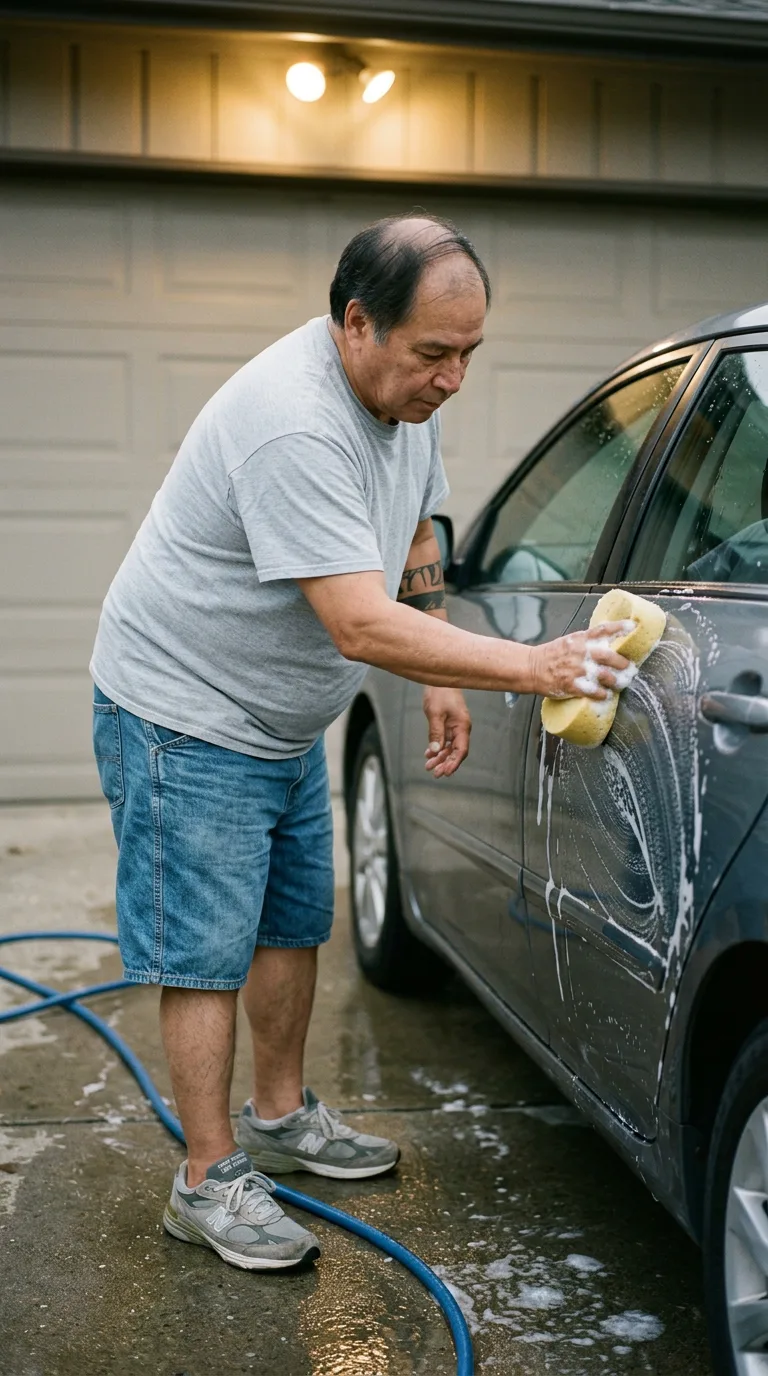
Rarest thing about him: Mixed — rare, 1 in 26
Season 0seed 1934598958 · engine v10
Character card
lineage COEU7T
His body-swap story
@colin.tarwater, wearing Sean Lachlan Malick, rolled the wheel on and woke up as Raymond Kettleman, spent 12 hours in him, then spun the wheel and woke up as Todd Warkentin
Sean Malick's hands are shaking on the ladder rail, and they've been shaking for nineteen years, longer than this body has existed, because that's just what these hands do — a tremor that has nothing to do with fear and everything to do with whatever wiring got handed out when this one was built. Below the ladder, the container yard is dead quiet, dead dark, three in the morning on a Saturday, and everyone at the site is asleep except the crane lights and you, standing in a nineteen-year-old longshoreman's body less than a minute after you first opened his eyes. You spun this one only once. You haven't even learned to like the height yet. His shoulders ache in a way that isn't yours, from a shift that isn't yours, and something in you — the part that has been thirty-eight other men and is already bored being the newest — doesn't want to learn to like it. You want to know what a shift like that feels like after forty years of it instead of one night. You want to know what happens to a body when the tremor's had decades to set into it, when the freckles have had sixty years of weather, when the wedding band has actually meant something long enough to leave a mark. You climb down off nothing in particular, walk to nowhere in particular, and you are already gone before Sean Malick's next breath, off toward a phone you don't own, toward the wheel.
You come up mid-motion, bent at the waist, and the first thing that isn't Sean Malick is the belly — it gets in the way of the reach, meets the car door before your arm fully extends, and you correct without thinking because the body already knows how far it can lean. Sponge in your right hand, yellow, soap sliding down the gray panel in the arc it was already sliding in, and your left hand — a wedding band on it, plain, worn thin on the inside edge though you can't feel that yet — braces against your own thigh. Late light, or early light, coming off the garage under a bulb that's been left on since it was dark enough to need it. The hose runs behind your feet, water finding the low seam in the concrete same as always. Your grip changes on the sponge without your permission: thumb tucks under, wrist starts turning in small tight circles instead of the wide sweep, and behind you, for the first time all morning, the swirl marks in the soap stop laying themselves down like a signature. Somewhere under the new weight of you, a stomach you didn't bring with you sends up a small hot flare of acid, patient, familiar, already half-ignored.
The polo shirt is the first thing that opens — not this one, the one from the portrait, but close enough in the muscle memory of getting dressed that it comes anyway: a low, comfortable roll of the shoulders that means he has never once liked a shirt tight across the belly, has bought them one size up for fifteen years and told the girl at Kohl's it's for "room to move," and she has laughed the same laugh at that joke maybe four times now like she doesn't remember the last three. Then the shorts, denim, worn soft at the pocket edge where his phone rides — and the phone, when you find it in your own back pocket without meaning to check, brings his daughter's face up on the lock screen, nineteen, laughing at something out of frame, and behind that a flood you didn't ask for: her at seven on these same porch steps refusing to wear shoes, her at twenty-two calling from Ohio to say she got the job, don't tell your mother yet I want to. His son somewhere in there too, quieter, a photo from a hunting trip nobody talks about because it went badly and nobody died but somebody almost did and it was Ray's fault, a little, the gun stayed loaded when it shouldn't have, and that one comes with a taste like copper that isn't the acid, that's just shame, decades old and never spent.
The sneakers on your feet, New Balance, gray, bring back a podiatrist's office and a lecture about the knees you get once a year now like a birthday you didn't ask for. The tattoo on your forearm — black tribal lines, faded at the edges into the freckled skin — comes back loudest of all, because it's the one thing on this body that was a decision instead of a habit: nineteen years old, a shop in Homestead that isn't there anymore, a version of himself that thought he'd get more of them and never did, that thought a lot of things he never did. There was a woman then. Not the wife — before the wife, the one the ring doesn't cover, the one who left for Arizona in 1981 and who he thinks about still, on nights the wife doesn't know are about anyone, in a way that has nothing to do with wanting her back and everything to do with wanting to have been someone who kept her. The wife herself comes through the ring, warm and plain and unglamorous: thirty-one years, a woman asleep right now in a house behind you with the porch light left on for a husband who is, this particular Saturday, thirty years too early or fourteen hours too late for anyone's understanding but yours. He should be having his coffee on the porch about now, mid-morning, the day-in-the-life of a retired man. Instead the hose is running and the light over the garage is doing the work the sun should be doing, and none of that has ever struck him as strange, because in his life, right now, at this exact moment, it is not strange at all — it is simply Saturday, and the car is dirty, and he is a man who washes his car on Saturdays whether or not anyone is watching, whether or not it's the right hour for it in a sequence you don't get to see the rest of.
You straighten up. The sponge sits in your hand, spent, dripping foam onto white sneakers that have gone gray at the toe. You turn your right hand over slowly, palm up, freckles disappearing into shadow, and watch the tremor come back into it now that it isn't holding anything — small, constant, a motor that never quite shuts off, sixty-four years old and none of it asked for and all of it, now, entirely yours. Behind you the water keeps running down the driveway toward the street.
"There you are," you say, to no one, to the hand, and you don't know yet if you mean it as a greeting or a warning.