Raymond Choi
Fictional. Generated by AI — not a real person, and no likeness of one is intended.
55, contractor in New York · rolled by @connor.waskiewicz · card — no film
History
who has worn him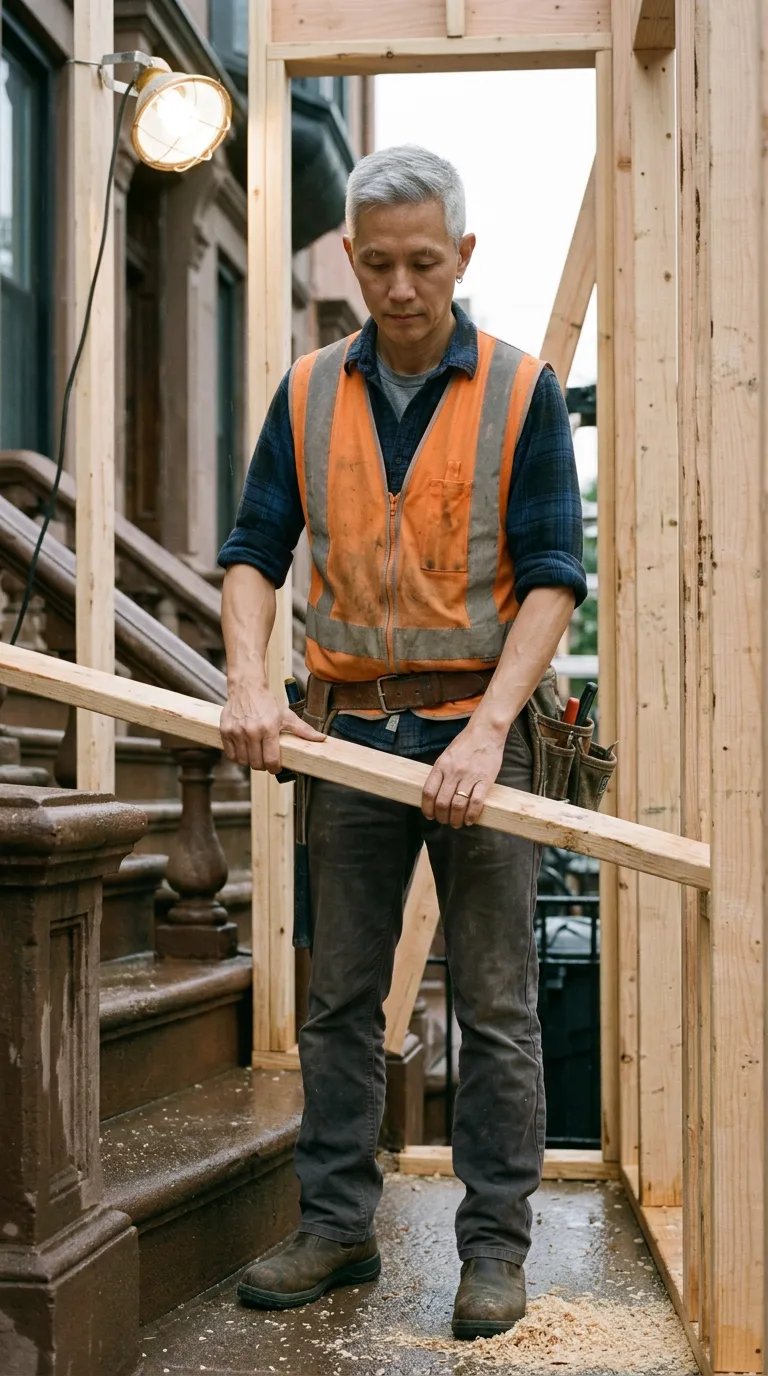
Rarest thing about him: Buddhist — common, 1 in 49
Season 1seed 627483274 · engine v11
Character card
lineage 2NZHHJ
His body-swap story
@connor.waskiewicz, wearing Julian Ordóñez, rolled the wheel on and woke up as Raymond Choi, spent under a minute in him, then spun the wheel and woke up as Samir Haddad
You are Julian Ordóñez for less than a minute, and already you are tired of his smallness. Five-five, moustache damp from the coffee, a clinic hallway that smells of dogs and bleach. A beagle is waiting on the table in room two. You stand in the supply closet with the phone against your chest and think: nothing is wrong with him. He has good knees. He has a soft voice the animals like. Something has sent you back anyway, a thing that happened the moment you stepped into him: the receptionist said "Doctor" and you did not know whose name to turn toward. You paid. You pressed the wheel. Julian's thumb is still on the glass when he is gone.
Now there is a board in your hands. Long, rough, pine, its grain dragging against your palms, a lean weight held level across a doorway of studs. Cold wet air and sawdust in your nose. You are halfway through a motion and the motion is wrong. Your hands slip a quarter inch off the mark, and you correct it slowly, deliberately, and then you check the next one, and the next, ten of them, as if the board might lie.
The vest is stiff with dust against your ribs, and the zipper's teeth press a line down your sternum. Touching it opens something that is not yours. Ray, five in the morning, the vest on the hook by the door, his wife Soo-jin asleep with one arm flung over his pillow. He zips it up in the dark kitchen, and the zip sound is a thing he has done so often it is a kind of prayer. A flannel next, sleeves rolled twice at the forearm, because his daughter once told him he looked like a man who was about to fight someone when he left them down. He rolled them. He has rolled them ever since.
The belt is heavy on your hip. The hammer's handle is worn into a groove by a thumb that is now yours. A tape measure clicks against your leg. Through the leather comes a whole afternoon: a client in a Park Slope kitchen who would not pay, Ray standing very still, saying nothing, letting the silence do the work until the check came. Under that, older, his father's shop in Flushing, a boy sweeping curls of wood and being told that hurrying is how you lose a finger. A Buddhist's patience, learned the hard way, worn like the shirt.
Your body speaks for itself. Fifty-five and thin as a rail, hips sore from the wet concrete, a pull in the right shoulder when you lift. Lean strength, the kind that does not show and does not quit. The scar through your eyebrow itches, and your fingers go to it, and a memory of a falling ladder and a ringing, bright blow comes with the touch, though not the fear. The small hoop in your left ear is cold. The wedding band on your left hand has been turned so many times it has worn a pale groove in the skin, and when your thumb finds it you feel, wholly, a woman's laugh in a doorway. Not yours. You keep it anyway.
The wet street breathes beyond the framing. A sodium lamp hums on its cord. Boots grind sawdust into slick stone.
You set the board down. You lift your hand and turn it over, palm and knuckle, the nails cracked, the ring catching light. It does what you tell it. Then you look up, straight out.
"Hello, Ray," you say, and his voice is lower than Julian's, gravel under it.
Nobody answers. The lamp hums. You wonder how long this lasts, whether the wanting comes back by dinner or by the next breath, and your thumb is already turning the ring.