Ray Salcido
Fictional. Generated by AI — not a real person, and no likeness of one is intended.
61, sales rep in Atlanta · rolled by @ray.salcido · card — no film
History
who has worn him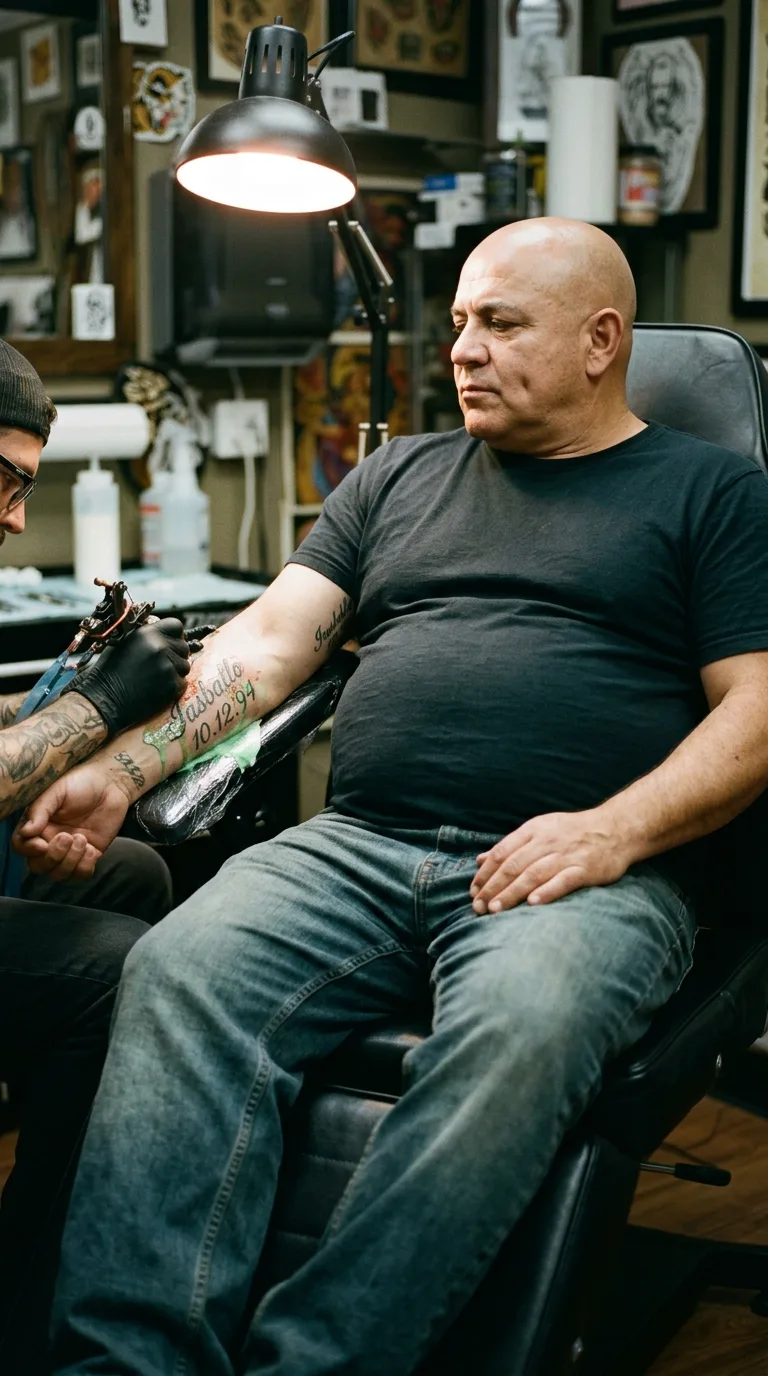
Rarest thing about him: Mixed — rare, 1 in 26
Season 0seed 261535331 · engine v10
Character card
lineage CMW9DP
His body-swap story
@ray.salcido rolled the wheel on and woke up as Ray Salcido — their first
The site loads slow on a dull Tuesday afternoon, the kind where you've already scrolled past everything twice. Vessel.cards. You've read about things like this in forum threads at two in the morning for years — never believed one would actually work, never had the money and the moment line up until now. There's a wheel on the screen, gaudy as a slot machine, and underneath it: *you pay, you spin, you go.* You pay. You spin.
There is no falling, no tunnel, no rush of wind. There is a chair under a heavy body, a needle stuttering against skin, and a forearm that was flinching a half-second ago and now isn't.
The tattoo gun is still buzzing. The artist doesn't look up — just keeps working the line, green soap slick under the black. You feel the weight of this body first, low and settled, a gut that presses against a black t-shirt, thighs spread wide on cracked leather. The arm on the armrest is heavier than any arm you've imagined having. The pain of the needle registers, small and far off, like it's being reported to you by someone else's nerves. You watch it dig into skin like it's happening to furniture, because it is, because that's how he's already decided to survive it, and that decision came with the body.
Then the shirt — that's the first door. Cotton, worn thin under the arms, and it opens into a closet in a cul-doak house with beige carpet, socks balled by a hamper, a hand — his hand — buttoning this exact shirt three hours ago while a coffee maker gurgled somewhere else in the house. Alone. Always dressing alone lately. The ex-wife's name comes with that, a name you don't have yet but the shirt does: it was ironed the way she used to iron it, out of habit more than love, years after love left the building.
The jeans against the vinyl chair give you the drive over — a Tuesday morning off work, a rare morning without a lanyard, without a hotel lobby full of men half his age pitching accounts he's been closing since before they had teeth. Sales rep, twenty-some years, good at the parts that wear you down slow: flights, handshakes, small talk with men who don't remember his name until he's useful to them. He is, by any account, doing fine. Better than fine. The house is paid off. The number in the account would surprise people who only see the lanyard.
The chair's leather against his back brings the years of it — the low ache that lives in the lumbar now, that he stretches out at gate B14 in every airport in the Southeast, that no mattress has ever quite solved. Chronic, patient, familiar as weather.
And the arm itself — his own hand resting on his knee, the older tattoo already there on the inner forearm, script and a date, *Isabella 10.12.94.* The needle now is finishing a second line beneath it, another name coaxed out of skin he's carried sixty-one years in. He doesn't drink much. Never smoked. Church on the Sundays he's not traveling, the kind of faith worn quiet, like a coat you keep by the door instead of on your back. He touches his own face without noticing, a thumb along his jaw, and the gesture arrives in you like a tic inherited rather than learned — dimples pressing in even though nothing here is funny, dimples that have been there, unbothered, through every deal he's lost and every year alone in that house.
Somewhere behind you — behind him — a name from a long time back, gone now, and one still here, needled into his skin twice over so it never has to be trusted to memory alone.
The gun lifts. The artist wipes the line, says something about almost done, and you feel your own new hand — his hand — lying heavy and open on his knee. You lift it, turn it over slowly, like checking it survived something. Dimples show without your trying.
You look up, into the shop's dim lamp light, past the artist's shoulder, and say, quiet, mostly to yourself:
"Whose turn is it now."