Ray Contreras
Fictional. Generated by AI — not a real person, and no likeness of one is intended.
43, manager (mid-level) in Las Vegas · rolled by @colin.hasbrook · card — no film
History
who has worn him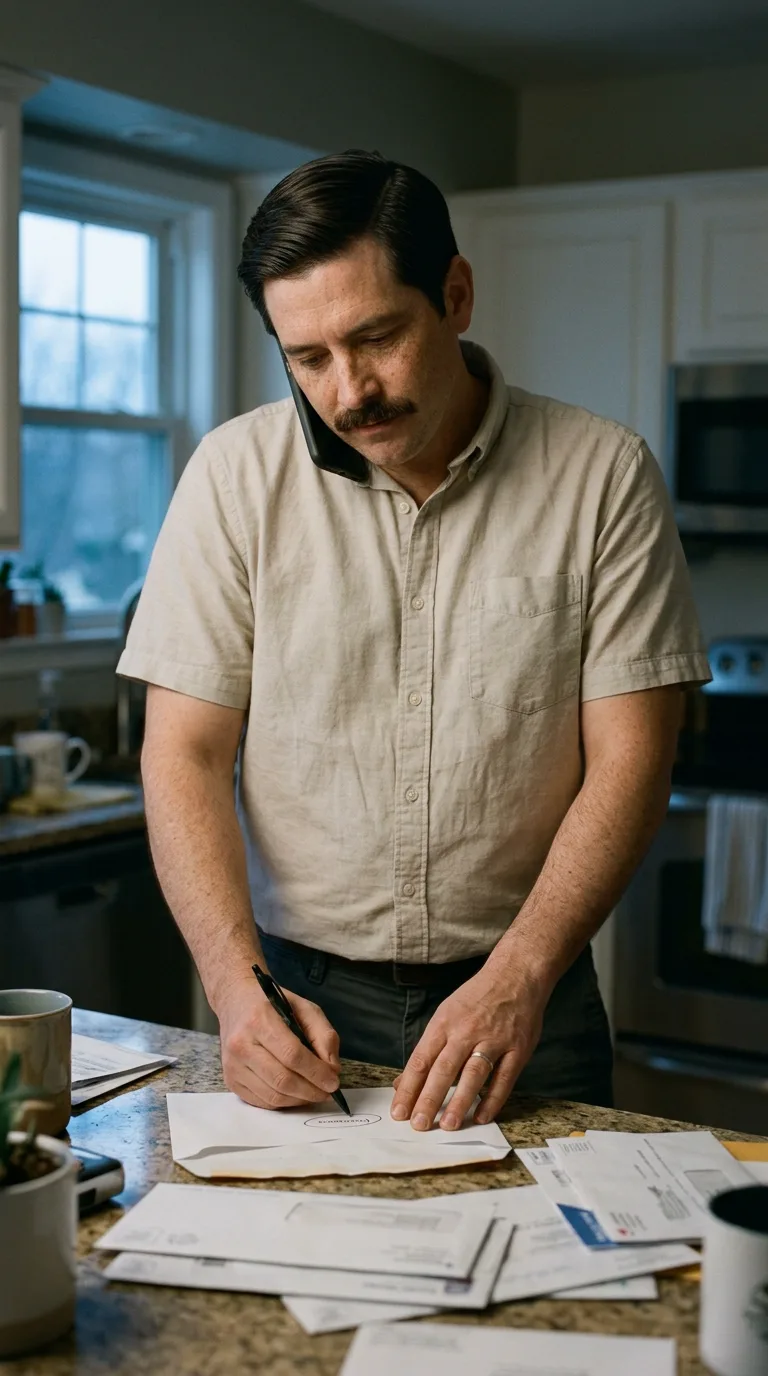
Rarest thing about him: On hold with someone — common, 1 in 70
Season 1seed 425926867 · engine v11
Character card
lineage 2NZHHJ
His body-swap story
@colin.hasbrook, wearing Marcus Enriquez, rolled the wheel on and woke up as Ray Contreras, spent under a minute in him, then spun the wheel and woke up as Danny Reyes
---
You are standing behind a register that isn't yours, in a body that isn't yours either, and the fluorescent light over lane six is buzzing in a way that has annoyed you for exactly four minutes now. Marcus Enriquez's feet ache already, flat in cheap black sneakers, and his back has a permanent hunch to it from bagging groceries at a slouch. Twenty-six years old and it feels like nothing, like a coat that doesn't fit through the shoulders. You spun for a birthmark once, on a whim, and got this — a kid clocking in at a Houston Fiesta Mart with a name tag that says MARCOS because nobody in three years bothered to fix it. There is a customer waiting for change. You do not care. Four minutes was enough to know you don't want the rest of his shift, his double shift, his life. You reach into his pocket, past his phone, and thumb open the browser you bookmarked seven hundred and sixty times. The wheel loads before the change even hits the counter.
You spin.
The hold music loops back to its first bar — a synthesized trumpet doing the same eight notes for what must be the ninetieth time — and your shoulder, which a second ago belonged to somebody else entirely, drops the phone into your hand mid-loop, like you'd been about to do that anyway. A pen is in your other hand. It has stopped on the second digit of a long reference number written in blue ink on the back of an envelope, and it does not start again. You are standing at a kitchen counter. There is a window to your left with a blue predawn nothing behind it, no sun yet, and a coffee mug sweating a ring into the granite. Your hips ache in a way that has nothing to do with age and everything to do with having stood a very long time in shoes not built for it. The phone is warm against your ear. Someone very far away has been telling you, on a loop, that your call is important to them.
The shirt is what opens first — short-sleeved, tan, the collar starched enough to still hold its fold even slouched against your neck — and it comes with the specific, ordinary satisfaction of a man who buttoned it top-down forty minutes ago in a dark bedroom so as not to wake anyone, working by the nightlight in the hall, his wife's shape unmoving under the comforter, one of the kids' door cracked with a stripe of glow from a plug-in lamp. Ray Contreras dressed by feel this morning, has dressed by feel most mornings for nineteen years of shift work that used to be all-night and is now, since the promotion, a five a.m. drive to be at the casino by the time the day managers need someone who already knows where the bodies are buried. He buttoned the shirt, hooked his belt through last night's loops without checking, and pocketed the badge that swings now against your hip on its clip, ACME embroidered small over the breast though nobody at the property calls it that out loud, it's just the company, it's just the job, seventeen years of the job.
The envelope under your hand is a flash all its own — a collections notice, not urgent, a AAA renewal wedged behind three days of mail he hasn't sorted, and the reference number he's circling is for the health insurer, a claim from his daughter's dentist that got kicked back for a coding error, and he is annoyed in the specific quiet way of a man who has done this dance eleven times this year with three kids' worth of orthodontists and pediatricians and one stubborn ear infection that wouldn't clear. The hold music is for the insurance company. He called before the house was awake on purpose, so he could do this without anyone needing anything from him for six minutes, so he could stand here with his coffee going cold and his pen moving and just be a man handling something, competently, the way he handles the floor at work — the glass-walled office with the door he leaves open on principle, because his own manager kept hers shut and he swore he'd never be that guy, and now dealers and cage cashiers and pit clerks lean in all day with problems he mostly already knows the answer to before they finish the sentence.
The moustache is on your face like it has always been there, and it has — since he was twenty-eight and it came in fuller than the rest of him ever would, and his wife told him it made him look like somebody's uncle and married him anyway. The wedding band on your left hand is thin and it has a groove worn shiny on the underside from turning it, a habit he does not know he has, that his wife pointed out once and he denied. Freckles map his forearm where the sleeve ends, and up onto his nose and cheeks, pale ones, the kind that came from a childhood in a sun he doesn't get much of anymore working the graveyard side of a windowless building. His body at forty-three carries a low ache in the right knee from twenty years of standing on casino carpet that looks softer than it is, and a strength in the forearms from nothing more dramatic than hauling paperwork and pushing a hand truck of chip trays when the cage was short-staffed. He is, underneath everything, a careful man. Three kids upstairs. A wife who married the moustache. A job he's decent at and mostly doesn't mind, in a city that runs at every hour and asked him to run with it.
You look down at the hand holding the pen — his hand, olive-brown and freckled and steady in a way Marcos Enriquez's never got the chance to be — and you turn it over slowly, watching the light from the window catch the wedding band, watching it be a hand that has signed permission slips and dealt with vendors and touched a woman's shoulder in the dark without waking her.
Then you lift your eyes off it, off the ring, up toward wherever the lens would be if there were one, and you say, quiet, still holding the dead phone against your ear like the hold music might start meaning something again:
"Okay. Let's see what you're worth."