Ray Cisneros
Fictional. Generated by AI — not a real person, and no likeness of one is intended.
37, line cook in El Paso · rolled by @colin.hasbrook · card — no film
History
who has worn him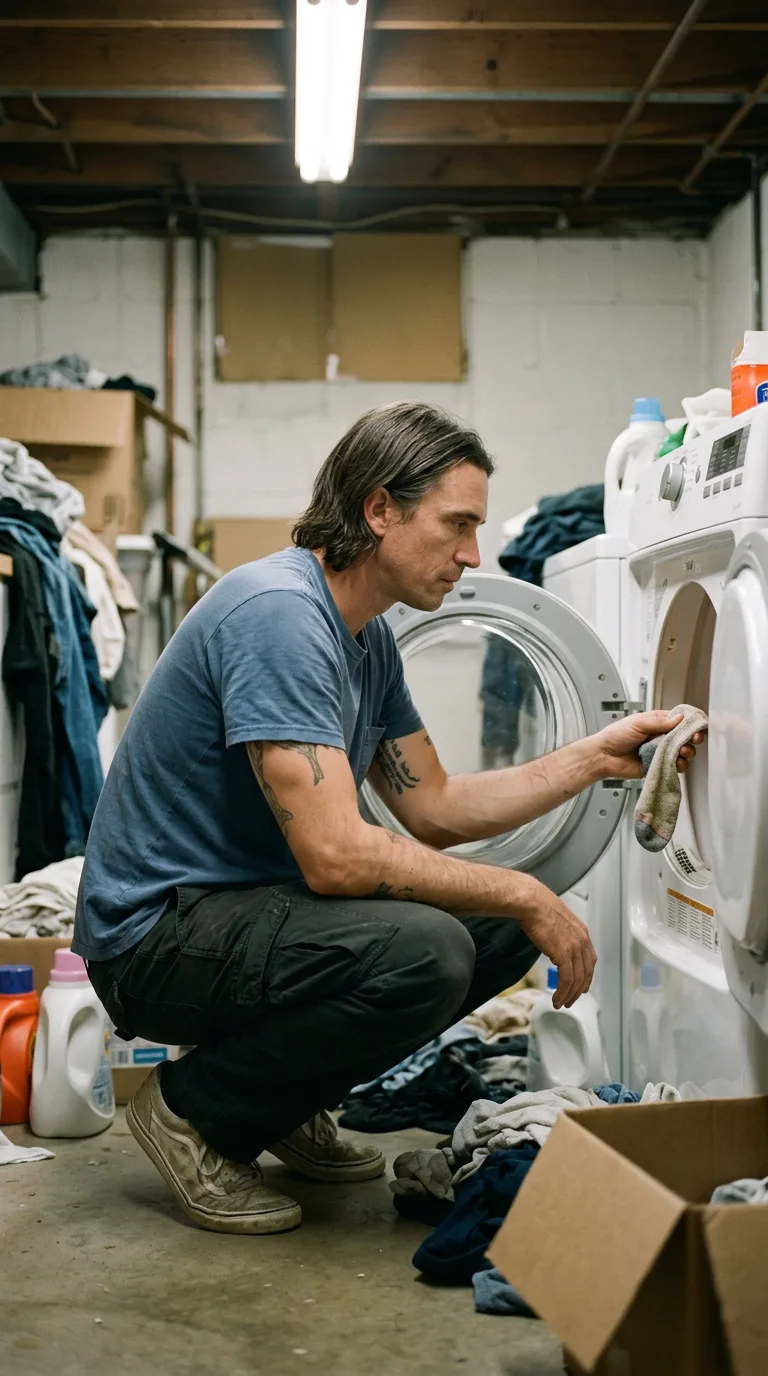
Rarest thing about him: A pack a day — rare, 1 in 17
Season 0seed 1723634506 · engine v10
Character card
lineage 2NZHHJ
His body-swap story
@colin.hasbrook, wearing Walter Prusinski, rolled the wheel on and woke up as Ray Cisneros, spent under a minute in him, then spun the wheel and woke up as Emilio Restrepo
Walter Prusinski has been standing in the break room supply closet for forty seconds, holding a box of gloves he does not need, when he decides.
It is not the shift. The shift is fine, ordinary, a Monday of vitals and call lights. It is the hands. Walter's hands, which are your hands now, fifty-five years of them, the knuckles gone thick, a faint tremor when you hold them still too long that the doctor called nothing to worry about and you have decided to worry about anyway. You have been him less than a minute and already you know the tremor, the ache behind the left knee on stairs, the particular fatigue of a body that has given thirty years to other people's worst days. It works. It is not what you want. You have eighty-six men in you already and none of them have this ache, and today, for reasons you would not say out loud even to yourself, that is unbearable in a way it wasn't yesterday.
You set the gloves down. You take out your phone, and vessel.cards loads the way it always does, patient, ordinary, a wheel on a page like a raffle nobody else can see. You pay. You spin.
—
The dryer door is warm against your knuckles and there is a sock in your other hand, damp-heavy, and the fluorescent tube overhead is humming its one flat note, and you are crouched, and your knees do not ache. That is the first thing. No ache. You pull the load out in an armful, drop it into the basket at your feet, and your back does the motion before you tell it to — bend, lift, drop — thirty-seven years old and unbothered, and you stand up too fast out of old habit and nothing in you complains.
The basket is warm through your forearms. You start folding without deciding to, and your hands square a corner before you've had a single thought about it, fast, precise, a shirt collapsed into a rectangle in four moves, and you stand there holding it, faintly amazed at yourself in a way that isn't yours yet.
Then it starts coming in.
The shirt in your hands first — a work shirt, and just from the weight of the cotton across your palms you get a flash of a walk-in cooler, condensation on plastic wrap, a ticket rail with eleven chits hanging off it and your name for the shift being *behind*, *behind*, *hot behind* — and under that, longer, a whole morning: waking at five without an alarm because the body doesn't need one anymore, coffee black on the back step, the turquoise paint on the house catching the very first gray light before the sun turns it white. Chain-link fence ticking as it warms. A pack of cigarettes on the sill, one already gone by the time you're dressed.
The dressing comes back through the shirt's own sleeves, sequential, someone else's morning played back to you glove-first: the chef's shirt over the T-shirt, buttons that don't quite reach the collar right so you never close the top one, sleeves rolled twice because forearms burn on the flattop if you don't, the apron last, tied behind the back one-handed, a motion so old it isn't a memory so much as a reflex arriving with a memory stapled to it. You feel, distantly, the ghost of every burn that's ever landed on that forearm — small ones, dozens, the kind that stop being individual and become just texture, just skin that's been near enough fire long enough.
The basket under your palms gives you more — laundry as its own small ritual, done here in the basement because the unit upstairs quit two winters ago and nobody's fixed it, and you get the exact resentment of that, low-grade, permanent, filed next to a hundred other small resentments about the house that used to have someone else living in it too. A ring you don't feel on your hand because there isn't one anymore. A woman's laugh in a kitchen that isn't this kitchen. Two car seats, once, then one, then a schedule instead — Wednesdays, alternating weekends, a duffel bag that lives by the door half-packed at all times so leaving is never a production. Guilt shaped like a duffel bag. And past that, newer, lighter — someone who calls at the end of a shift just to hear the extractor fan still running behind your voice, who doesn't ask you to be anything you're not on a Tuesday.
Your fingers start drumming against the basket's rim, unbidden, the way they must do a hundred times a day — on a cutting board between orders, on a steering wheel at a red light, on a table across from a doctor who upped a dosage two years ago and hasn't had to since. Under the drumming, a low hum of something managed rather than gone: three a.m. some nights, staring at a ceiling for no reason the sun can point to. Mass on the Sundays he actually goes. A rosary somewhere in a truck's glovebox that hasn't been touched in months and still matters.
The smell of the room finishes it — detergent, concrete, the machine's hot exhaust — and gives you the whole cheap fluorescent hum of this basement as a place, boring, familiar, his, the last ordinary ten minutes before a shift that starts in an hour and will not stop until it's over.
You are standing in a body that does not hurt anywhere it shouldn't, folding a shirt with hands that already know exactly how, and something in you that has been fifty-five for months exhales all at once.
You look down at your hands — his hands, wide-knuckled but not thick with age, a callus riding the pad below the right forefinger from a knife handle held the same way ten thousand times — and you turn them over once, like you're checking they came with the rest of him.
You look up, into the basement light, and you say, to no one, "Better."