Ramón Figueroa
Fictional. Generated by AI — not a real person, and no likeness of one is intended.
52, lab technician in Philadelphia · rolled by @connor.waskiewicz · card — no film
History
who has worn him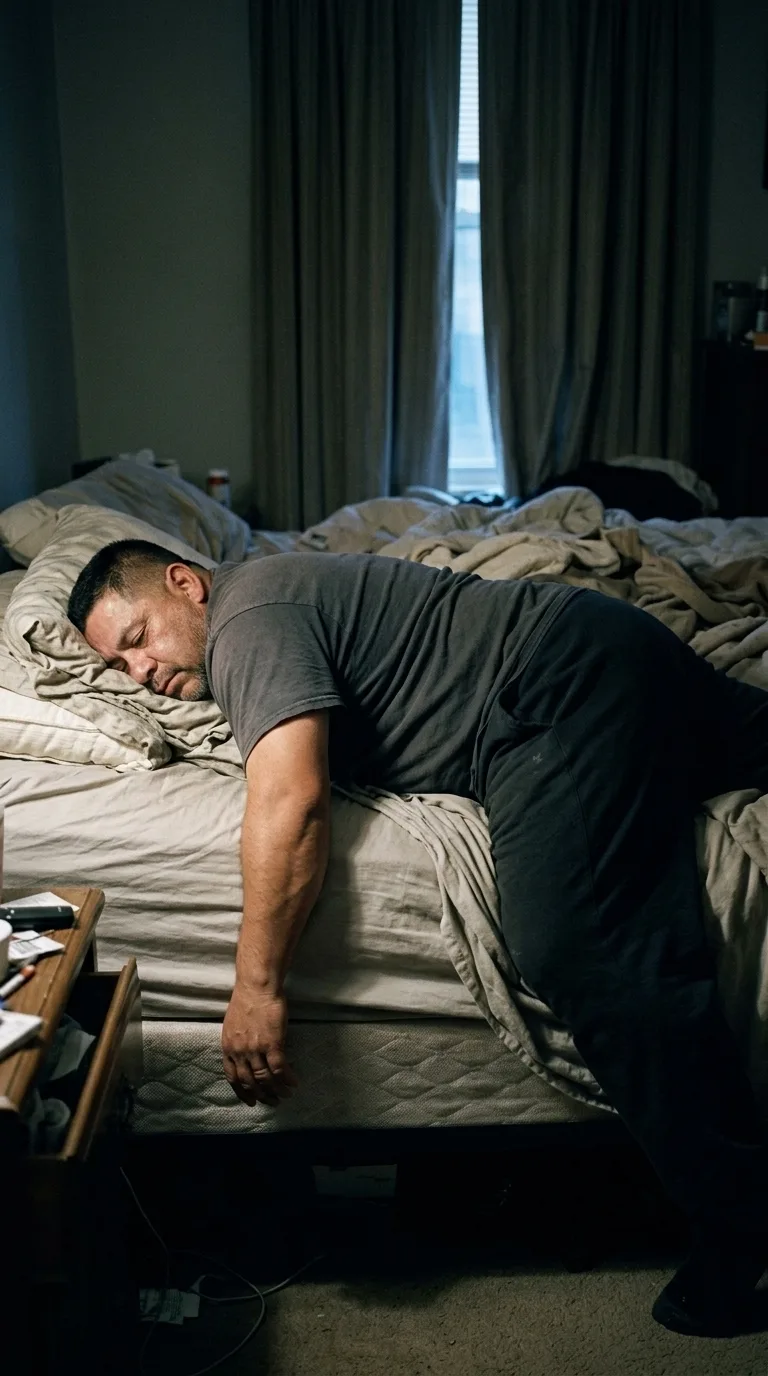
Rarest thing about him: Lab technician — common, 1 in 297
Season 1seed 103203695 · engine v11
Character card
lineage 2NZHHJ
His body-swap story
@connor.waskiewicz, wearing Leonard Baca, rolled the wheel on and woke up as Ramón Figueroa, spent under a minute in him, then spun the wheel and woke up as Walter Ishikawa
Leonard's body is still warm around you, and you are already leaving it.
It is the middle of the night in El Paso. The house is asleep. You are standing in a kitchen that belongs to a man who taught eighth-grade history, with his shaved head cooling in the air-conditioning and his dimples doing nothing, because nobody is there to see them. You had him for less than a minute. The thing you couldn't forgive him was small: at the sink he reached for a glass and his hand knew exactly where it was. It knew the shelf, the weight, the habit. He had a whole life and it was handing itself to you in pieces, and you did not want to be handed anything. You wanted to be surprised by what you were. So the page is open, the wheel is already turning, and you are leaning toward it the way you lean toward a window.
The wheel clicks and slows. You are gone.
Weight first. Then the dark, the streetlight cut thin through a gap in the curtains, laid across the sheets like a blade. You are facedown. One arm hangs off the mattress and the blood has left it, so it feels like something borrowed. His breath was ragged, and in one breath it is yours and even. Your arm draws itself up. The body rolls onto its back and your hands fold on your chest, a posture he has never once slept in, and you feel the strangeness of that in the muscles before you understand it.
Then the things he touches begin to speak.
The T-shirt is gray and soft with washing, and it clings at the belly. Against your ribs it gives you the morning he pulled it on: the left sleeve first, because of the shoulder, then the head through, then a hand down over his stomach, a small flat disappointment he has carried for years and does not name. He pulled it on in this same dark because he works nights. The bench, the centrifuges, the racks of tubes under light that never softens. He sleeps through the day as though it were a rumor.
The sheet is bunched under your knuckles. It gives you a woman's laugh in this room, recent, a girlfriend, and the way she stopped laughing. It gives you no argument, only the quiet after, and the apartment getting larger. Under that, older, a marriage in a different house. You feel the ring finger, the pale band of skin where the gold used to sit, and your thumb goes looking for the ring on its own. It finds bare skin. Grief comes up through the thumb, not through you, a reflex like reaching for a rail on a stair that has been removed.
The mattress is lumpy on the left. His back knows it. His back is fifty-two and aches low, a dull bar of heat, and his knees are stiff the way knees are after years of standing on tile. He is thick and strong through the shoulders and arms. These hands could carry a case of reagents without thinking. They know pipettes, the small patient thumb-press. They know a cigarette too. He quit, and the craving is still lodged under the tongue like a coin, and the memory of the first drag on a loading dock at dawn comes with it, the sweetness of it, the shame.
The pillow smells of him: sweat, soap, a trace of the bleach that lives in his skin. It gives you a church, a worn pew, his mother's hand pressing his head down in prayer when he was seven, and a rosary in the nightstand drawer that he does not use and cannot throw away. Under your bare heel is carpet. Beyond the curtain, the stoop outside, marble worn hollow by a hundred years of feet, where he sits at first light with coffee to watch the sun come down the block. That is the best thing he owns. You can feel how much he loves it.
His freckles are the one thing you would have noticed, and you cannot see them. You can feel them, the faint warmth of them across the nose and cheeks, a sunburn that never left.
You lift your hands from your chest and hold them in the streetlight. You turn the right one over. The thick fingers, the bare pale band. A stranger's, and yours.
"Okay," you say, in a voice with gravel in it. "Okay, Ramón."
The room says nothing. Somewhere under the ribs, the quiet already has a question in it, small and patient: how long.