Ramón Feliciano
Fictional. Generated by AI — not a real person, and no likeness of one is intended.
46, freight handler in Chicago · rolled by @connor.waskiewicz · card — no film
History
who has worn him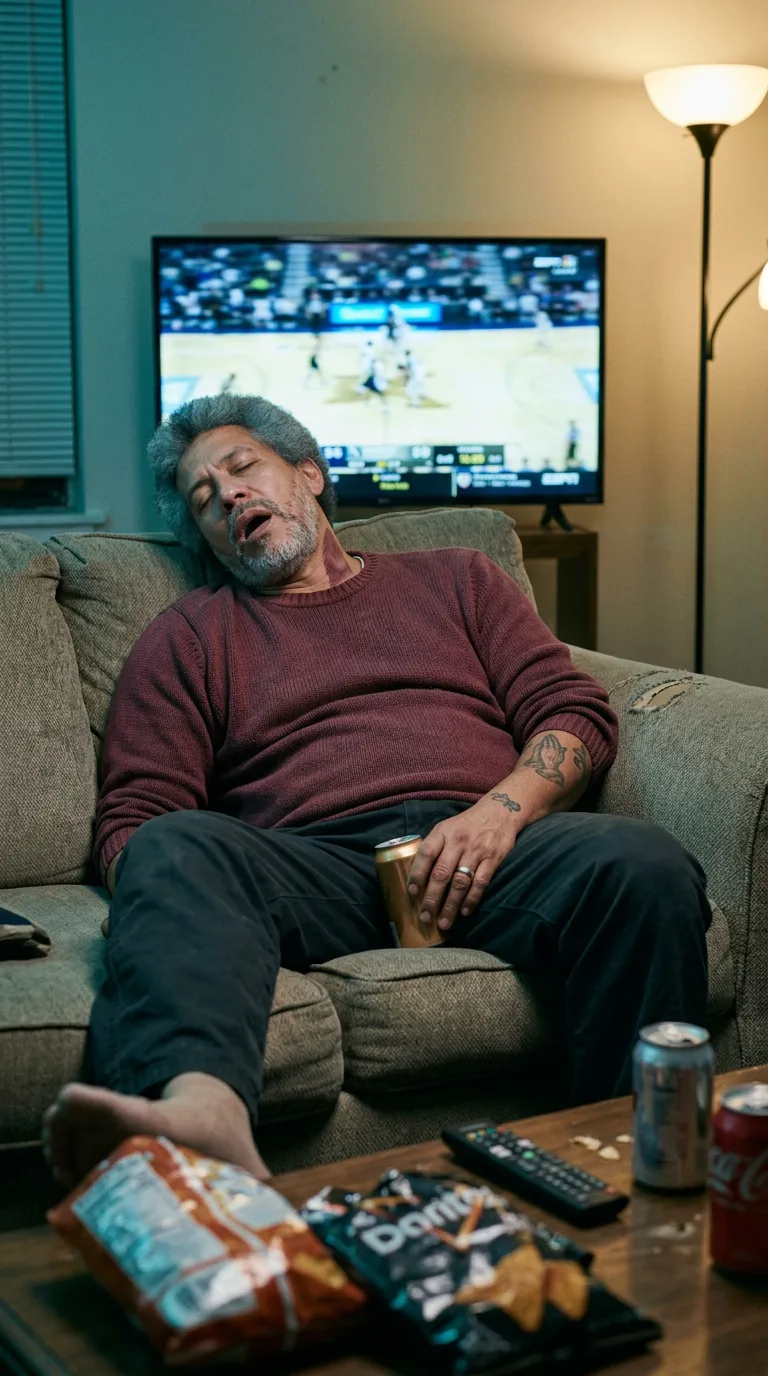
Rarest thing about him: A birthmark on the face — uncommon, 1 in 99
Season 1seed 1325875205 · engine v11
Character card
lineage 2NZHHJ
His body-swap story
@connor.waskiewicz, wearing Nathaniel Ferris, rolled the wheel on and woke up as Ramón Feliciano, spent under a minute in him, then spun the wheel and woke up as Danilo Reyes
The office is glass on three sides, thirty-one floors up, and the city beneath it has gone to that orange-black nothing that Houston does after eleven. You are standing at the window in Nathaniel's big soft body, still buttoned into the shirt he wore to the board dinner, and the champagne they gave you for the quarter is going flat on the desk because Nathaniel Ferris does not actually like champagne, you have learned; he likes the idea of being handed it. You have had him less than a minute. You already know you are done. It isn't the body — the body is fine, better than fine, it comes with an elevator that goes to a private floor — it's the specific, ordinary flatness of standing here at the top of something and feeling nothing move in your chest at all. Sixty-two years in that skin by the time you count what he'd lived before you, and none of it yours, and none of it, apparently, anything. You want the drop. You always spin again for the drop, if you're honest, which you are, this once, to no one. You set the glass down un-drunk and you open the laptop and the wheel is already loaded because you never actually closed the tab, and you spin it not thinking of Chicago, not thinking of anything, and the light goes out of the room.
Sound arrives before sight: a horn, a whistle, sneakers on hardwood doubled and tripled by an arena mic. Weight settles into you low and stocky, five-seven of it, a body that has been sitting so long one foot has gone dead-numb against a coffee table. There's a can in the hand, aluminum going warm, tacky where it's touched skin all night. The mouth is open. A breath comes out of it that isn't yours, wet and ragged, and then the thumb — his thumb, already, before you've caught up to it — finds the volume button on a remote half-buried under a bag of Doritos and brings the game down three notches without you asking it to, like the hand already knew the room better than you do. Onscreen a shot goes up on the second replay. You did not see the first one. Neither did he.
The couch gives you the first of it: worn corduroy under thighs that don't belong to you yet but are already reporting in — a low ache in the lower back that has been there since a Tuesday nine years ago when a pallet shifted wrong, a stiffness in the right knee that means rain tomorrow whether the forecast says so or not. The can in your hand is warm and that wrongness — a beer gone flat and body-temperature — comes with a flash: him at twenty-six, cold Tecate on a stoop on Rockwell, laughing at something Marisol said before she was anybody's wife, before she was the one who got away instead of the one who stayed. You didn't ask for her. She came anyway, riding in on the shape of the can in your palm, gone as fast as she arrived, leaving behind only the specific ache of a name you're not allowed to say out loud anymore, not even to yourself, not in this house.
The sweater is next — maroon, a little moth-worn at one elbow, and it gives you a Christmas: Dolores holding it up still folded, still tagged, saying you never buy yourself anything nice so I did it for you, and him embarrassed and pleased in exactly the way a man is when his wife has been paying closer attention to him than he has to himself. Twenty-two years married in this body's accounting and you feel the whole shape of it settle into the shoulders like the sweater does — not romance anymore, something with more floor to it, something that doesn't need the room to be dark or the radio on. No kids. There was a year that was going to have kids in it and then there wasn't, and the two of them never talked about it again in so many words, they just got quieter about certain aisles in the grocery store, and that quiet is still folded into this sweater too, pressed in at the seams.
Your thumb finds your own jaw without asking — it does this, apparently, unprompted, an old habit worn smooth as the beard under it — and the beard gives you mirrors: a bathroom this morning, this exact gray stubble under a razor he decided at the last second not to use on the neck, because the birthmark is there and razors near the birthmark have never gone well since he was nine years old and his tío told him God marks the ones he means to keep close, and whether or not Ramón ever fully believed that, he has never once tried to make the mark less visible. He wears collars that show it. He touches it when he's thinking, the way he's touching it now, an old tell his warehouse crew has learned to read like weather.
The tattoo is under the sleeve, cross and praying hands, and it gives you a hospital hallway at nineteen — his mother in a bed, machines doing their slow arithmetic, and him promising a God he wasn't sure was listening that he'd stay right if she stayed. She stayed. He stayed. Church every Sunday since, sober going on eleven years not because it got bad exactly but because one morning it felt like a debt he hadn't paid yet, and he quit the way some men quit smoking, all at once and without ceremony, and never spoke of it as a virtue.
Under your feet, through a sock with a thin place at the heel, is the particular give of a rug bought on clearance the same week as the couch, and that gives you nothing grand, just a Tuesday — him coming off a double at the loading dock, spine talking to him the whole train ride home, boots off at the door because Dolores has a rule about boots, socks on this rug, this couch, this game, a can going warm in a hand that earned the rest before it earned the beer. Boots at a warehouse door this morning, actually — no, tonight, his tonight, third shift, the trailer half-loaded when the foreman sent him home early for a family thing that turned out to be nothing, a mix-up, and he came home to an empty apartment and a Thursday night game he had no real stake in and ate chips off a coffee table until his eyes gave out on him mid-quarter, and that unfairness — a whole shift lost for nothing — is still sitting in the shoulders when you arrive, unresolved, his to keep.
You feel forty-six in every place a body keeps its years: knee, low back, the give in the gut that average build allows a man who works with it instead of against it, the ring still on the hand, plain gold, warm from his own skin a half-second ago and now from yours.
You lift the can — his hand, then yours, then just a hand — and look at it like it might explain something. It doesn't. On the screen the second replay ends and the real game goes on without him having seen either one.
"Who was watching," you say, out loud, to the empty room, not sure yet if you mean the game or something bigger, and you don't look for an answer, because somewhere thirty-one floors up in a glass room a laptop is still open to a wheel, and neither you nor Ramón Feliciano has any idea how long you intend to stay behind that birthmark before you go looking for it again.