Ramon Esquibel
Fictional. Generated by AI — not a real person, and no likeness of one is intended.
54, retired in High-desert Nevada · rolled by @ramon.esquibel · card — no film
History
who has worn him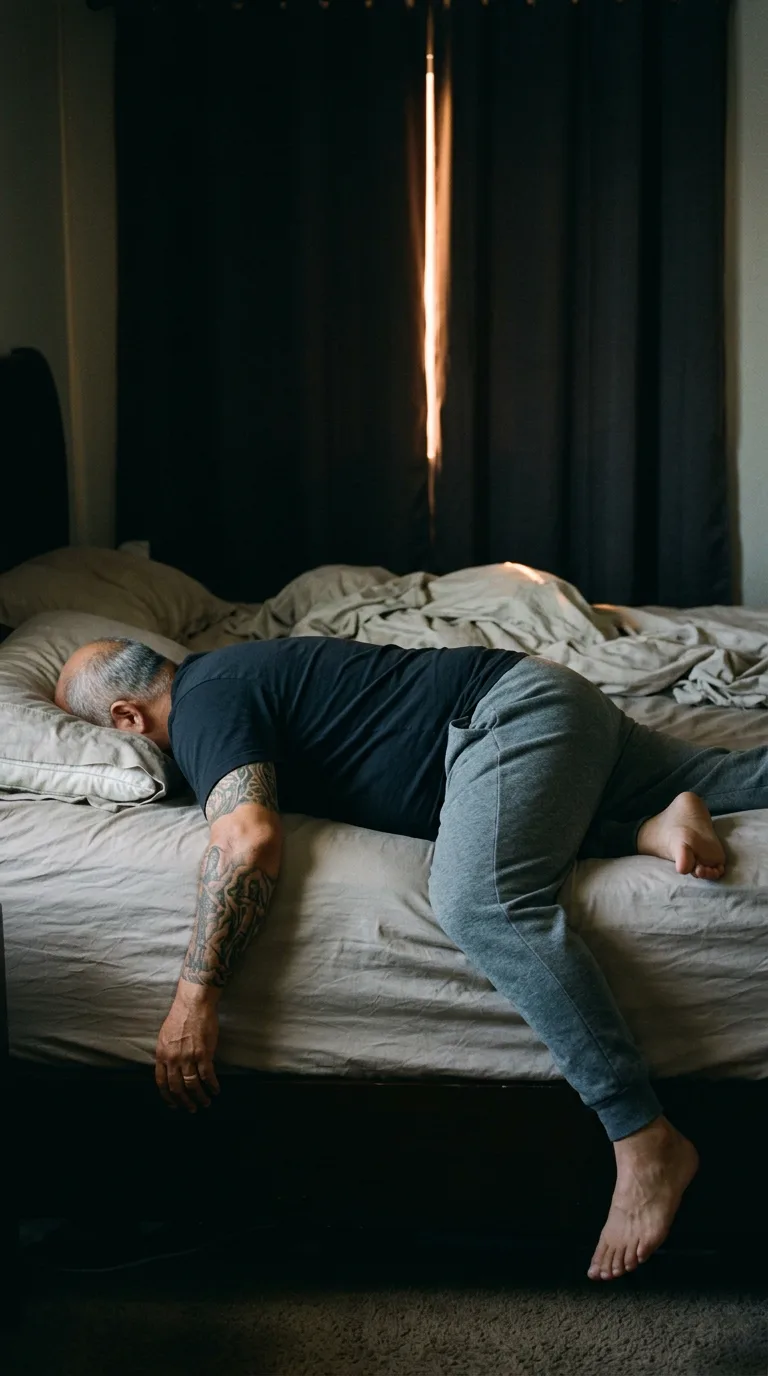
Rarest thing about him: Latter-day Saint — common, 1 in 64
Season 1seed 1107421810 · engine v11
Character card
lineage SAW38D
His body-swap story
@ramon.esquibel rolled the wheel on and woke up as Ramon Esquibel — their first
The site loads slow on your connection, the way everything does on a Sunday when the whole world has gone quiet and you're alone with a browser tab and a feeling you've had since you were young enough to still believe the dreams meant something. A wheel. Plain as that. Vessel.cards, white background, a spinning wheel rendered in flat color like a roulette table built by someone who didn't care about theater. You have read about things like this in forum threads at two in the morning for years — someone always claiming, nobody ever proving. You didn't believe it would work. You still don't, really, even with your card already saved, even with the payment cleared. You put your cursor over the wheel the way you might put a hand over a stove to see if it's really hot, and you click, and the evening — nothing, dull, the tail end of a day you can't remember a single good part of — just stops being the thing that is happening to you.
It is the middle of the night somewhere far from your evening, and you are face-down in a bed that is not a bed you have ever lain in, and your arm is hanging off the edge of a mattress at a wrist you don't own. Then the breath changes. It goes from ragged to even in the space of one inhale, like a held note resolving, and the arm that was dead weight off the mattress draws itself up and the whole body turns onto its back without your meaning to do it — your meaning has nothing to do with it — and the hands fold over the chest the way they'd fold in a coffin, a posture this body has never once chosen for itself in sleep. You are in him. You are fifty-four years old and your knees already ache with it and you don't know that yet, not really, not until the knowing comes.
It comes through the sheets first — cheap cotton, warm with body heat, worn soft at a thousand washings — and that's nothing, that's just fabric. It comes through the mattress at your back, a memory of a cheaper mattress, a motel mattress, a mattress with somebody else's weight on the other side of it that isn't there anymore. The curtain light cuts the room into one gold line and in that line, without being asked, you get a flash: Lupe's voice, saying his name the way she used to when she was still soft about him, before the softness ran out. Ramon. Just that, just the shape of his name in a mouth that used to love him, and it's gone before you can hold it.
You lie there in him a moment, feeling a leg start to bounce under the blanket on its own, some restlessness in him that doesn't need a reason, that was probably bouncing before he had a worry worth naming. Middle of the night here, but something in the marrow of him says this is wrong, says his body expects daylight, the porch, the coffee going cold in his hand while the desert burns off its morning chill — he works nights now, some gig at a warehouse out past Pahrump that takes men his age because nobody else will, and the arithmetic of his sleep is backward from everyone he loves. That's why the dark outside the curtain doesn't match the clock his body keeps. He's a man who sleeps when the world doesn't.
Your hand finds the blanket's hem and that's the sleeve, that's the cross and the praying hands inked into his right arm by a guy named Tiny in Barstow twenty-two years ago, Ramon sweating through the pain with his jaw clenched, thinking about his mother, who was still alive then and who would have hated it, the tattoo, not the prayer part. You feel the whole afternoon of it arrive at once — the buzz of the gun, the smell of antiseptic, the particular pride of walking out into the parking lot with his arm wrapped in plastic like he'd done something that mattered. He has never regretted it once. He touches it sometimes without noticing, fingers finding the praying hands through his shirtsleeve in church, which he still attends, which still matters to him more than almost anything, more than it probably should given what else fell apart.
The ring finger tells you less with a touch and more with an absence — a thin pale band where gold used to sit, years of sun not reaching that strip of skin, and under it comes the whole unhappy architecture of a marriage: Lupe at the kitchen table doing the bills with her reading glasses pushed up into her hair, Lupe laughing at something on television before either of them knew what was coming, Lupe's face at the end, not angry, just tired, just done, telling him in a voice with nothing left in it that she couldn't keep waiting for him to become somebody different. There's a daughter in there too — Marisol, a woman now, who calls on Sundays sometimes and sometimes doesn't, and the hollow of that not-calling sits in him like a stone he has learned to carry without flinching.
Your feet find the floor, cold linoleum under a trailer that sits up on blocks like it's always halfway to leaving, and in the floor's cold he remembers the double-wide he used to dream of before he settled for the single, the sagebrush he's half fond of now, the particular blue of the shadows at dusk that he has started, in his retirement and his night shifts and his solitude, to actually watch. He thinks about calling it beautiful out loud sometime and never has, because there's nobody in the trailer to say it to. He quit smoking eleven years ago on a bet with himself and kept the bet, and some mornings his fingers still want a cigarette the way an amputee's foot still itches. He has never had a drink in his life — not once, not even the bad years — and that abstinence feels less like discipline to him than like a kind of key, the one door in a hallway of ruined doors that he kept locked and never opened.
The jacket on the chair, the plaid shirt he wore yesterday still holding his shape, give you one more flash — a hand smoothing a collar in a mirror, a Sunday morning, him dressing slow because his knees don't love the cold anymore, zipping the blue jacket to the throat, checking his reflection without vanity, just habit, a man making sure he looks like someone his daughter wouldn't be embarrassed by if she ever did show up. Freckles scattered over his nose in that mirror, the one thing about his own face that always surprised him, a boy's mark on an old man's face.
You lift the hands up out of the dark in front of your face — his hands, thick-knuckled, a workingman's hands gone soft at the palm in retirement, the tan line pale on the fourth finger — and you turn them over slowly, watching them not quite believing they're yours to move.
"Lord," you say, in his voice, to the dark trailer, to nobody, "I don't know whose prayer this was."