Ramón Escobedo
Fictional. Generated by AI — not a real person, and no likeness of one is intended.
54, between jobs in Rural Texas · rolled by @connor.waskiewicz · card — no film
History
who has worn him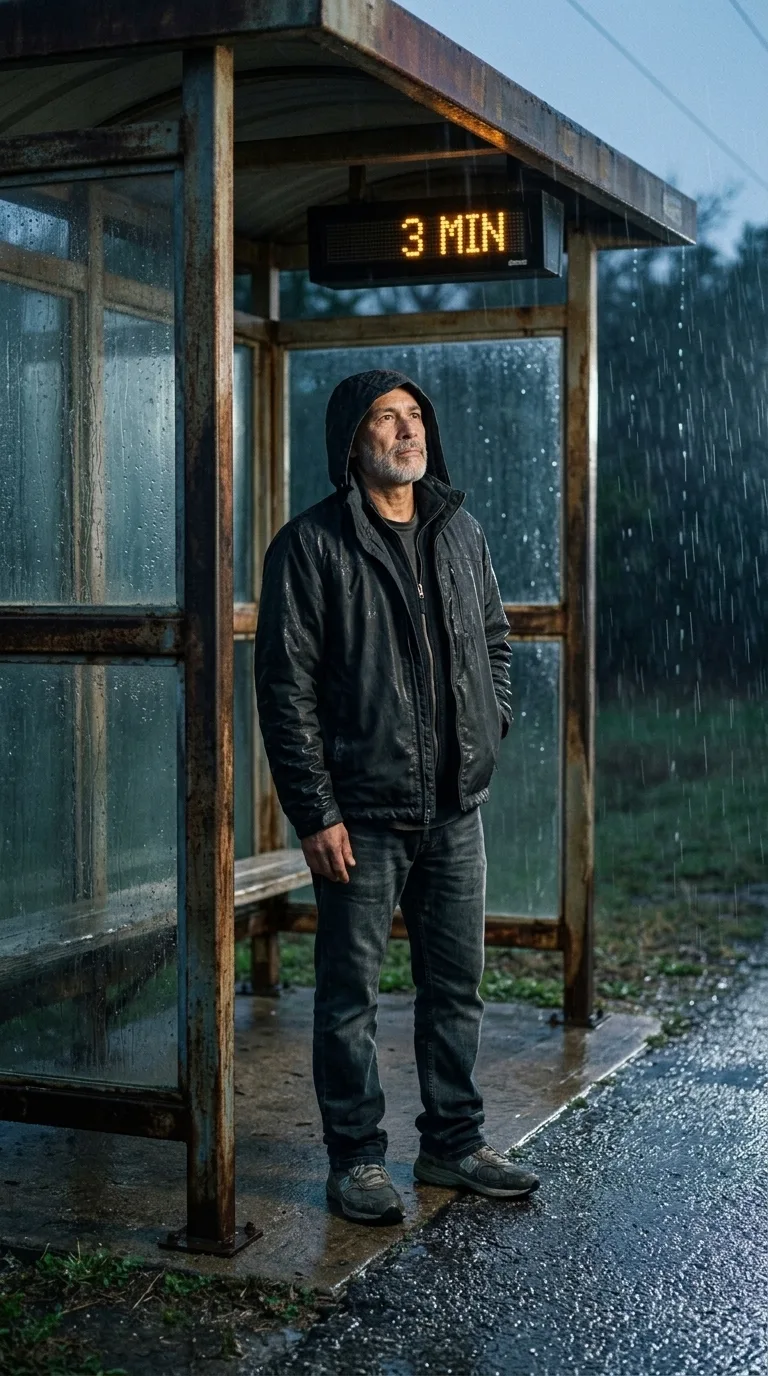
Rarest thing about him: A horseshoe, kept short — common, 1 in 81
Season 1seed 1749007888 · engine v11
Character card
lineage 2NZHHJ
His body-swap story
@connor.waskiewicz, wearing Hector Villanueva, rolled the wheel on and woke up as Ramón Escobedo, spent under a minute in him, then spun the wheel and woke up as Lionel Pettiford
You are standing at a sink in Detroit, in a body that is not yours, running water over a mug you do not remember dirtying. Hector Villanueva's belly presses against the counter's edge. His moustache is damp from the steam. He has had these hands for less than a minute, and already they know how to hold a mug by the rim. Through the window the street is gray and empty, and somewhere behind you is a briefcase full of other people's worst days.
He would be good at it, you think. That is the trouble. He was already good at it, and there was nothing in the work to push against. You wanted something he could not do. You wanted a body that had been out in weather. You open the page. The wheel is already turning.
Rain. It arrives as a weight on the crown of the hood, then a roar on the shelter roof. You are standing under rusted tin with your head up, watching amber letters that say 3 MIN. Then you are not under it. His boots take one step, then another, out onto the wet concrete, and the hood falls back, and the water hits his scalp where the hair has gone and runs down into the beard. You do not turn away from it. Your face stays up. You stand in the runoff like a man who has not been cold in a long time.
The jacket is the first thing you touch, the slick cuff against your wrist, and it gives you a morning. A kitchen table. A laptop open to listings, the same four he has read twice. Pulling the zipper up to the chin with a thumb that knows its teeth, and the quiet sting of knowing it was a good jacket once. A daughter bought it, or helped him choose it. The feeling is warm and slightly ashamed.
Your hands go into the pockets and find a folded paper gone soft. A bus transfer, and under it a rosary of plain wooden beads, worn smooth on one side. The memory is not a picture. It is a church in a town with a water tower, a pew his knees know, and a woman's shoulder beside him years ago that is not there anymore. She left. He never said she was wrong. The ache arrives in your chest like a stair that is not where you expected it.
The jeans are stiff and heavy with rain against his thighs. You feel the morning he pulled them on in the dark, one leg and then the other, the hard knee that complains. Fifty-four. The knee, the lower back, a shoulder that lifts and tells you it has hauled things. This is a body that worked. It is strong in the forearms and the grip, and it is still strong. It simply has nowhere to be at the moment.
Gravel under the soles, then the pavement. Two children, grown or nearly, and the phone call he rehearses before making and then does not make. He quit drinking quietly, without a speech. The craving is a ghost in the jaw and it does not come now. Freckles on his cheeks sting under the water, and you know without a mirror that he was teased for them once and then not.
Down the road the headlights swell through the rain. You lift your hands in front of you. They are broad, scarred only by use, water pooling in the creases. You turn them over. The rain fills the palms.
"Well," you say, and his voice is lower than you expected, with gravel in it. "Look at that."
The bus brakes hiss. You do not move toward it. You wonder how long this one holds, whether the wanting comes back by noon, or tonight, or never.