Ramón Escobedo
Fictional. Generated by AI — not a real person, and no likeness of one is intended.
46, call center agent in High-desert Nevada · rolled by @connor.waskiewicz · card — no film
History
who has worn him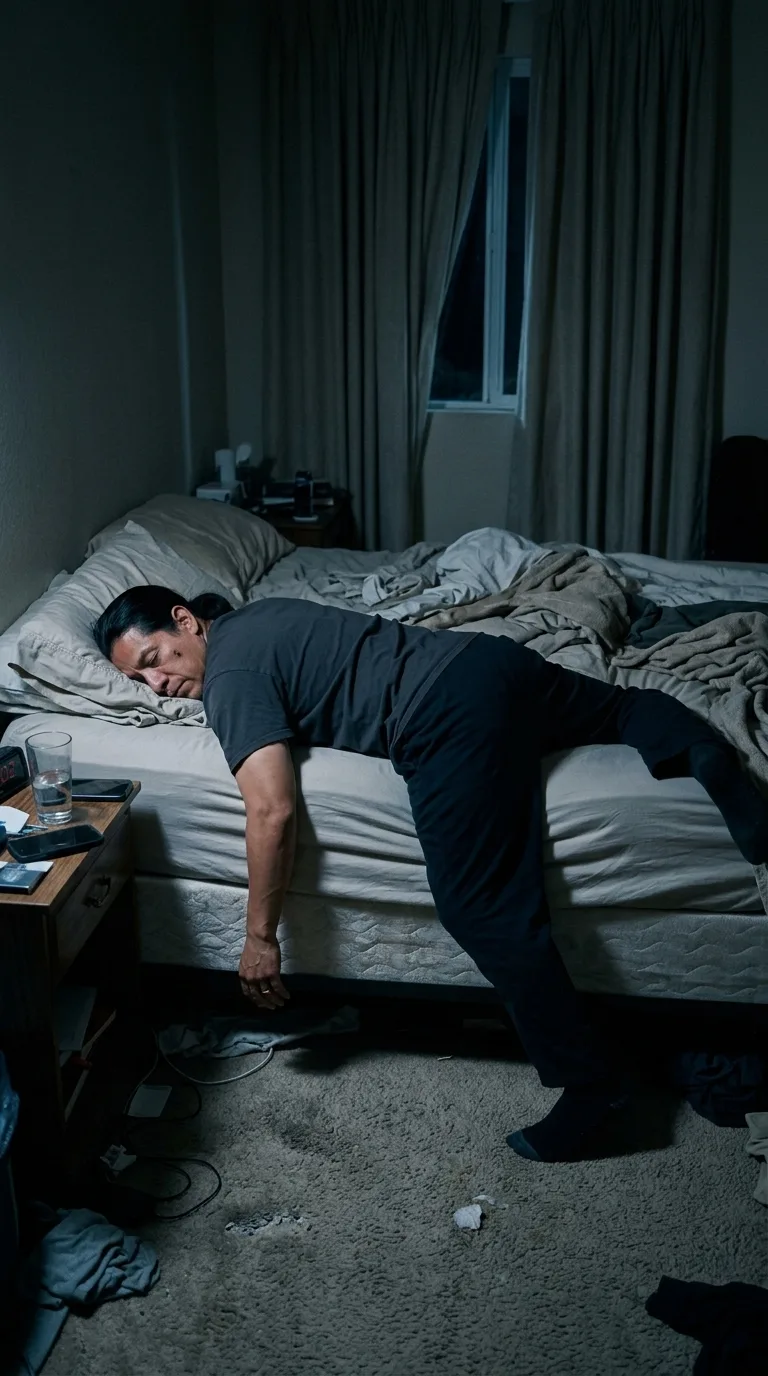
Rarest thing about him: Dyed black — uncommon, 1 in 109
Season 1seed 1891082060 · engine v11
Character card
lineage 2NZHHJ
His body-swap story
@connor.waskiewicz, wearing Jürgen Albrecht, rolled the wheel on and woke up as Ramón Escobedo, spent under a minute in him, then spun the wheel and woke up as Curtis Boudreaux
You are standing in a stairwell in Berlin with a mop bucket's worth of someone else's life in your shoulders. Jürgen Albrecht's knees ache on the third landing. His freckled forearms smell of lemon cleaner, and the stairwell light clicks off on its timer, as it does every ninety seconds, and you wave an arm to bring it back. He has done this for eleven years. You have done it for under a minute. It is not the work. The work is fine. It is that his phone buzzed in the bucket's pocket with a message from a sister you have no word for, and the warmth of it, the plain claim of it, went through you like a draft through a door. You could not answer it. You do not know her name, only that he would have. The body works. Something in it is still his, and you cannot get past that. So you thumb the site open with a wet glove and press the wheel.
It is a falling that does not fall. The stairwell goes out and you are face-down in a bed, and your breath is ragged, wet, caught in the pillow. Your right arm hangs off the mattress and the blood has left it. Streetlight comes through a gap in the curtains. You draw the arm up. You roll onto your back and fold your hands on your chest, a posture he has never once slept in, and the breath goes even.
The first thing is the sheet under your heels, cheap cotton gone thin, and it hands you a night: his wife's side of the bed, cold, and the knowledge that she works the early shift at the hospital laundry and leaves while it is dark. Ana. The name comes up warm and tired, like a coin kept in a pocket.
The shirt against your back is soft from washing, and it gives you the evening. He came off the phones at midnight with his headset still ringing in his ears. Eight hours of people shouting about their bills at a voice they could not see. He peeled the lanyard over his head, and it caught in his ponytail. He swore at it quietly, because the child was asleep down the hall. He ate cold rice standing at the counter. Then he took off the hoodie and hung it on the chair, where it still holds the shape of his shoulders, and lay down in the rest.
Your hands are on your chest and they know things. The left thumb turns the plain band, round and round, a habit older than the marriage. The right goes to your face on its own and touches the mole high on the cheek, then the jaw, smooth, freshly shaved. He shaved at ten for no one. Because a man on the phones is only a voice, he said, and he wanted the voice to come from someone clean. The band gives you the church, a hot afternoon, Ana's mother crying, the priest's cough, and a feeling of such complete luck that your ribs ache with it.
The ponytail is pulled tight against the pillow, the black too even, and it gives you the bathroom mirror and the box dye, and him laughing at himself at forty-five because the grey had come in at the temples. His daughter said it looked like a hat. He kept it anyway.
The mattress dips under you. Five foot five of him, average, a little heavy at the middle, a back that complains low on the left from a chair that was never right. His feet are cold in the socks. Trailer walls tick as the desert cools, and outside there is wind in sagebrush. You can smell dust, old coffee, and a child's shampoo on the air from down the hall. He pays the mortgage on a place nobody would want, and the lot, and the savings. More than anyone at work knows. He never spends it, because he remembers being poor and does not trust it.
You lift both hands in the dark and turn them over. They are not Jürgen's. They are wider, dry across the knuckles, a thin pale band of skin under the ring. You look up at the ceiling, then at the curtain gap and the blue light on the wall.
"Ay, Ramón," you say, softly, in a voice that is deep and unhurried. "Where did you go?"
Down the hall a floorboard creaks and stops. You do not know how long you have this breath, this ring, this quiet house. Maybe the wanting comes back by morning. Maybe in four minutes. You lie there and listen for it.