Ramón Aguilera
Fictional. Generated by AI — not a real person, and no likeness of one is intended.
60, soldier in Western Kansas · rolled by @marco.villagrana · card — no film
History
who has worn him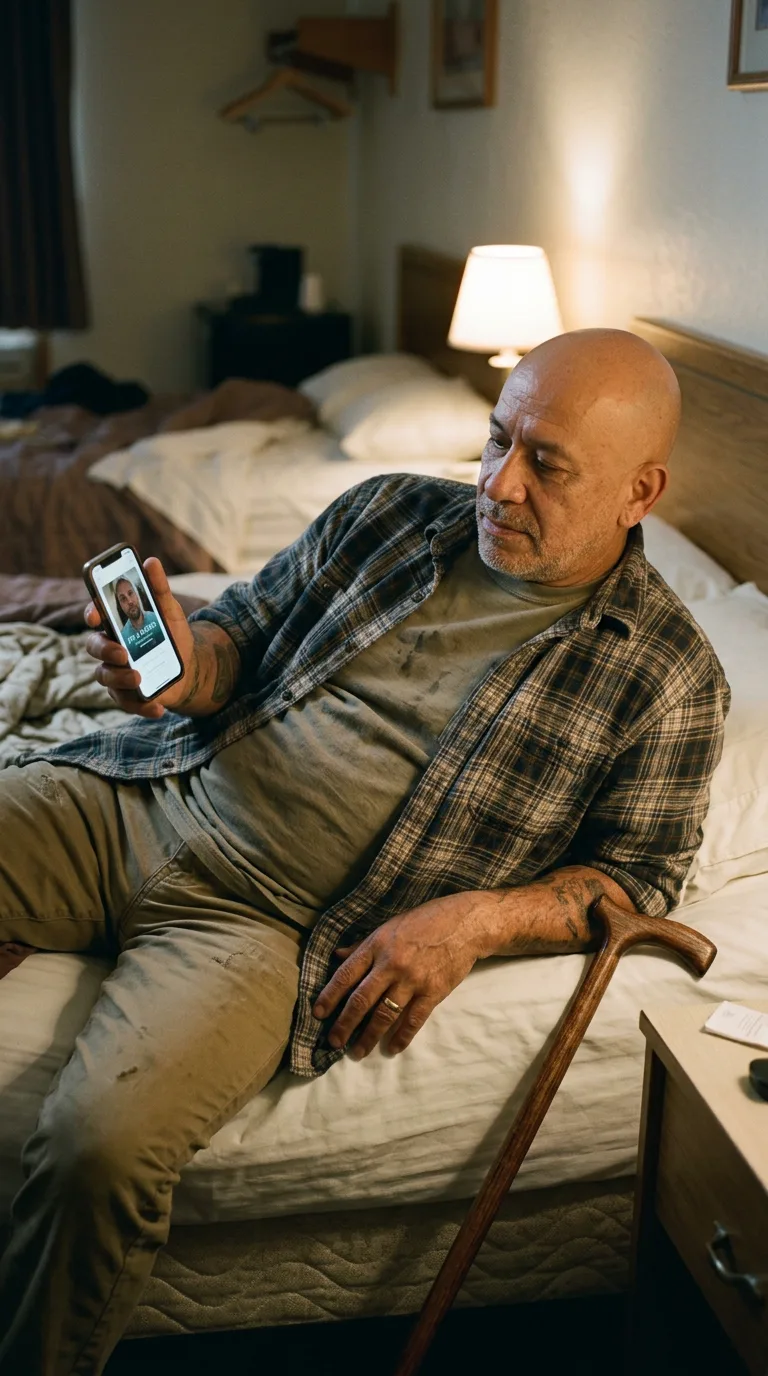
Rarest thing about him: Bisexual — legendary, 1 in 100
Season 0seed 1356389526 · engine v10
Character card
lineage LJL8SV
His body-swap story
@marco.villagrana, wearing Dwayne Setliff, rolled the wheel on and woke up as Ramón Aguilera, spent 4 minutes in him, then spun the wheel and woke up as Warren Astle
Dwayne Setliff's body is sitting on a motel bed in Las Vegas at two in the afternoon, scratching at a sunburn on his forearm, and you are so tired of him already. Three minutes. That's all you gave him — long enough to feel the gap in his front teeth with your tongue, the give of the gut under the flannel, the particular tiredness in knees that spend all day walking a garbage route — and you already know you're not staying. It isn't disgust, exactly. It's that nothing in him is asking to be lived in. The room smells like somebody else's cigarettes even though the card says no nicotine, ever, on the next one — you don't know that yet, you just want out, want anything else, want the little jolt of not-knowing that the site sells you better than it sells anything real. You open vessel.cards on Dwayne's phone with Dwayne's thick thumb. You spin.
The bedroom photo on the screen doesn't clear when it should. IT'S A MATCH sits there fading and not-fading, a stranger's face still looking out of it a half-second too long, and then the glass goes dark and gives you back a mouth — not yours, not Dwayne's — trying on a smile it hasn't decided about, then trying it again. You are lying back against a motel headboard that isn't a motel headboard, weight settled low and solid through a spine that complains from the hip down, a cane wedged against the mattress under your right forearm where it always rides. Late-day light the color of a bruise is coming through a gap in curtains that don't belong to Vegas at all. The thunderhead outside is stacking up black over stubble fields you have not yet remembered are there.
The phone is still warm in your hand. That's the first thing that comes through — not a memory, just heat and the shape of a grip, the phone smaller than it should feel because these fingers are used to gripping a rifle sling, a steering wheel, a cane handle worn smooth. Then the flannel shirt against your back gives you the morning: buttoning it one-handed, left hand doing the work because the right was busy bracing on the dresser, humming something without meaning to, a Thursday like every other Thursday except that a captain half his age had sent him a link to an app as a joke at chow and he'd downloaded it out of something that wasn't quite loneliness, more like curiosity about a door he'd never tried. Ramón Aguilera, twenty-two years in, buys the joke because his life has had exactly one door in it for a long time and he is sixty and not done being curious.
The wedding band is the next thing your hand finds, turning it without meaning to, a habit from decades — and there she is, whole and sudden: Marisol at their kitchen table forty years running, her voice going up at the end of a sentence like a question even when it isn't one, her hand flat on his chest the last time he shipped somewhere she couldn't follow. And there, right alongside her, unhidden, unashamed, is Dennis — years back now, a different life, a different uniform of a marriage, gentleness that didn't survive but didn't curdle either, still a Christmas card most years, still a name that comes with warmth and not with wreckage. Two kids somewhere between those two men's houses, grown now, one who calls on Sundays and one who doesn't call enough. He loves all of it at once, easily, the way you love things you were never taught to be ashamed of loving.
The cane tells you about the leg — an IED outside a town whose name he says less often now, a limp that isn't dramatic, just permanent, just his, just something he works around the way he works around everything. The tattoos on his forearms are older than the leg: the unit insignia inked in a country he doesn't talk about at parties, done cheap and done right. His hands know rifles and rope and the particular give of a cane's rubber foot on gravel outside a barracks at 0500, know how to stand at parade rest without thinking about it, know his own knee's tolerances better than any doctor.
The thunderhead keeps stacking outside a window that, a breath ago, was a motel curtain. Somewhere under all of it is the plain fact of the app, the plain fact of the photo he was still deciding how he felt about — a face that was, for a few seconds, the most interesting thing that had happened to him all week.
You look down. His hand — thick-knuckled, sun-spotted, the ring loose enough to spin — is still holding the phone up like it matters. You turn it once, the way he would, testing the weight of it, and something in you that is not him and never will be almost smiles with his mouth before you catch it.
"Bad time for a thunderstorm," you say, to no one, in his voice, and set the phone face-down on the nightstand, already wondering how long you'll want to keep him.