Ramón Acevedo
Fictional. Generated by AI — not a real person, and no likeness of one is intended.
61, cashier in Pittsburgh · rolled by @caleb.dean.whitfield · card — no film
History
who has worn him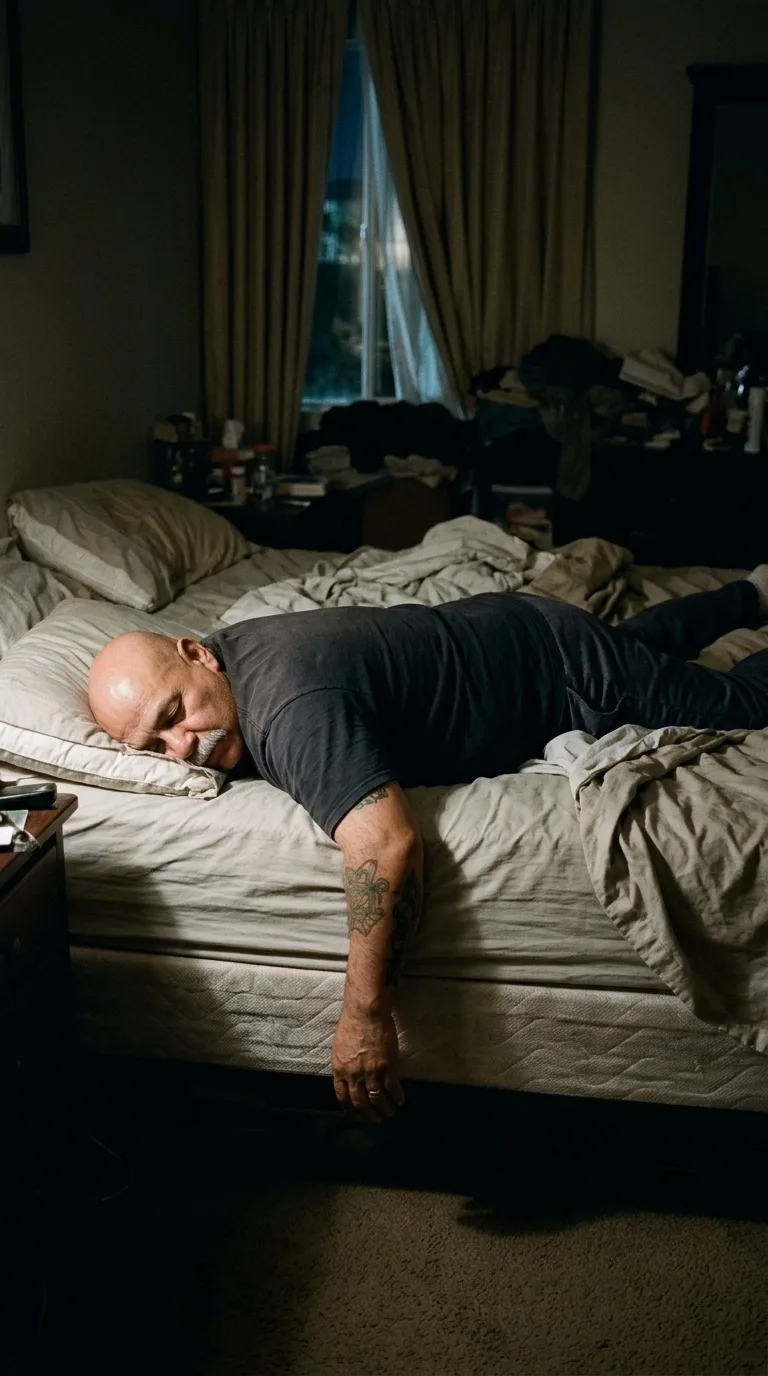
Rarest thing about him: Pipe smoker — rare, 1 in 282
Season 1seed 579890747 · engine v11
Character card
lineage A8GP7H
His body-swap story
@caleb.dean.whitfield, wearing Neil Garrett Sorensen, rolled the wheel on and woke up as Ramón Acevedo, spent under a minute in him, then spun the wheel and woke up as Alberto Quiñones Rivera
You are standing in Neil Sorensen's kitchen in New York with the refrigerator door open, and the light from it is the only light in the apartment. His body is thirty-one and has been yours for one minute. It is tall and light and wants nothing. Cold air runs up his bare shins. He has a carton of milk in his hand, and you cannot make yourself want it.
Nothing is wrong with him. That is the trouble. He works, he is young, and his knees do not hurt. The wanting in you has gone flat in him as fast as it did in the eighteen before him, and it has gone flat on a Friday in the dead hour when the building ticks and everyone is asleep. You shut the refrigerator. The dark comes down like a lid. Your thumb is already on the phone, and the page is already open with its wheel, waiting.
You put the milk down. You spin.
The wheel clicks through its slow dark and stops.
Your breath goes ragged and then even, in one pull. You are face-down. Something soft and damp is under your cheek, a pillow warm from your own mouth, and the mattress is giving under a weight you were never ready for. One arm hangs off the bed, and the blood has pooled in it, heavy and humming. You draw it up. The body rolls onto its back by itself, a big slow turning, and your hands fold on your chest. He has never slept like this. You can feel that he has not, the way you feel a stair that is not there.
A line of streetlight comes through the gap in the curtains and lies across your chest.
The shirt is the first thing. Cotton, thin at the collar, soft from a thousand washings, and when it moves against your ribs the morning comes up through it. His thumbs worked the buttons of the grey vest over this shirt, and he hated the vest and would never say so. The lanyard went over his head and caught on his ear. He stood in the kitchen with coffee too hot to drink and thought about nothing. His wife had left the radio on low. It was only a Thursday.
You breathe, and the belly rises under your folded hands. It is heavy, warm and round, and it makes the breath slow. It has carried him thirty years of standing. The arches of the feet ache even lying down. The lower back has a long bruised note in it, the checkout lane written into the spine. Your left hand shifts, and the band on it turns once against the knuckle. A plain ring, worn thin. It is a kitchen and a church parking lot and a woman laughing with her whole face at something he said badly. He had been so frightened that day, so glad. His hand closes on the memory, and the fingers do what they know. They go to the mouth. The thumbnail is already between the teeth, bitten to the quick, a habit older than the marriage, older than the children. A boy in a doorway waiting for his father's truck. You pull the hand away and feel the ragged edge. It is the most his thing you have found.
Under the ring and the nails there is more. The anchor on the forearm, the bold black lines, the red gone to rust. A man in a shop with a buzzing needle who said hold still, mijo, and he held still. Twenty-two, drunk on being brave, and proud for forty years. The other one is a rose that is no longer a rose, for a mother, and your throat closes on a grief that is his and not yours. The pipe is on the nightstand. You smell it without seeing it, cherry and old wood, the one quiet hour on the back steps after the late lane closes, with wet leaves on the concrete and the whole hill of yards dark below. He sat there and the smoke went up and he was nobody's father and nobody's cashier. It was the only room that was his.
Money is in him too, a calm one. Houses and years of careful nothing. He never told the people at the store. He still says have a good one to every stranger and means it.
One eye drifts. You feel it now, a slight lazy outward pull in the left, the world arriving a little crooked. Someone teased him in grade school. His wife says it is how she knows he is listening.
You lift both hands in the streetlight and turn them over. They are broad, scarred at the knuckle, and the ring shines. They are thick and warm and they are not yours, and they obey.
You look up at the dark ceiling and say, in his low voice with its gravel and its patience, "Hola, Ramón."
Nothing answers. The house breathes. Somewhere in you the wanting is only asleep, and you cannot tell how long it will stay that way. It could be years. It could be before the streetlight moves.