Ramiro Quintanilla
Fictional. Generated by AI — not a real person, and no likeness of one is intended.
42, forklift driver in Dallas · rolled by @connor.waskiewicz · card — no film
History
who has worn him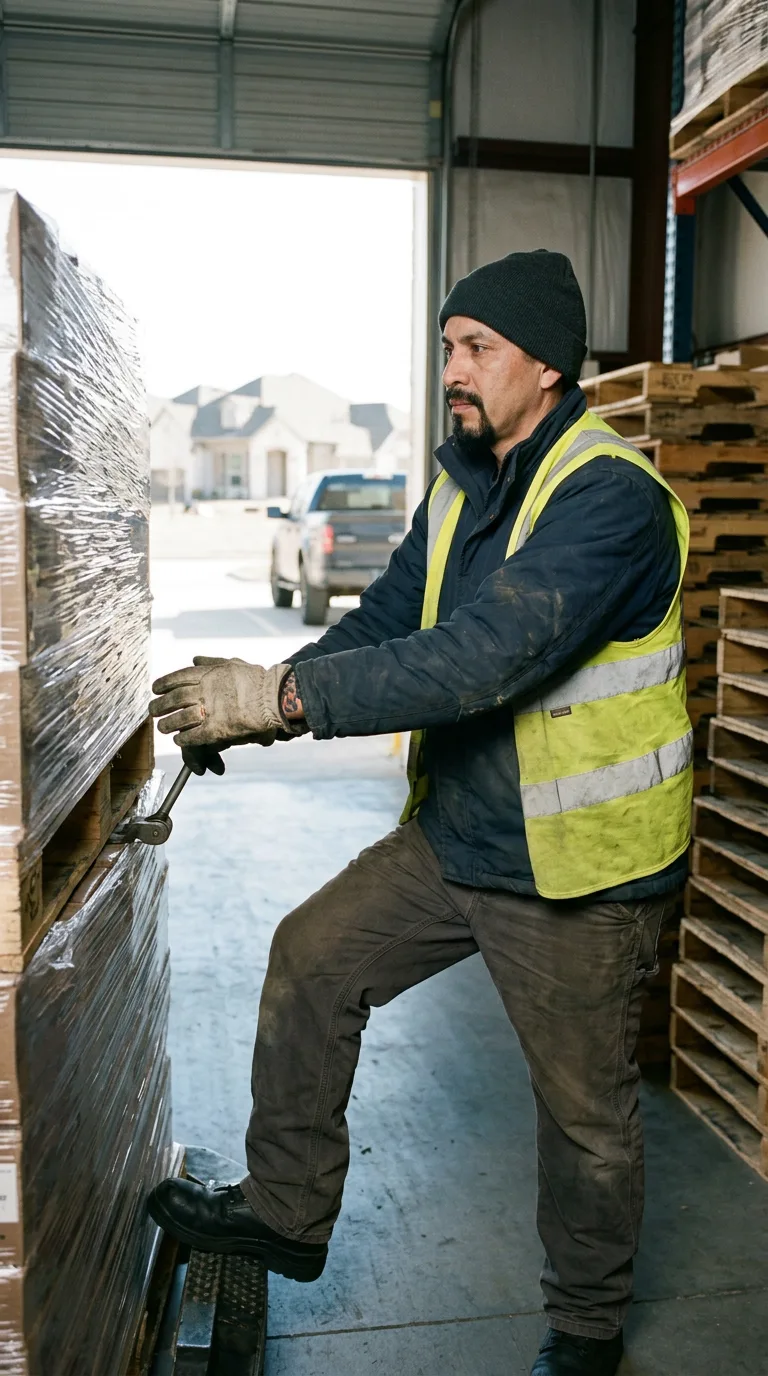
Rarest thing about him: Forklift driver — common, 1 in 150
Season 1seed 1367555171 · engine v11
Character card
lineage 2NZHHJ
His body-swap story
@connor.waskiewicz, wearing Martin Feldstein, rolled the wheel on and woke up as Ramiro Quintanilla, spent under a minute in him, then spun the wheel and woke up as Marcus Odom
Sixty years old, and the knees in this body have opinions about the stairs. I am standing at the register of a store that is not mine, in Los Angeles, mid-morning, and a woman is asking Martin Feldstein's mouth whether there is a manager. I am the manager. I have been the manager for under a minute. The keys on the lanyard are warm against his sternum and I get nothing from them, nothing, only the ordinary weight of a man who is bald by razor and sunburned on the scalp.
He could not do one thing. That is all. For forty seconds I have been trying to feel what it is to want the little things he wanted, to care about the delivery that is late, and there is no door into it. It is a body that works. It is a body, and I am bored in it the way you are bored in a hotel room. Behind the till there is a laminated card with a wheel drawn on it by nobody, and in my pocket the phone already has the page open.
I pay. I spin.
The warehouse comes up cold. It is a hand on the lever and the lever is already moving, half a motion done wrong. My elbow has gone out and the pallet corner is a finger's width from where it ought to be. I stop. I do it again slowly, and it is right. Then ten more, each one checked, each one a thing I look at because I do not trust it yet.
Breath first. Thin and quick, a skinny man's chest working in the cold, the air smelling of cardboard and diesel and the wet concrete under the open door. Then the weight: a hundred and forty-something pounds on five-foot-seven, the legs lighter than the ones I just left, the back tight in a way that has a history. One boot is up on the step of the truck. The steel is cold through the sole.
The glove is the first thing that speaks. Stiff leather, sweat dried into the palm, and the lever hums in it. A flash, and it is not mine: a Saturday, his daughter on the hood of a pickup in a driveway where the concrete is still pale, clapping because he let her honk. Pride, flat and uncomplicated. New house, new street, nothing planted yet. He signed for it with a pen he held too tightly.
The jacket collar scratches my jaw. Navy, quilted, the cuff gone black. I feel him pulling it off the hook that morning in the dark. His wife's hand on his back as he passed her in the hall, not a word, and the smell of coffee she had made without being asked. The vest over it, the zipper stubborn. The beanie last, pulled down over the place where his hair has gone, a habit older than the cold. He does not like the mirror. He has not liked it since the forehead started to climb.
The wedding band presses against the inside of the glove. I push my thumb against it and the whole of it opens: a church, a hot afternoon, a borrowed suit, his mother in the second pew crying openly. Then, quicker and sourer, another woman, years before. The one who got away. She said something at a bus stop and he has been answering it ever since in the back of his head, and never out loud, and never to his wife.
My knuckles crack. I did not do it. The hand did. Right, left, each finger in turn, a little pop in the cold, and with it comes the whole of his nerves: that is what he does when he is waiting for bad news. The tattoo on the upper arm itches under the sleeve. Bold lines, faded color, an anchor or something like it, got at nineteen, regretted for a week, kept for good. His nose aches in the cold where it was broken once and set a little off true. A fight, a floor, a boy who is now someone's uncle.
Every evening a drink or two on the back step. He prays the rosary on the drive home and loses count at the second decade. Fifty thousand dollars in a credit union, he thinks of it nightly, a number he turns over like a coin.
I take the glove off with my teeth. I look at the hand. Brown, scarred across the knuckles, thin, a stranger's, mine.
I look up at the truck in the doorway, the street beyond it, the new roofs, and I say, in a voice that is lower than I expected, "Okay. Okay, Ramiro."
How long does a body like this last before I want another? I flex the fingers and wait to find out.