Rafael Quintero
Fictional. Generated by AI — not a real person, and no likeness of one is intended.
52, engineering manager in Small-town Ohio · rolled by @rafael.quintero · card — no film
History
who has worn him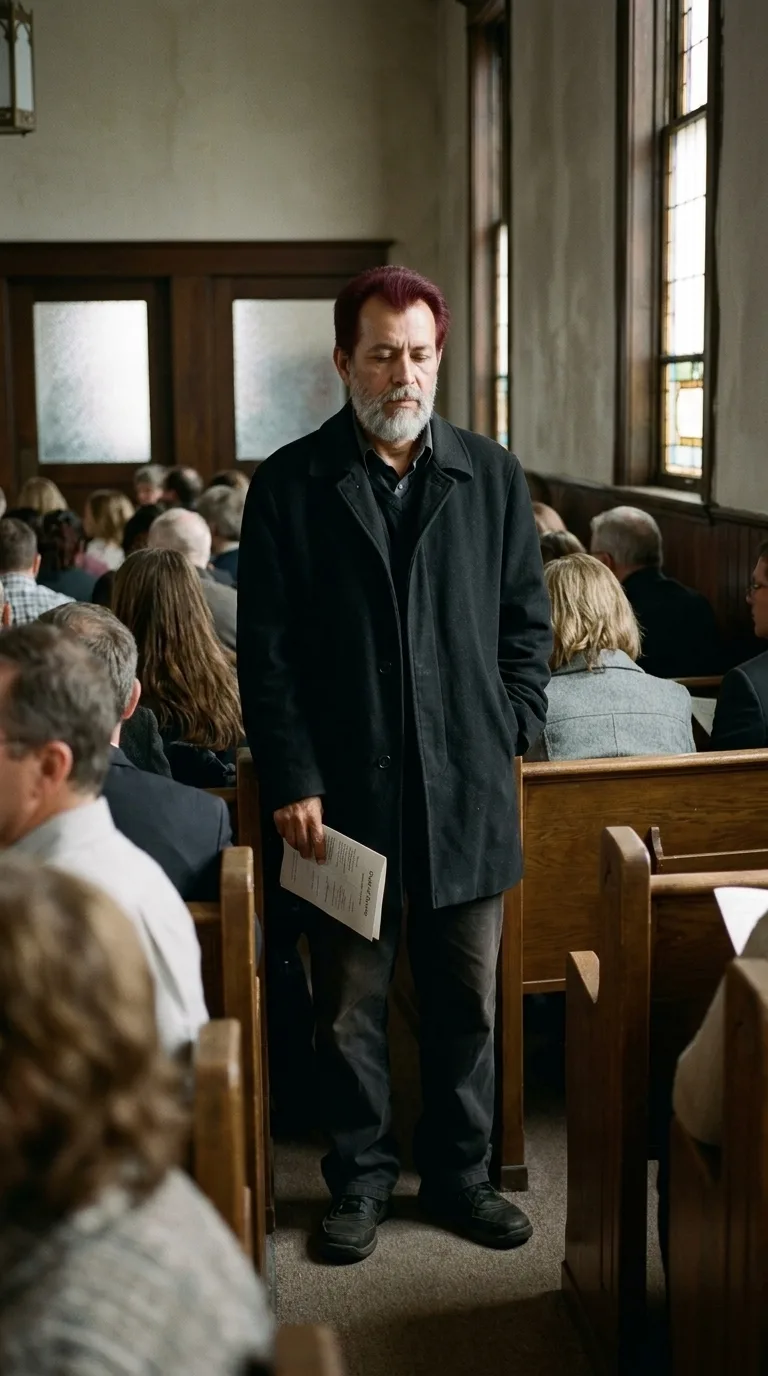
Rarest thing about him: An ancestral tradition — rare, 1 in 169
Season 1seed 2070890707 · engine v11
Character card
lineage CMH47D
His body-swap story
@rafael.quintero rolled the wheel on and woke up as Rafael Quintero — their first
I have the page open and nothing else to do. It is a Tuesday night, late, and I have scrolled past everything there is. The wheel sits in the middle of the screen, painted segments, a button under it. I have wanted this for as long as I can remember: the films, the stories, the threads at two in the morning about waking up in someone else. I never believed any of it could be bought. I pay. I press. The wheel turns and slows, and a name I will never read lands under the pointer.
The organ stops.
The silence has a weight and the room stands up around me, and I come up a half-beat behind them, knees working, the floor carpeted and soft under shoe soles that are not mine. There is paper in my right hand, folded in thirds. The air smells of wax and wet wool and old radiators. It is the middle of a morning, and the light through the tall windows is gray and level.
My hands go to the coat. They smooth it down slowly, learning the buttons, one, two, three, and nobody turns around.
The wool is borrowed. The knowledge comes up through my palms. The coat belongs to a brother-in-law, a bigger man, and the shoulders hang off me by an inch. This morning he stood in a kitchen and shrugged into it, and his daughter said, *Papá, you look like a priest.* He laughed, and the gap in his front teeth whistled a little. Under the coat is a black shirt he ironed himself on a towel because the board had a broken leg. His thumb remembers the hot flat of the iron.
The paper in my hand is the order of service. I run my thumb along the fold and a name comes up, a woman's, and a feeling with no words, a long low ache he has carried for twenty years. She is not in the coffin, but she is somewhere in this chapel, and he has not let himself look. That is why his eyes are lowered. It is not grief only.
My free hand drifts to my face. Beard, thick and two inches deep, the moustache joined to it. I feel him in it: the little ritual of trimming it Sundays over the sink. I touch the hair on top. It is dyed. His girlfriend did it in her bathroom, laughing, gloves on, towel around his neck, red as a dare, and he let her because he was fifty-one and receding at both temples and wanted, just once, to be a man who did something unwise. The temples are bare under my fingertips, the hairline pulled back into an M.
My tongue finds the gap between the front teeth. It is a familiar place to him. He has been teased for it, loved for it.
The body underneath is soft at the middle and thin in the limbs. My lower back hums from a long chair. The right knee complains as the pews settle. He is fifty-two. He manages engineers in an office with big prints pinned to the walls, and the callus on his middle finger is from a pencil he still prefers. Two children are somewhere in him, and when I think of them my chest tightens before I know their faces.
The room sits. I sit a beat late. The wood is hard and cold against my spine.
I look down at my hands. They are brown, square, the knuckles creased. I turn them over. They are his, and they are mine, and nothing in the room has noticed.
I lift my eyes to the front of the chapel and say, low, "Okay." Then, quieter: "Okay. How long?"
Nobody answers. The organ begins again.