Petey Vollan
Fictional. Generated by AI — not a real person, and no likeness of one is intended.
26, line cook in New York · rolled by @petey.vollan · card — no film
History
who has worn him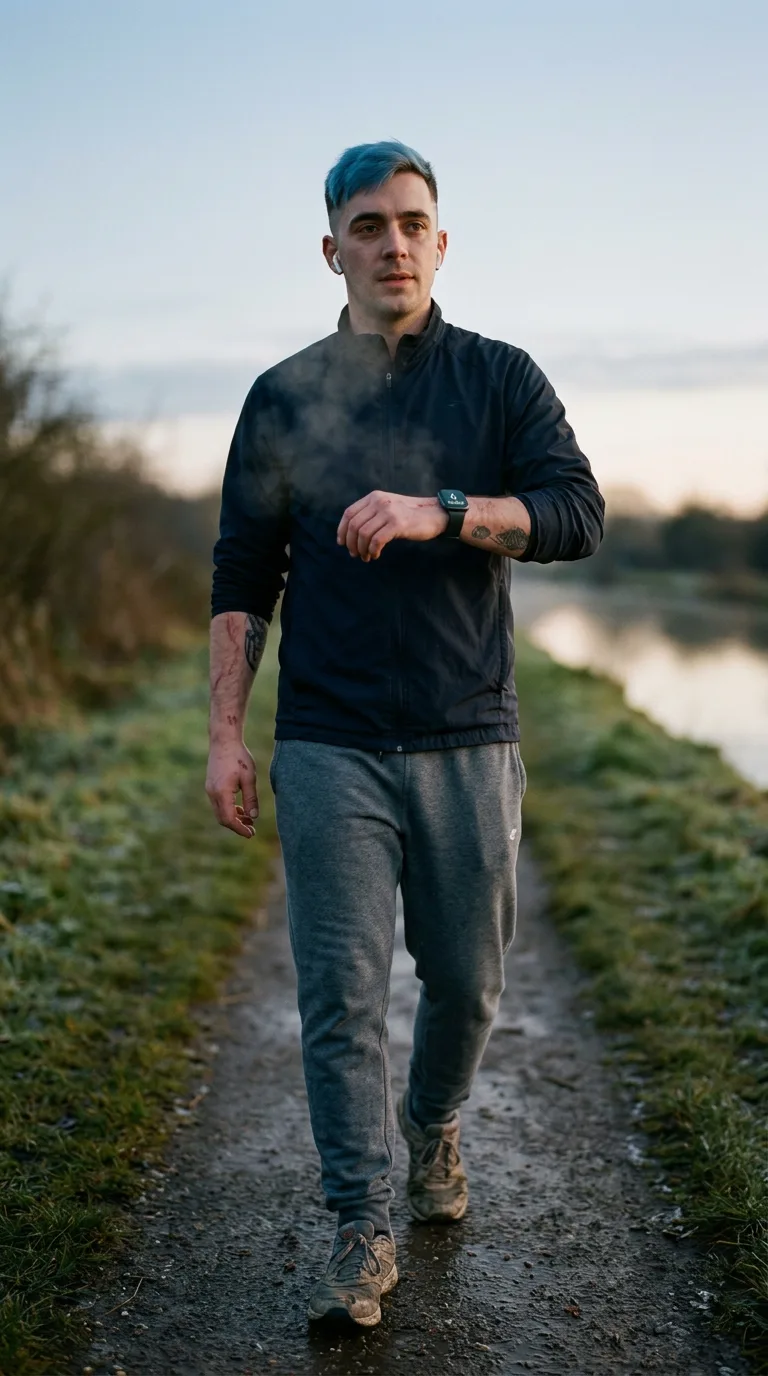
Rarest thing about him: Fashion color — epic, 1 in 56
Season 0seed 7254154 · engine v10
Character card
lineage GV7E9R
His body-swap story
@petey.vollan rolled the wheel on and woke up as Petey Vollan — their first
The screen is the only light on. Middle of the morning where you are, though it feels later than that, feels like nothing-time, the hour that doesn't belong to any day of the week. You have had the tab open for eleven minutes. You have read the same paragraph on the front page three times — *a real one, somewhere, in the middle of an ordinary evening* — and you have wanted this since before you had a word for wanting it, since the first movie where a body wasn't a fixed thing, since the threads at two in the morning where strangers argued about whether it would feel like falling or like waking up. You have never had money for it before now, or never let yourself. Tonight there is nothing on and the card is already saved. You spin.
There is no falling. There is a canal path and cold air going into lungs that are not lungs you have ever had, mid-stride, one earbud rattling a song you didn't choose, and for exactly two steps the rhythm breaks — a stumble that does not become a fall, that resolves itself before it can even be called one — and then the legs are running again, arms a little lower than they were, head steady, and a watch on the wrist buzzes out a split time for a stride that, as far as any device could know, nobody has ever run. Breath is coming out in a visible cloud. The path is wet. Somewhere behind the eyes a mile marker ticks over and means nothing to you yet.
It starts in the feet, of course — it always starts wherever you're touching something of his. The shoes are broken in on the outside edge, worn to a private geometry, and the second your weight rolls onto that edge a whole morning comes up out of nowhere: him — no, you now, but him first — lacing these same shoes on the same stoop in the dark, breath already fogging before he'd even started moving, a stretch through the lower back that he does every time because if he skips it the ache sets in by mile two and doesn't leave for the rest of the shift. The back. It's there now, a low dull heat along the spine that isn't pain exactly, more like a debt the body is always paying down, thirteen years of standing at a range doing that to a person who is only twenty-six. You feel it and you feel, underneath the feeling, his flat unbothered relationship to it — not suffering, just weather.
The jacket gives you more. Zipped to the throat, cheap wind-block fabric, and through it comes a Tuesday — no, a hundred Tuesdays folded into one — the walk-in at Vrbicky's, the smell of scorched garlic and bleach water, the particular clatter of a ticket rail filling up past what two hands can keep pace with. You are him standing at the flat-top at half past midnight with sweat cooling on your neck under the hood you'd throw on for the walk home, calling back a temp to the expo like it's a whole sentence, *two rare no onion, one well*, and there's satisfaction in it, plain and physical, the same satisfaction now humming under your sternum as you run: the work is hard and you're good at it and nobody has to tell you so.
The earbud gives you a name — Marisol — and with it a laugh from a kitchen doorway, her hip against the frame, flour on her forearm, the specific warmth of being with someone who doesn't need you to be anything but tired and funny at one in the morning. Dating her seven months now. And under that, quieter, an older ache with a different shape: Danika, the ex, the one who still has a key to something even though she gave the apartment key back a year ago — a hospital room, a small weight put into his arms that changed the entire physics of every day since, a kid he sees on a schedule that never feels like enough days and is somehow, impossibly, also enough.
The watch on the wrist is warm from motion and it gives you the cross around the neck under the jacket, plain silver, worn since his grandmother pressed it into his hand at seventeen — Sunday liturgy some weeks, not others, guilt about the weeks he skips heavier than the cross itself. Gives you, too, a memory of a lighter he doesn't carry anymore, the specific relief of the fourth month without one, and a party he stood sober at, holding a club soda like a shield, and how much easier that got over time and how it never got all the way easy.
The hair — you can't touch it running, but you feel its weight in the wind, and it brings the barber's chair, the moment he first said *just do it, all the way, disconnect it hard*, laughing at himself in the mirror afterward like he'd gotten away with something. A small rebellion nobody at work even blinked at. He liked that it surprised no one and pleased only him.
Legs keep turning. Chest keeps working, five-eight of him, ordinary-shouldered, nothing about him that would make a stranger's head turn on the street, and that ordinariness is its own small, real comfort sitting inside you now like borrowed furniture.
The watch buzzes again, mile five, and you look down — not at the display, past it, at the hand wearing it. You turn it over in the grey dawn light like you've never seen the back of a hand before, because you haven't, not this one, not any hand at all until eleven minutes ago in a life you're not going to think about right now.
You say, out loud, to no one on the empty towpath, "Okay." Just that. Testing the voice, testing how far away the wheel is, and how long you get before it spins again.