Petey Salazar
Fictional. Generated by AI — not a real person, and no likeness of one is intended.
18, waiter in New York · rolled by @petey.salazar · card — no film
History
who has worn him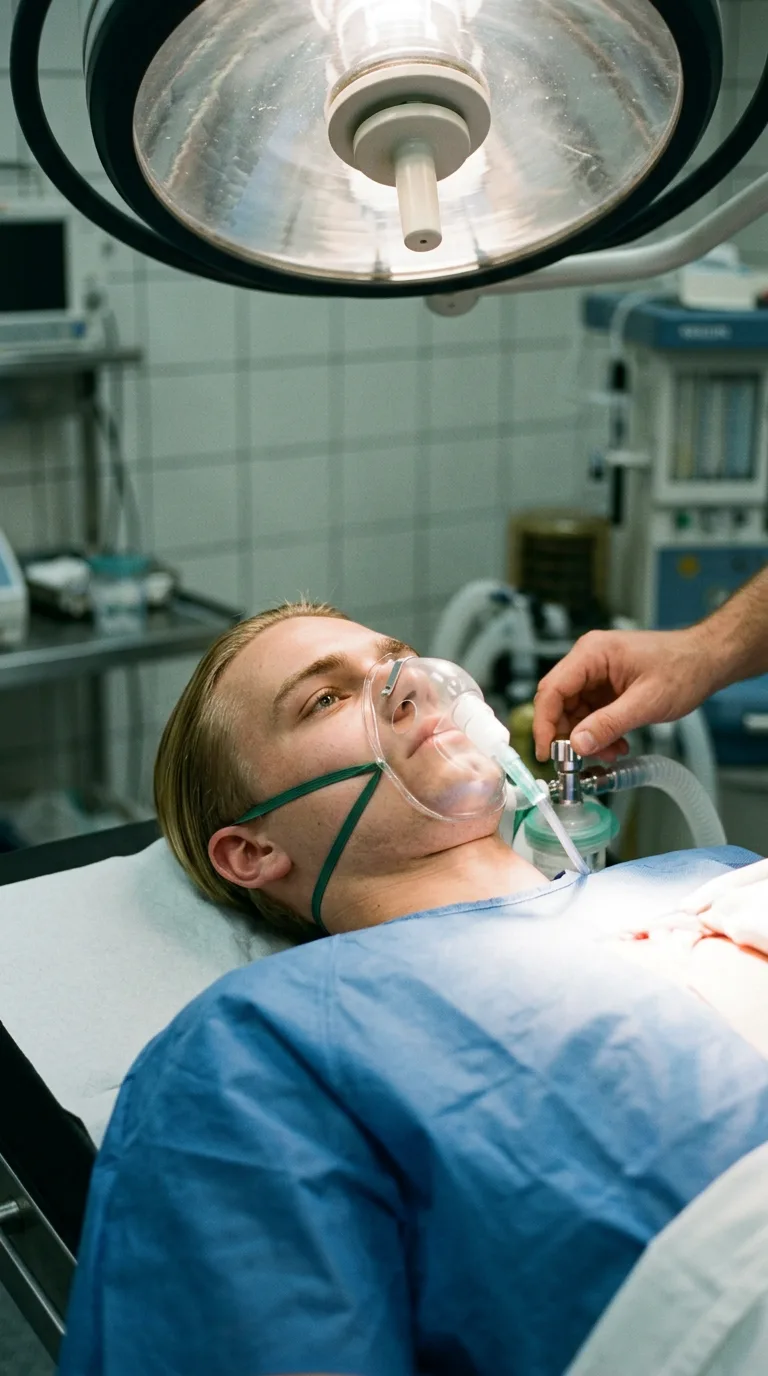
Rarest thing about him: Cigars only — epic, 1 in 56
Season 0seed 401516065 · engine v10
Character card
lineage 9LLZBL
His body-swap story
@petey.salazar rolled the wheel on and woke up as Petey Salazar — their first
The site loads slow on a phone that's too bright for the room. Nothing is happening anywhere else in the world tonight, or that's how it feels — Saturday bleeding into Sunday, the kind of nothing that isn't restful, just used up. You have read about this for years. Every thread, every story where someone wakes up behind a stranger's eyes. You never thought it would be a checkout page. VESSEL.CARDS, plain as a parking receipt, a wheel rendered in flat gray, a price that means something and a button that says SPIN. You pay it. You spin it. You do not believe it will do anything.
It stops on seven.
Not a name. A number, spoken by someone else, in someone else's mouth, and you are the one who feels it stop there — mid-word, mid-breath, the count trailing off into a mask that smells like plastic and something sweetened underneath. The light above is enormous and white and close. Machines keep a rhythm that isn't yours yet but is about to be. Under lids that aren't your lids your eyes drag once, left to right, taking in a ceiling tile, a lamp arm, a shape at the edge that might be a hand. Then the hand that is apparently yours, down at your side on a padded table, closes. Opens. Closes again. Testing. It is not a big hand. It is a young one.
You are in a body mid-sentence, on a table, going under — or coming up, you can't tell which yet, and the strangeness of that sits in you like a held breath before anything else does.
The mask stays on. Nobody in the room reacts, because nothing to react to has happened; the monitors keep their long unhurried tone, and whatever surgeon is standing over the sheet keeps working like the boy underneath his hands is still just a boy, asleep, unremarkable. You are still. You have to be. There is a fingertip's worth of movement available to you and you spend it feeling out the hand — knuckles, a thumb, nothing on any of the fingers, no ring, no band, skin a little rough at the pads.
That roughness is the first door. It opens onto a tray of dirty flatware, a sink running hot, a dish pit at the end of a ten-hour Friday — no, not this Friday, an earlier one, dozens of them stacked into a single ache across the same eighteen-year-old palms. Petey. The name comes up out of the hand itself, the way his manager says it — *Petey, table six needs waters* — clipped and constant, said so many times it's worn a groove. He bussed tables before he got promoted to the floor. He is proud of that promotion in a way he'd never say out loud to anyone his age, because admitting you're proud of carrying entrées is not a cool thing to be at eighteen, but he is.
Under the gown, under the anesthetic stillness, the body remembers standing for ten hours at a stretch — the particular tiredness that lives in the arches, climbing to the knees, a low burn that never fully leaves even on a day off. Average build, no gym regularity to speak of, all of his strength earned by tray weight and the stairs down to the walk-in. Green eyes that track once more, right to left this time, restless even now, even under the drug, because that's a thing about him: his hands and his eyes both, always looking for the next task, twitchy with unspent motion even at rest. Idle hands drive him a little crazy. He drums them on his thigh in the walk-in waiting on a ticket. He flips a butter knife when the manager isn't looking.
Touch gives you more. The strap of the mask against his jaw, and under that, faint, the ghost-memory of an apron strap in the same place — cotton, worn soft, tied twice around because once always came loose. White apron over black button-down, black pants, the black shoes that are murder by hour eight. He remembers this morning putting it all on in a room you never see clearly, sleeve first, the shirt still creased from the dryer, the small satisfaction of a clean uniform on a day that would not stay clean. A knife in a leather sheath clipped at his apron pocket, the weight of it there like a tool he trusts, a thing his hand knows without asking his head — folding it open, closing it, table crumbs, bread service, the particular economy of motion that a good waiter's hands develop and never unlearn.
And under that: a girl. Not from tonight, not from this table — from weeks stacked behind him, texts he doesn't answer anymore, a laugh he still hears sometimes over the pass when the kitchen door swings. Recent enough that touching the apron string brings up her hand undoing it once, joking, after close. He does not let himself sit in that memory long. Even half-conscious, some old habit of his turns away from it.
He drinks big maybe twice a month, off shift, with the guys from the kitchen, and otherwise nothing — a cigar sometimes on the stoop after a long service, watching the wet street go orange under the lamp, no rush to be anywhere. He believes there's something out there running things, though he couldn't say what, and he's never needed church to feel it. Twenty-five, thirty thousand sitting quiet in an account he doesn't touch and doesn't talk about, saved with a patience that surprises people who only know him as the kid clearing plates.
The mask fogs faintly with a breath that is now yours to take.
The hand at your side opens once more, slower, like it's checking that you're really the one asking it to.
You look at it. Small scar-less knuckles, a thumbnail bitten short, no ring, nothing on it that says whose it used to only be.
Then you find the ceiling with his eyes, past the lamp, past the mask fog, and you say, muffled through the plastic, not even sure if anyone hears it:
"How long's this one."