Peter Skarzynski
Fictional. Generated by AI — not a real person, and no likeness of one is intended.
37, warehouse picker in Boston · rolled by @peter.skarzynski · card — no film
History
who has worn him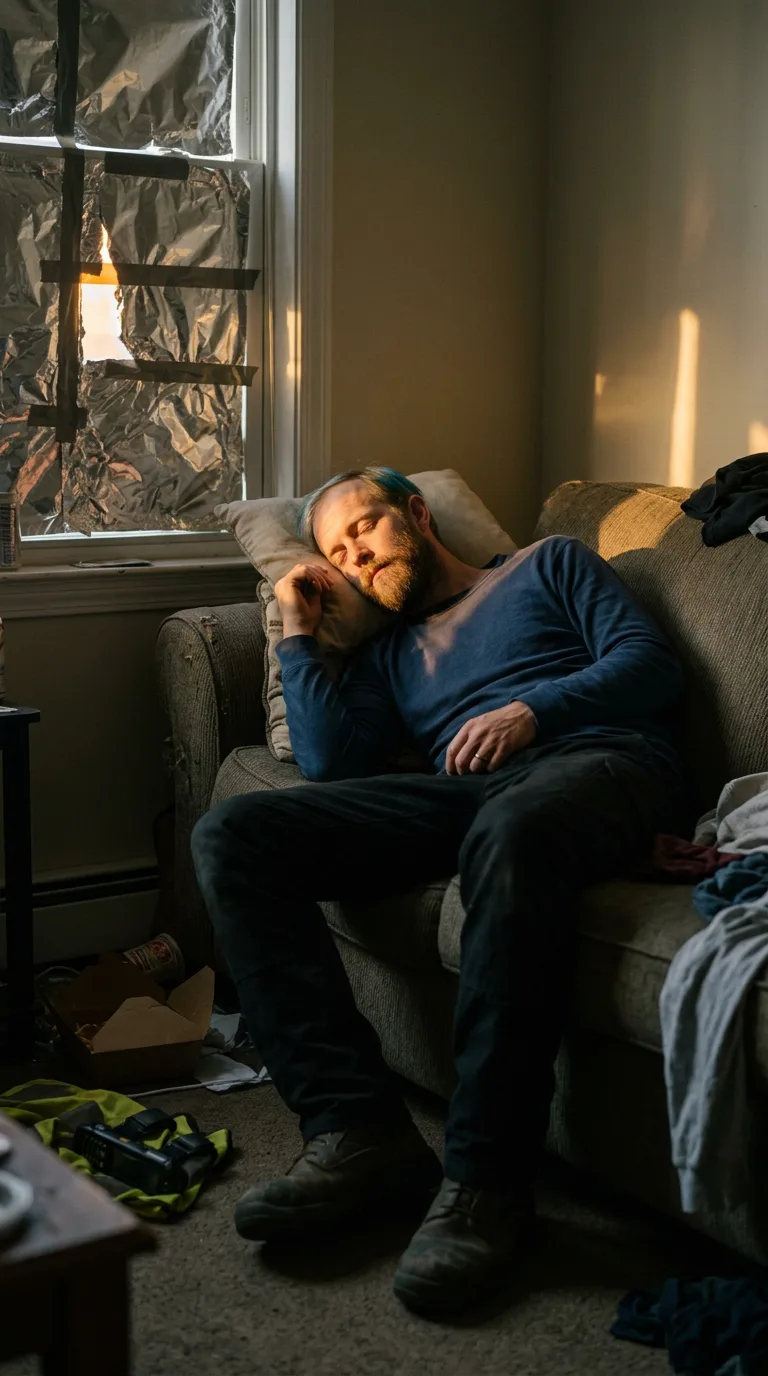
Rarest thing about him: Fashion color — common, 1 in 76
Season 1seed 101483660 · engine v11
Character card
lineage AES9WP
His body-swap story
@peter.skarzynski rolled the wheel on and woke up as Peter Skarzynski — their first
The page loads slow, like it's not sure it wants to. A wheel, plain as a raffle drum, sitting in the middle of an otherwise empty site. No testimonials, no countdown, no reason to trust it. You have wanted this for so long you stopped telling people — not the movies, not the stories, the actual thing, the actual click of becoming someone else mid-sentence — that the wanting itself has gone quiet and private, like a hobby nobody asks about anymore. Wednesday, the middle of your day, nothing pulling at you. You put in the number without letting yourself reread it. You spin.
The light is orange-gold and it is falling across your closed eyes like a hand. You turn from it out of some old animal instinct, and then — you don't decide this, something in you decides it — you turn back into it and open his eyes.
Foil. A torn corner of it over a window, flapping very slightly at the tape, and through the tear a bar of sun laid right across your face, and you are looking into it without blinking because blinking is the kind of thing that takes a person a second to remember how to want. You are sitting. Weight low in a couch that gives more on one side than the other. Boots still on. A phone-shaped scanner gun strapped to your wrist like a spent limb. Your mouth tastes like a twelve-hour shift and the coffee that tried to fix it.
The couch is the first thing that talks to you. Polyester-rough under your palm, a burn mark you can't see but your fingers find anyway, right where they always land, and a whole night comes up through your hand like heat off asphalt: the Costco DC out by the highway, aisle 14, the forklift's reverse-beep that never stops even when you close your eyes, the pallet jack's cold handle, a supervisor named Dava who says good pick without looking up. Eleven hours of it, and two hours before that of not sleeping in the break room because the chairs are the kind that punish you for trying. You came home at nine in the morning into daylight that hates you, taped foil over the window yourself in November because the sun through that gap hits the couch cushion like a searchlight every single afternoon and you were too tired that first week to care about the bedroom twenty feet away.
The shirt gives you more. Navy, long-sleeve, soft at the elbows from washing. Your hands — because they are your hands now, thick-knuckled, a nick healed white across one thumb — remember putting it on this morning-that-was-night: sitting on the edge of the bed, Tammy still asleep, one arm in, the wedding band catching on the cuff the way it always does, a small private scrape of metal you've stopped noticing except your hands haven't, they flinch through it every time. Tammy. The name comes with a whole weather system — nine years married, a fight about money three weeks ago that they're still walking carefully around, the specific gentleness of her getting up in the dark to make you a coffee you won't drink for another two hours. And under that, quieter, guiltier: Renata, six months gone now, a laugh you still sometimes hear in stores that aren't hers. You don't reach for it. It's just there, filed, the way a scar is there.
Your scalp itches where the dye's grown out — thinning hair combed low and left, blue faded to the color of a bruise healing, brown roots pushing through — and your jaw carries two inches of beard joined into the mustache, the kind you stopped trimming carefully around year two of marriage because Tammy said she liked it messy. One eye pulls outward very slightly, has always pulled that way, a thing people are too polite to mention and you've stopped checking for in mirrors. You are thirty-seven and your lower back has the specific dull ring in it that twelve-hour picking shifts put there, and your hands — not thinking about it, never thinking about it — crack their own knuckles, one after another, a small ritual violence you do instead of chewing your nails.
None of it is much money. None of it is supposed to be. A triple-decker porch, a storm door that doesn't seal right, boots by the couch that are more tape than sole. It is, somehow, still someone's whole actual life, arrived at from the inside, and you are standing in the middle of it with his weight and his breath.
You lift your hand — his hand — into the bar of light and turn it over, knuckles, the pale seam of the ring, the nick on the thumb.
"Whose house is this," you say, out loud, to no one, and it isn't really a question, and somewhere behind your eyes the wheel is already spinning again in your mind, patient, uncounted, not yet.