Peter Seung Hahn
Fictional. Generated by AI — not a real person, and no likeness of one is intended.
29, sheriff's deputy in New York · rolled by @dominic.ray.thibodeaux · card — no film
History
who has worn him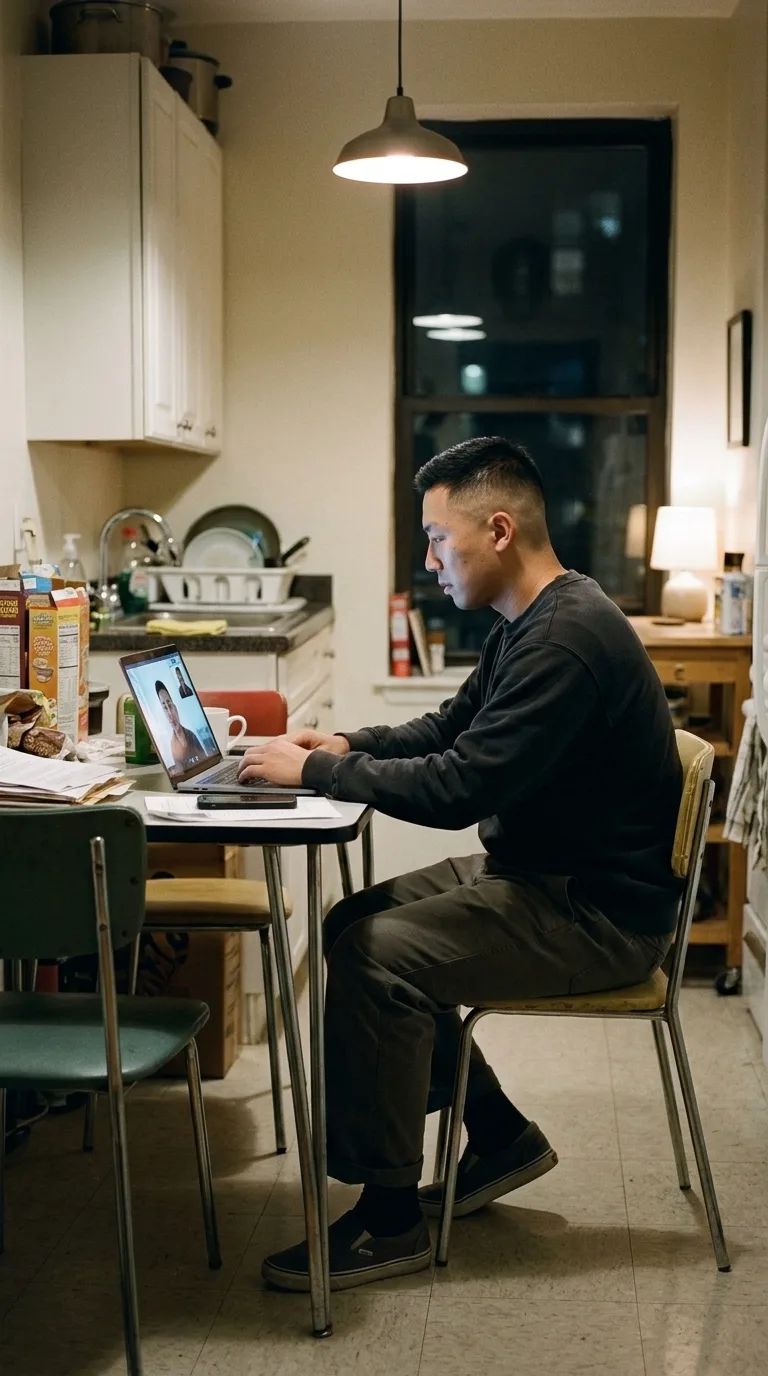
Rarest thing about him: Sheriff's deputy — common, 1 in 585
Season 1seed 730282676 · engine v11
Character card
lineage WVDWFN
His body-swap story
@dominic.ray.thibodeaux, wearing Owen Patrick Dalrymple, rolled the wheel on and woke up as Peter Seung Hahn, spent 3 minutes in him, then spun the wheel and woke up as Calvin Odell Rucker
You are standing at a sink in the Outer Sunset, in a nineteen-year-old's body, and the water is running over a plate you have washed twice. Four minutes. He was a dishwasher, and his hands are still pruned and pink from it, and the whole of him smells like fryer grease and bleach. He is fine. He works. Nothing is wrong with him, and that is what you cannot say aloud to the empty kitchen. He is a body that has already been used up by a Sunday, and you have been looking at the clock above the stove and feeling the wanting come back up under the ribs like a second pulse. You set the plate in the rack. You dry your hands on his jeans, which is a thing he does and you do not. Then you go to the page with the wheel on it.
The kitchen is in New York, and it is nearly midnight, and you are already in it.
There is a laptop in front of you and a face in the window, frozen mid-blink, one eyelid halfway down, the mouth caught on a word. Your own thumbnail is in the corner, small, and the timer under it keeps counting past the stall. You sit up dead centre into the camera. Your lungs are bigger than the last ones and the air goes into them differently. "Hello," you say, into the still face, and the voice comes out lower than you meant, a man testing how loud he is.
Then the table is under your forearms, cool chrome-edged laminate, and a flash comes up through the skin of them: a mother's kitchen, a table just like this one, a pencil, a child being told to sit straight. It is his feeling, a flat gray ache of being watched while doing sums, and it is gone. The sweatshirt is heavy cotton, washed so many times the neck has gone soft, and it hands you the morning without being asked. Sleeves pushed up, then pulled down. He stood at a closet door in the dark and chose the plain one because the plain one meant nobody would ask him how he was. The cuffs are frayed where he chews them, and your thumb finds the thread and your mouth wants it.
His fingertips are raw. You look at the nails, bitten to the quick, the skin around them tender and pulled. The body knows this. It reaches for the edge of the thumbnail on its own, and you let it, and the small sting is exactly what he wanted from it. Under that comes the other thing, the one he told nobody: a church basement, folding chairs, coffee that tasted of the urn, and his own hand raised once at a meeting for people who no longer drank. Eleven months. The cup beside the laptop is only tea. He is proud of the cup.
The chair is hard against the small of his back, and a dull ache sits low there. He is soft around the middle and narrow in the shoulder, a skinny-fat man who sits too much, and the belly presses the table edge when you breathe in. The slip-on shoes on his feet are worn flat. You push a toe against the linoleum and the cold comes up through the sock, and with it a girl's voice, years back, laughing in a doorway, saying his name wrong on purpose. Her name does not come. Only the laugh, and the way he stood very still so it would not stop.
There is a phone on the table and a stack of papers, cereal boxes, a dish rack with a yellow cloth. A badge hangs in his mind, though not in the room: the long rural roads at dusk, the cruiser ticking as it cools, a county that will never learn how tired he is. Deputy. Seven dollars of rice and a bank account you could fit in a drawer. The prayer he says before sleep is in his mouth too, ready, a habit of the tongue. You do not say it.
The window of the stranger on the call is still frozen. You lift your hands from the table and hold them in the lamplight, and you turn them over. Short wide palms, calluses along the heel from a grip you do not know. The ragged nails. They are yours now in the only way anything is.
You look up into the lens. "Hi," you say softly, in his voice. "Sorry. Can you hear me?" And underneath it, quiet as the timer: how long, this time, before the wanting comes back.