Paul Kinnare
Fictional. Generated by AI — not a real person, and no likeness of one is intended.
58, sanitation worker in Boston · rolled by @colin.hasbrook · card — no film
History
who has worn him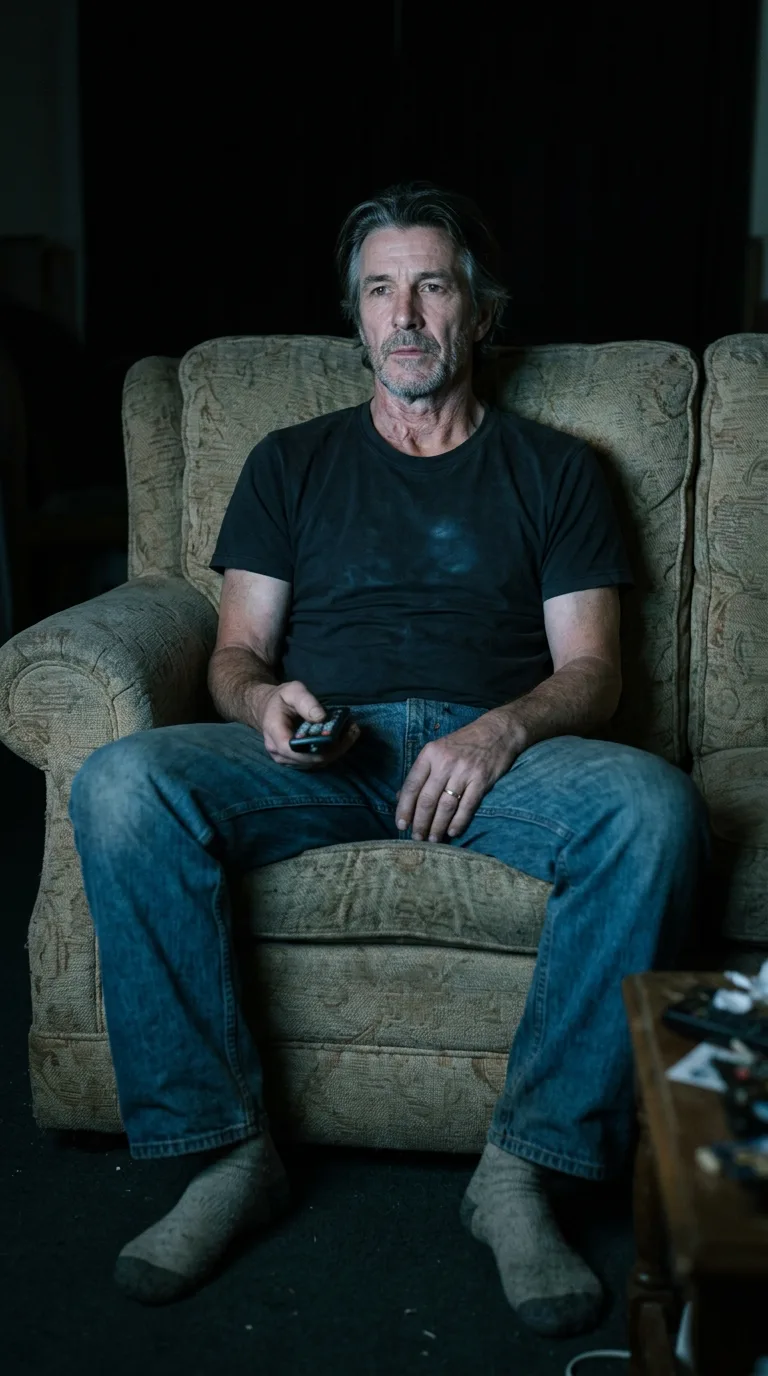
Rarest thing about him: A burn scar — epic, 1 in 132
Season 0seed 1902866004 · engine v10
Character card
lineage 2NZHHJ
His body-swap story
@colin.hasbrook, wearing Amit Cherian, rolled the wheel on and woke up as Paul Kinnare, spent under a minute in him, then spun the wheel and woke up as Andre Whitfield
The knee is what does it. Amit Cherian's knee — your knee, for less than a minute now — folds wrong getting off the training table, and something in it clicks like a knuckle popping backward, and the trainer says the word *scope* and *maybe six weeks* and you are already gone before he finishes the sentence, already reaching for the phone, already at the site with your thumb over the wheel while a grown man is still talking to a body you have decided to stop wanting. Six weeks in this. Six weeks of ice and a couch and a walking boot in a career that has maybe four good years left in it, if that. You didn't come back to Amit's life to sit in it. You came back because sitting in a body doing nothing is the one thing you can't stand, in any of them, and there is a whole card catalog of other men doing other things at this exact minute, none of them hurt. You spin without deciding to.
The room comes in dark and blue and moving. There's a couch under you, soft in a broken-in way, and a weight in your right hand that turns out to be a remote, and a light flickering off a face you can't see because it's your own face now, somewhere above where your eyes are. The show on the screen cuts to a commercial, bright and sudden, whiter than everything else in the room, and in that half-second of glare you feel yourself — feel *him* — sit up straighter than the moment called for, spine unbending like something startled. The remote goes down on the arm of the couch, deliberate, his hand doing it though you didn't ask it to. Canned laughter plays under the ad. You don't laugh. You're too busy arriving.
The couch is the first thing that talks to you. Worn velour, a permanent dip on the left cushion where he's sat every night for eleven years, and it gives you an evening — not this one, an old one — him and her, Denise, laughing at something forgettable on a Friday with the lights off because the electric bill had been bad that month and neither of them wanted to say so out loud. That's this couch. That's what it knows.
Then the shirt. Black cotton, thin at the collar, a shape worn into the shoulders that isn't quite your shoulders yet but is getting there fast — and the shirt gives you a Tuesday morning, hours ago by his clock, hauling it over his head standing in a bedroom with the shade half up, gray Boston light through it, Denise already gone to work. His shoulder had been bad that morning, the left one, the one that's carried thirty-some years of barrels lifted the wrong way because the truck was already rolling and there wasn't time to do it right, and the shirt had caught on it going down and he'd had to work his arm through slow, teeth set, not making a sound because making a sound about it stopped meaning anything to Denise around year twenty. You feel that shoulder now, a low persistent ache that isn't pain exactly, more like pain's furniture, always in the room.
The jeans under your palms are older than the shirt — five years, six — soft at the knee, and they bring back a different morning, one with frost on the storm door, him buttoning them standing on one foot in the cold because the radiator in that room never worked right, and a thought arriving with the memory rather than after it: *forty more years I could be doing something else.* Not bitter. Just arithmetic, done at six in the morning too many times to still sting.
The wedding band gives you the most, because it's touching skin and skin remembers longest. Denise at twenty-six in a dress she altered herself. Denise at forty telling him about the lump that turned out to be nothing, both of them in a hospital hallway holding hands too hard. Denise now, upstairs probably, or out — the ring doesn't say where, only that she's the one fact in this house that isn't a question. And under that, quieter, an old apartment on Dorchester Ave and a woman named Carol who isn't his wife and never was, who he thinks about sometimes on nights exactly like this one for reasons he has never once explained to himself, a door he closed at twenty-nine and has kept oiled ever since without meaning to.
The burn comes last, because it isn't something you're touching, it's something you're wearing — his jaw, his neck, a stretch of skin gone shiny and pulled since a truck fire eighteen years back that took four inches of a good friend named Ray who didn't walk away from it the way Paul did. Every time Paul shaves around it he thinks the same small thought, unasked: *could've been worse, was worse, for somebody.* His faith sits right next to that thought, has for years — a church on Sundays, a God he doesn't argue with much, a private conviction that being spared counts as a debt and not a gift. Two kids, grown now, who call on Sundays too. A truck he'll be back on tomorrow at six, whatever his knee — his old knee, the one you left behind — was going to cost him.
His hands are wide, older than you're used to, gloved most days but bare now, one gold band, knuckles a little swollen with something that will be arthritis before long if it isn't already. They know a hundred small weights without thinking — a barrel's lean point, a hydraulic handle's give, the particular grip of a truck's back rail at speed. They know Denise's hand in the dark better than they know anything.
You look at them anyway. Turn the left one over in the TV light, watch the ring catch the flicker, feel the ache sit in the shoulder like it's always been yours, because as of about four seconds ago, it is.
"Huh," you say, out loud, to no one, in a voice with thirty years of diesel and cold mornings under it that isn't the voice you had this morning at all.
Nobody answers. The show comes back from commercial. You don't reach for the remote yet.