Paul Antonellis
Fictional. Generated by AI — not a real person, and no likeness of one is intended.
62, student in Boston · rolled by @paul.antonellis · card — no film
History
who has worn him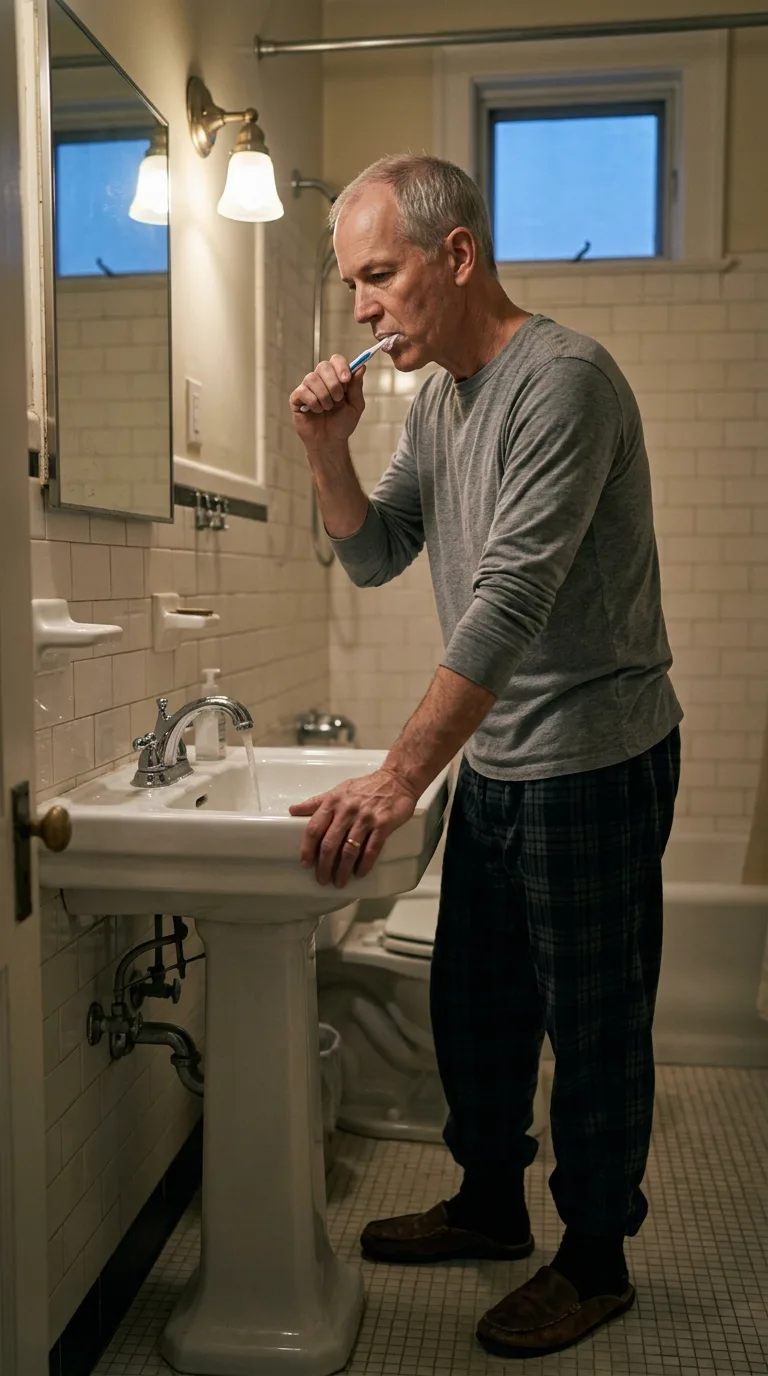
Rarest thing about him: Brushing his teeth — common, 1 in 53
Season 1seed 981108523 · engine v11
Character card
lineage G36Q83
His body-swap story
@paul.antonellis rolled the wheel on and woke up as Paul Antonellis — their first
The screen is the only light in the room, and it's early, too early, the kind of hour where the dark outside hasn't thought about turning yet. You've had this tab open for three nights running. A wheel, rendered clean and almost tasteful, the way expensive bad decisions always are. You have read the fine print twice and the reviews zero times because there aren't any that matter. This has been yours since you were a kid staring at the ceiling, the question under every movie about swapped bodies and stolen faces: what would it feel like, the actual second of it. Not the moral. The second. Tonight is nothing, a Tuesday not yet begun, nothing on, nowhere to be, and that is apparently all the reason a person needs. You pay. The wheel spins the way wheels do in videos, too smooth, and then it isn't spinning.
You are leaning over a sink that is not yours, in a bathroom that is not yours, and your mouth is full of foam.
The brushing stops — his hand, now yours, now whoever's — stalled mid-stroke on the lower left molars. Then it starts again, slower, like something rebooting, and you walk it across to the other side because some instruction older than thought says *you're not done*. The tap is running. Water sounds enormous. You rinse, and rinse again, twice, and the second time feels like checking a door is locked after you've already locked it. You stand the toothbrush bristles-up, out of the gray puddle it usually sits in, and that small act of tidiness is the first thing that is unmistakably not a decision you made.
The shirt is what opens first. Long-sleeved, thin, worn soft at the elbows, and touching it with his own forearms gives you a morning: him pulling it over his head in a bedroom with the shades still down, a man's voice from the next room — *Paul, your bag's by the door, don't forget it again* — and the fondness in being nagged, twenty-six years of being nagged by the same voice and never once minding it. Marcus. The name arrives with the warmth already attached, no effort, like it was always going to be the first thing. A wedding band, which your hand — his hand — goes and checks is still there on the sink's edge before you've told it to. It is. Plain, a little loose now that the knuckle it swore itself to has thinned, the finger's memory of Marcus sliding it on in a county clerk's office nine years ago, both of them in borrowed blazers, laughing at nothing because the paperwork took forty minutes and the vows took four.
The plaid pajama pants against your legs bring something rougher: three kids, grown now, grown and loud and far-flung, a daughter in Providence who calls every Sunday without fail and two sons who call when they remember, which is less often, and it used to ache and now mostly doesn't, mostly. A Christmas with all of them crammed into the triple-decker's kitchen, somebody's kid underfoot, Marcus burning the rolls on purpose because it had become a bit. That one you'd stay in if you could just stay in memories.
The cold rim of the sink under your palm gives you the strangest one: a woman's name, Teresa, not unkind, a year and a half gone now, the two of you overlapping with Marcus in a way that took a long time and three different therapists to even have language for, and it ended the way good things end sometimes, which is to say sadly and on purpose and with nobody as the villain. You still text her. You — he — texted her last week about nothing, about a parking spot.
The backpack strap, remembered through the shoulder, is newer and stranger than any of it: a campus, actual grass, actual nineteen-year-olds who call him "sir" without meaning anything cruel by it, a laptop he still hunts-and-pecks on, the specific, surprising joy of being bad at something again on purpose, at sixty-two, because the kids are raised and the job let him go early with a package and Marcus said *so do the thing you always said you'd do* and he did. His knees know the folding chairs in Room 214. His lower back knows the walk up from the T. His hands know a steering wheel he hasn't touched tonight and a coffee cup he'll reach for in nine hours that don't exist yet in this body's time, because this body is standing in cooling bathwater-smelling air at the ragged other end of a Monday, while wherever you came from the day hadn't even opened its eyes.
The jaw under your own fingers, when you touch it, is perfectly smooth — he shaved before this, carefully, out of habit more than vanity — and under the smoothness is just a face, an ordinary one, sixty-two years of it, nothing remarkable about it and no reason there should be.
You straighten up. You look at the hand on the sink's edge — his hand, the ring, the thinning hair reflected wrong-side in the mirror above it — and you turn it over slow, both sides, like checking for a trick.
"Marcus," you say, to the empty bathroom, to the running water you haven't shut off, to no one, "I'm — give me a second."
And you have no idea, none, how many seconds you get.