Patrick Joseph Dunleavy
Fictional. Generated by AI — not a real person, and no likeness of one is intended.
35, manager (mid-level) in Philadelphia · rolled by @ernesto.villalobos.marqu · card — no film
History
who has worn him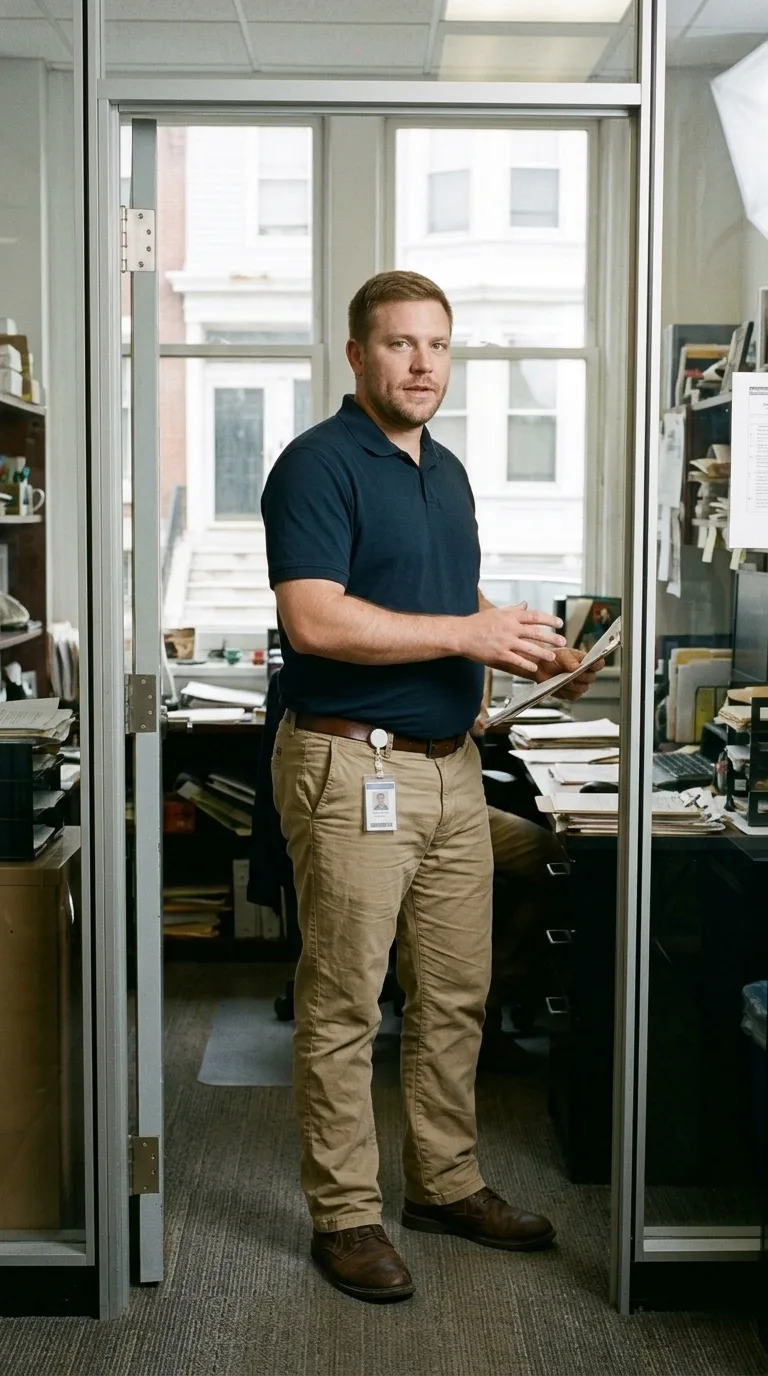
Rarest thing about him: Seriously rich — $3M to $10M — common, 1 in 88
Face-off rating 1500 · not ranked yet
Season 1seed 308884819 · engine v11
Character card
lineage HLUK77
His body-swap story
@ernesto.villalobos.marqu, wearing Ernesto Villalobos Marquez, rolled the wheel on and woke up as Patrick Joseph Dunleavy, spent 9 minutes in him, then spun the wheel and woke up as Caleb Thomas Brandt
You are standing in a kitchen in El Paso, in Ernesto's body, and the light through the window is the flat white of noon. His knees ache at the first step. His belly presses the counter. You have worn him for less than a minute, and you already know what was wrong with him. He has a sixty-four-year-old's hunger for nothing. He wants his coffee cold and his day small. You paid to be someone, and you have been handed a man who is waiting to be finished.
His thumb is already on the phone. The page is open, with its wheel and its patient little arrow. You do not feel guilty. You feel the way you do when a door you thought was a room turns out to be a closet.
You spin.
Afternoon, Philadelphia, mid-shift, and you are standing. Your weight is on the left foot. A folder is open in your left hand, and the right hand is in the air, halfway through a gesture that was explaining something to somebody. Your mouth is open on the next word. The room is glass on three sides, with the door propped open. Past the window there is a white rowhouse step, worn hollow in the middle.
The motion breaks. You close the folder wrong and have to do it again, slowly, edge to edge, and it is a motion you have made ten thousand times. You check it. You check the next one, and the one after it.
Then the memories come, each through whatever you touch.
The polo against your back is navy and washed soft. It gives you the morning: his arms going through the sleeves while the radio talked, the collar flipped up and then smoothed down with two fingers. A man who irons nothing and feels better in a collar. The khakis give you the belt, the brown leather one, the third hole, which he moved to the fourth last spring and did not discuss with himself. The badge on its reel is cold plastic against your thigh. Your thumb finds it, and you feel the small dull pride of a title he earned slowly. Nobody cheered when he got it.
The folder's edge is paper-dry. Under it comes a whole bad quarter, a layoff he had to deliver, a girl crying in this same glass room while the open door let everyone see. He had kept the door open on purpose, so that nothing he did here could be secret. You feel how that was both decent and lonely.
Your right hand drifts, unasked, to the pocket. It wants something to turn. There is no ring in there, but the fingers know the motion anyway, over and over, a ring that used to be there, a ring that was his grandfather's. You feel a church basement, folding chairs, a hymn he can sing and cannot believe in much. You feel the cigarettes he quit, the exact ache in the lip, and how he has not had a drink in his life because he watched one.
You feel money, too. It is quiet, a number in an account that nobody here knows about, an inheritance he never mentions and a house on a street of steps. You feel the Sundays, a man alone at a table with the paper, and a name he does not say, a boy from long ago. His dimples cut in when he thinks of it, even now, even at rest.
His shoes are stiff, and his calves are tight. His back has a dull old ache at the belt line. His breath is easy. This is a body that is fine and thirty-five and tired.
You lift your right hand and turn it over. It is wide and warm, and the knuckles are plain. There are no marks on it, only the calluses of ordinary use. You look up to the glass, to your reflection, to the stranger's green eyes looking back.
"Hi," you say, and the dimples come. "Let's see how long this one lasts."