Pat Medeiros
Fictional. Generated by AI — not a real person, and no likeness of one is intended.
56, mechanic in Honolulu · rolled by @connor.waskiewicz · card — no film
History
who has worn him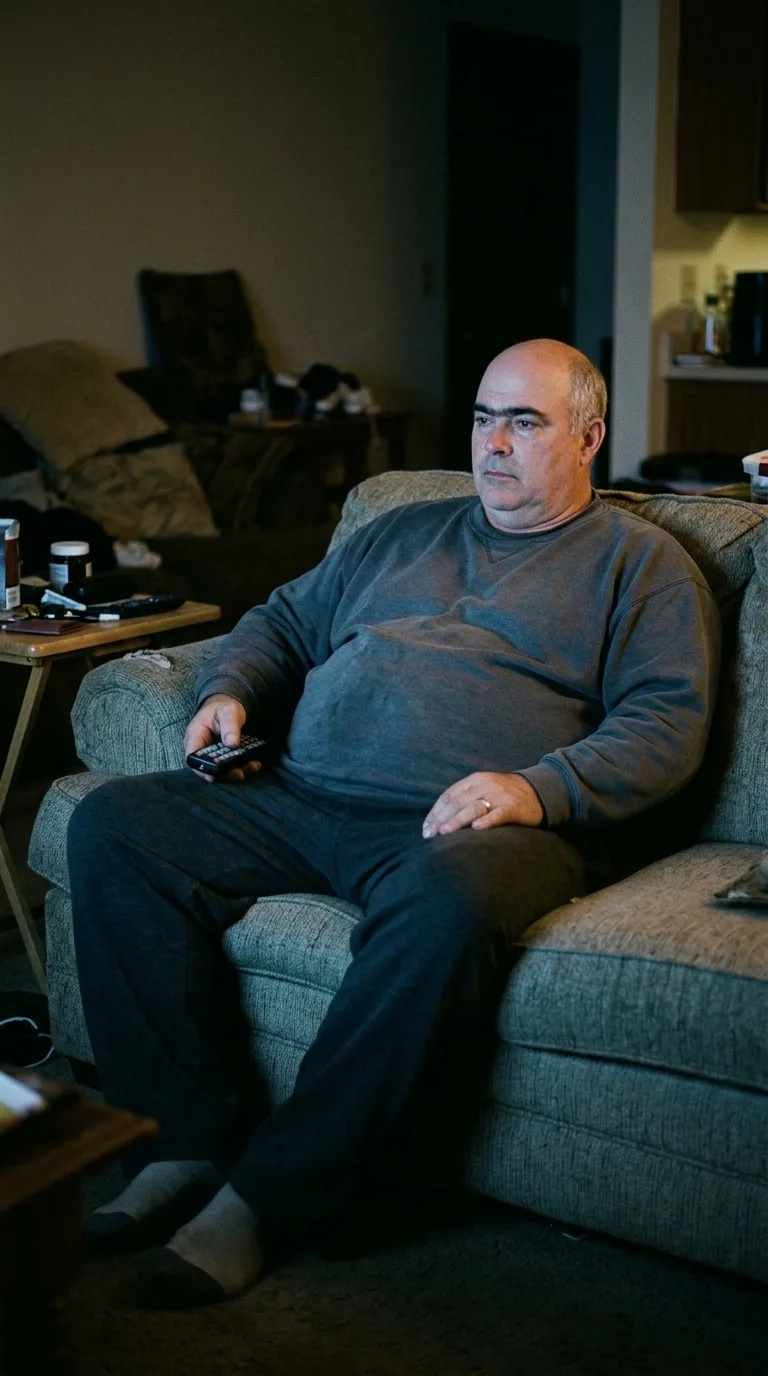
Rarest thing about him: A unibrow — common, 1 in 49
Season 1seed 1314792851 · engine v11
Character card
lineage 2NZHHJ
His body-swap story
@connor.waskiewicz, wearing Cody Ratliff, rolled the wheel on and woke up as Pat Medeiros, spent under a minute in him, then spun the wheel and woke up as Hector Ybarra
You are standing in a kitchen in Eastern Kentucky, in the dark, in a body that works. Cody Ratliff has freckled forearms and knees that do not complain. He has been yours for four minutes. The refrigerator hums. Someone down the hall turns over in bed and the mattress answers. Everything in this house is asleep except you, and you are holding a glass of water you do not want.
Nothing is wrong with him. That is the trouble. He is twenty-four and quick and nobody is waiting on him for anything, and you stood at the sink and felt it: a door that opens onto more of the same. So you went back to the page with the wheel on it, because the wanting does not ask whether the body is good. You put the glass down. The wheel turns.
Then the screen cuts to a bright frame and you are sitting up straight.
The couch gives under you, wide and soft and worn. The remote is in your right hand and you set it on the arm. Dark room, blue light moving on the walls. Your own breath comes slow and heavy, with weight behind it. The jaw is clenched, and you let it go, and it wants to clench again.
The sweatshirt is the first thing you really feel, the cuffs gone loose at the wrists, and it hands you a morning: a Monday, a gray fleece pulled over his head in the bathroom, a wife's voice through the wall asking if he ate. He said yes. He had not. The feeling that comes with it is small and tender and a little guilty, and it is his.
Your left hand rests on your thigh, and the ring is there, a plain band worn snug into the flesh. Touch it and the church comes up, the cool wood of a pew, a sleeve pulled tight over the arm, a younger heavier-haired man shaking so hard he nearly dropped it. Then two children on a red dirt yard in white glare, one on his shoulders, the tin roof ticking in the heat. You feel what he felt, which was that nothing could be better and he should not say so aloud.
Your thumb finds the pad of his index finger, thick and ridged, and the garage floods in: the cold of a creeper under his spine, brake dust, the raised car overhead like a low sky, a rag in his back pocket. His hands know the weight of a torque wrench before he thinks of it. Under that, the old craving, a cigarette after the last bolt, the quit he is still proud of. His knees ache from forty years of concrete. His back is sore low and honest.
The socks are warm and thin against the carpet. The couch smells of dust and laundry and the supper that was eaten. On the screen someone tells a joke and the room does not laugh, and some part of him that used to laugh at this is gone.
You lift your left hand into the blue light and turn it over. It is broad, scarred by work but unmarked in ways you check twice, the ring bright. Then you look up, past the television, into the dark.
"Well," you say, in a voice lower than any you have had. "Hello, Pat."
Somewhere a wheel is already turning in you, a question with no answer: whether you will still be here when the sun comes up over the tin roof, or whether the wanting will come back before the show ends.