Otis Mabry
Fictional. Generated by AI — not a real person, and no likeness of one is intended.
64, groundskeeper in Los Angeles · rolled by @tyler.iverson · card — no film
History
who has worn him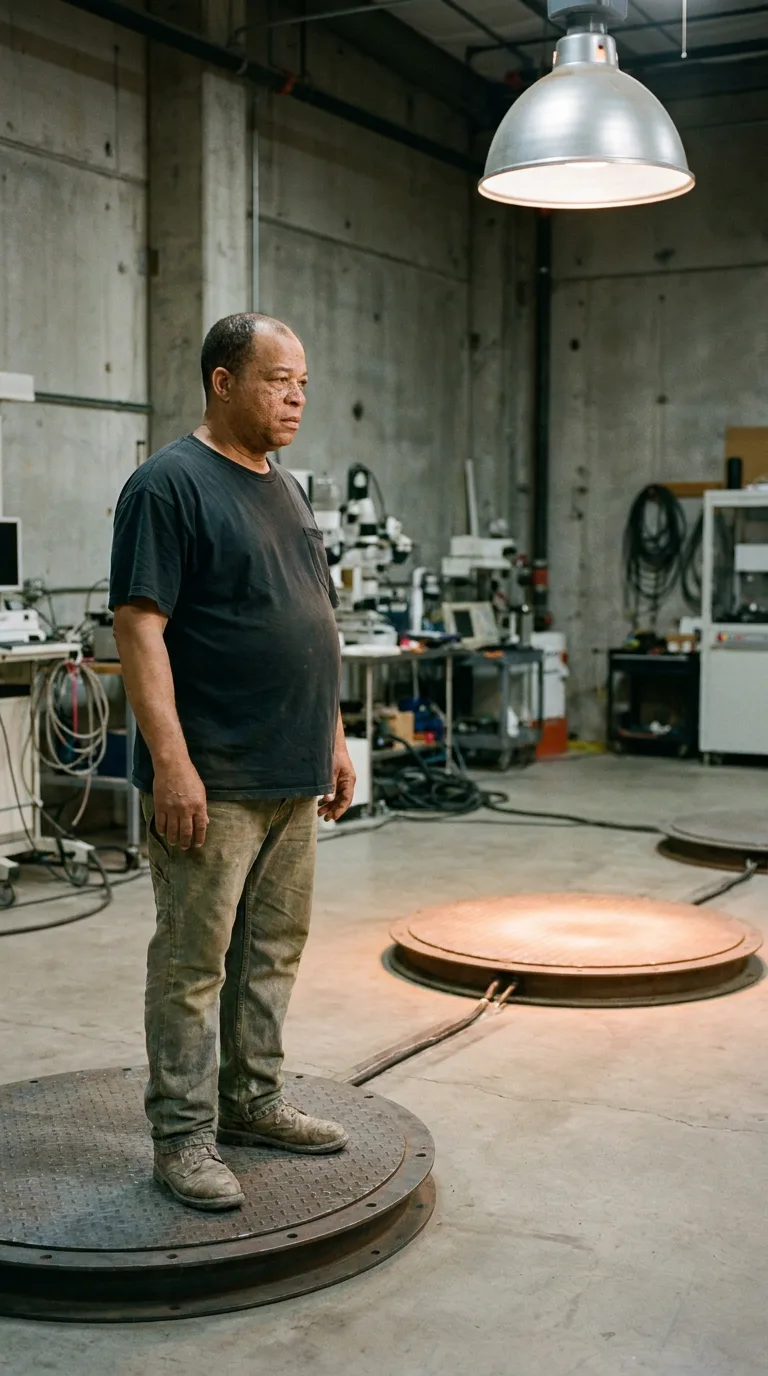
Rarest thing about him: Groundskeeper — rare, 1 in 106
Legacyseed 453880638 · engine v8
Character card
His body-swap story
---
You have known him since you were nineteen and he was nineteen, and the first thing you ever noticed about him was the freckles — a spray of them across the nose and the tops of the cheeks, like somebody had flicked a wet paintbrush at him. You told him so, badly, in a dorm hallway in 1981, and he laughed so hard he had to lean on the wall, and that was forty-five years of it, right there, decided in one hallway.
You went into physics. Otis went into grass.
That is how you always said it, and he never let you get away with it — *grass, hell, it's agronomy, it's drainage, it's a hundred and forty thousand square feet of living thing I keep alive in a desert* — and he was right, and you knew he was right, and you said it anyway because he liked being defended by himself. Sixty-four years old and he still mowed his own stripes because he didn't trust the crew's overlap. You've seen him out there at six in the morning with the sun coming up over the third-base stands, the field empty, the cut so clean it looked printed on, and him standing at the edge of it with a can in his back pocket, working a pinch of Copenhagen behind his lip, just looking at what he'd made. Never a drink in his life. Not one, not at your wedding, not at his own. But he'd chew, and he'd spit in a Gatorade bottle, and Charlene hated it, and that was one of maybe four things she hated about him.
She left anyway. Eleven years ago. He never took the ring off for the first three of them, and when he finally did there was a band of untanned skin around the finger, pale as the inside of a shell, and it never fully went away. He'd rub it sometimes without knowing he was doing it. Thinking about her, probably. Sometimes about Dev — the boy, thirty-one now, in Sacramento, calls on Sundays after service.
Otis was worth two million dollars and dressed like a man worth forty. The Angeles Vista lots he bought in '94 for nothing because a groundskeeper knows soil and knows what water does and knows which hillside will still be there after a wet winter. He never spent it. He tithed it. He drove a nineteen-year-old truck and lived in the same stucco courtyard off Slauson with the dry palms rattling and the late sun coming in orange off the wall, and he'd sit on those iron stairs after work like a man with nothing, and he'd say the Lord gave him enough and then some, and what did you want him to do about it. He was happier than you. That was the part you couldn't ever get around. He was the happiest man you knew, and you had three degrees and a lab.
He came to the lab because you asked him to. That's the whole thing, right there, that's the entire ledger. You asked him to come look at the machine because there was nobody else you wanted to show it to first. Not the board, not the funders, not your wife. Him. And he drove across the city on his day off, in that black T-shirt with the grass stain on the shoulder, and he stood in the middle of the floor with his hands hanging and looked up at that big aluminum bay light and said, *this whole building for two dinner plates?*
You had him stand on the near pad because the near pad was cold. The near pad was inert. The near pad was the *receiver*, and you were going across the room to the transmitter, and all it was ever going to be was you stepping into a cabinet of light on one side of a hangar and stepping out on the other. Ten meters. A parlor trick with a nine-figure budget. He was going to stand there and watch you appear beside him and you were going to see his face do the thing his face did.
He was still looking up at the lamp when the far pad started to glow.
You remember the smell of ozone and the taste of pennies and then no floor at all. You remember thinking, in whatever passes for thinking at that speed, *the polarity*, and *oh*, and *no, not him*.
The far pad flares white. The light comes across the room in less time than there is a word for. It hits him, and he staggers half a step —
— and you steady.
You steady into a stance that was never his. Weight back on the heels, chin up, one shoulder higher, the way you've stood since you were a kid, and it comes with you into a body that has never once stood that way. That's how you know before you know anything else. Not the height, though he was two inches taller than you were. Not the weight in the belly, which is comfortable and strange, a warm heaviness like a coat you didn't put on. It's that you *stood wrong*, and nobody corrected you, because there is nobody in here but you.
The hangar is enormous and quiet. The far pad has gone dark and something in it is ticking as it cools. You are alone in the room. You are alone in the room in the strictest sense that has ever applied to those words.
You lift the hands. They are his hands — thick fingers, nails cracked, grass in the creases of the knuckles, a dark stain of dirt that will not wash out of the pad of the thumb — and on the third finger of the left there is that pale ring of skin, and you turn the hand over and turn it back, and you cannot find where you end.
There is no second pad to step onto. There is no way back. You've read the math with a mind that is currently sitting behind his eyes and using his optic nerve to do it, and there is no term on this, no half-life, no drift. You get him for good.
You will find out other things in the following weeks, in no order, all of them small and all of them awful. That his back hurts in the morning. That the flank pain — the one he mentioned once, offhand, and you didn't follow up on because it was a golf weekend and you were talking — is a stone, and there's another one behind it, and you will pass the first one in a Cedars bathroom at four in the morning holding onto a grab bar and saying his God's name out loud in his voice for the first time and meaning it. That his mouth wants the tin. That the smell of cut grass is not a nice smell to this body, it's a *work* smell, it's a *get up* smell, and you'll wake at five without an alarm for a year.
That Dev calls on Sundays.
That is the one you can't hold. That is the one that's waiting for you the minute you walk out of this hangar into that dry orange light. The phone in his pocket will ring and it will say DEV and you will have to decide, in his voice, with his mouth, whether to be his father.
You bought him a drink once, as a joke, at your fortieth birthday. A club soda with a lime, and you put it in front of him and said *to a wasted life*, and he took it and held it up and said, *to a life*, and drank the whole thing down, and set the glass on the bar upside down.
You are still standing on the receiver pad. The lamp is buzzing above you. You are sixty-four years old, six feet tall, two million dollars rich, and the only man on earth who remembers who was supposed to be standing here.
You look at the hand again.
Then you lift your eyes, because you have to start walking, and there's a field on the east side that gets mowed on Thursdays and nobody else knows how he liked the overlap.