Osvaldo Reyna
Fictional. Generated by AI — not a real person, and no likeness of one is intended.
52, delivery driver in Small-town Ohio · rolled by @osvaldo.reyna · card — no film
History
who has worn him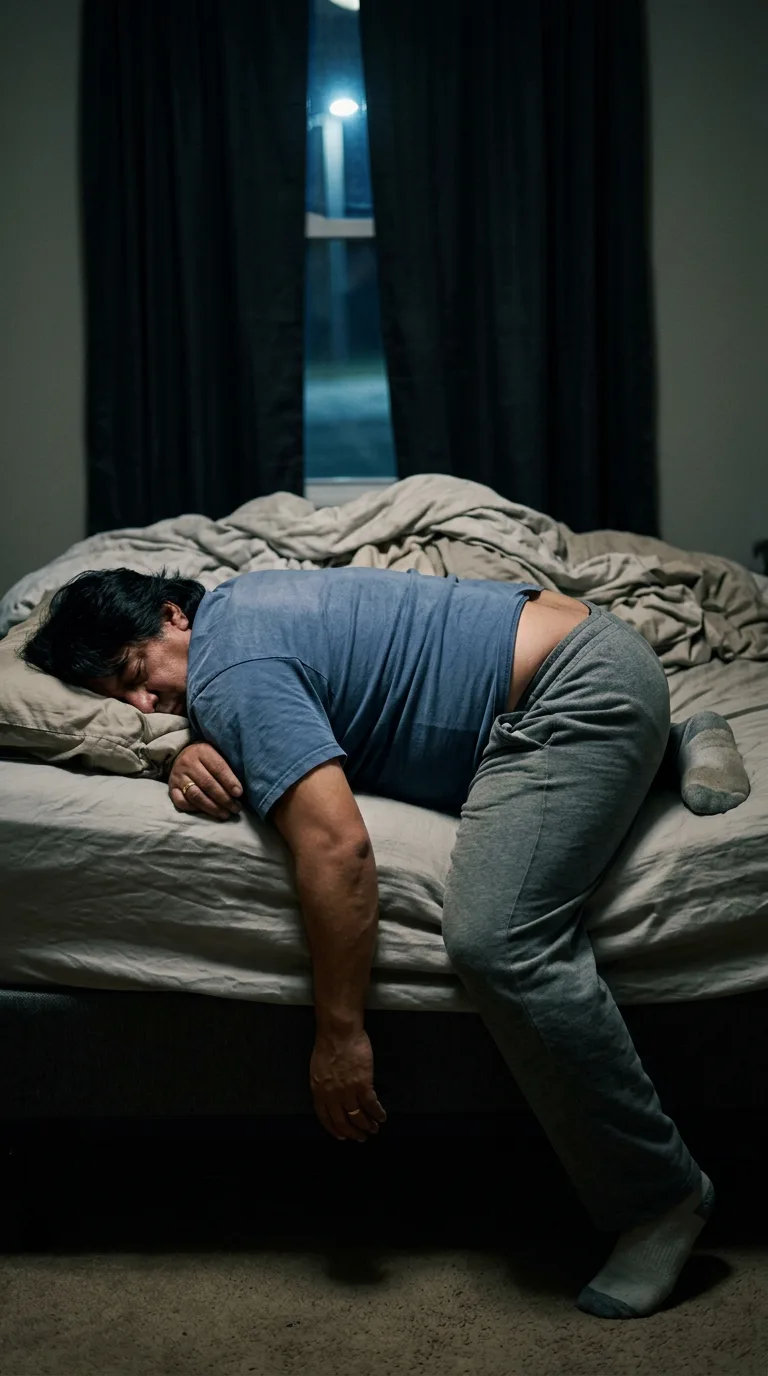
Rarest thing about him: Green — rare, 1 in 17
Season 0seed 1120766134 · engine v10
Character card
lineage PILT9F
His body-swap story
@osvaldo.reyna rolled the wheel on and woke up as Osvaldo Reyna — their first
The site loads slow on a bad connection, the wheel spinning lazy circles like it has all the time in the world, and you have all the time in the world too — a Friday with nothing on it, the kind that used to get filled with threads at two in the morning about men who wake up as other men, forums full of people who wanted this exact thing and never once found it real. You have wanted it for years, the way you want a taste you can't place. Tonight it is real. You pay. You spin. The wheel does not care that it is evening where you are and that somewhere else the hour is different, later, deeper — it only stops.
It stops on a small man in an unmade bed, face-down, one arm hung off the edge like it gave up on him hours ago.
You arrive already breathing his breath. It goes ragged to even in the space of one inhale, and the arm that was hanging draws itself up without asking you first — or maybe you asked it and didn't notice, the line between the two is not clean yet. The body rolls onto its back. Hands fold at the chest, over a shirt gone soft with washing, in a posture this man has apparently never once taken sleeping, and somewhere very far down there might be a version of him that would find that strange, if there were still a him to find things strange.
There isn't. There's the streetlight through the gap in the curtain, blue and thin, lying across the ceiling. There's the socked foot still hanging off the mattress, cold air finding the exposed heel. There's weight — real weight, more of it around the middle than you expected to be inside, a body that has spent fifty-two years being lived in rather than looked at. And there's the shirt against your back, damp cotton gone cool, and it starts talking before you ask it to.
Morning. Not this morning — some morning, all mornings, the same motion so many times it has worn a groove: sleeve, shoulder, the second sleeve, the collar dragged down over hair he never quite gets to a barber often enough. Hands that go stiff in the knuckles before ten a.m. and loosen by noon. A wedding band that has to be worked past a knuckle that's grown since it was put on, twenty-some years of a hand getting used to being married. The shirt is brown. It is always brown. There's a patch over the heart he stopped noticing the shape of years ago.
The van comes next, through the memory of the handheld scanner cold in his palm — the smell of cardboard and diesel and the particular boredom of a route driven so many times the truck could probably do it without him. He hates it some days. Loves it other days, the ones where Mrs. Petrovsky at the corner house brings out lemonade in July like it's still 1985 and he's still twenty-six. He is not twenty-six. He is a man whose knees announce themselves on the folding step down from the cargo door, whose lower back has an opinion about the job it never used to have.
The ring gives you more than the shirt does. Marisol — not from touching her, she isn't here, but from the metal itself, worn thin on the underside where it rubs. Twenty-three years. A wedding in her cousin's backyard in July, folding chairs, a cake that leaned. Two kids raised in a house four blocks from the stoplight that is the only stoplight this town has, grown now, one of them living two states over and calling on Sundays, one of them still local and dropping by with groceries she doesn't need help carrying, using it as an excuse. Marisol asleep somewhere near where this bed is — no, not near, in it, you realize, the shape of another body's absence pressed into the mattress like a shadow left behind by someone who got up first tonight, or he did, the memory won't settle which.
And under that, smaller, guiltier, the ex — Denise, a name that surfaces with its own separate weather, sunlit and twenty years gone, a version of himself that stayed nineteen forever in that one corner of him, harmless now, visited sometimes on nights he can't explain to Marisol and doesn't try to. Nothing happened there in decades. It's just a room he still has a key to.
The rosary on the nightstand, unreached-for tonight, gives you church — not devotion exactly, more habit, more his mother's voice in Spanish saying grace before every meal she ever cooked him, more Christmas Eve mass that he complains about and never misses. The empty glass by the bed, one of two he allows himself most weekends, never more, a rule he made for himself once and mostly keeps.
Your hands — his hands, thick-fingered, nails bitten down past where they should be, a habit he's ashamed of and does anyway when he's not thinking, which is most of the time — lie folded on his chest in a shape he never sleeps in. You feel that wrongness before you feel anything else: not fear, not yet, just a body arranged by something other than its own exhausted instinct.
You look at them. Turn one over in the thin blue light, watching the ring catch it, watching the bitten nails, watching fifty-two years of a stranger's ordinary hands hold still for you like they're waiting to be told what they're for now.
You lift your eyes toward the gap in the curtain, toward the street with its one light turning red for no one, and you say, quietly, to no one either — "Okay. Okay, I'm here" — and you do not know, any more than he ever did, how long here is going to last.