Nicolás Reyna
Fictional. Generated by AI — not a real person, and no likeness of one is intended.
29, cop in Pittsburgh · rolled by @paul.gervasi · card — no film
History
who has worn him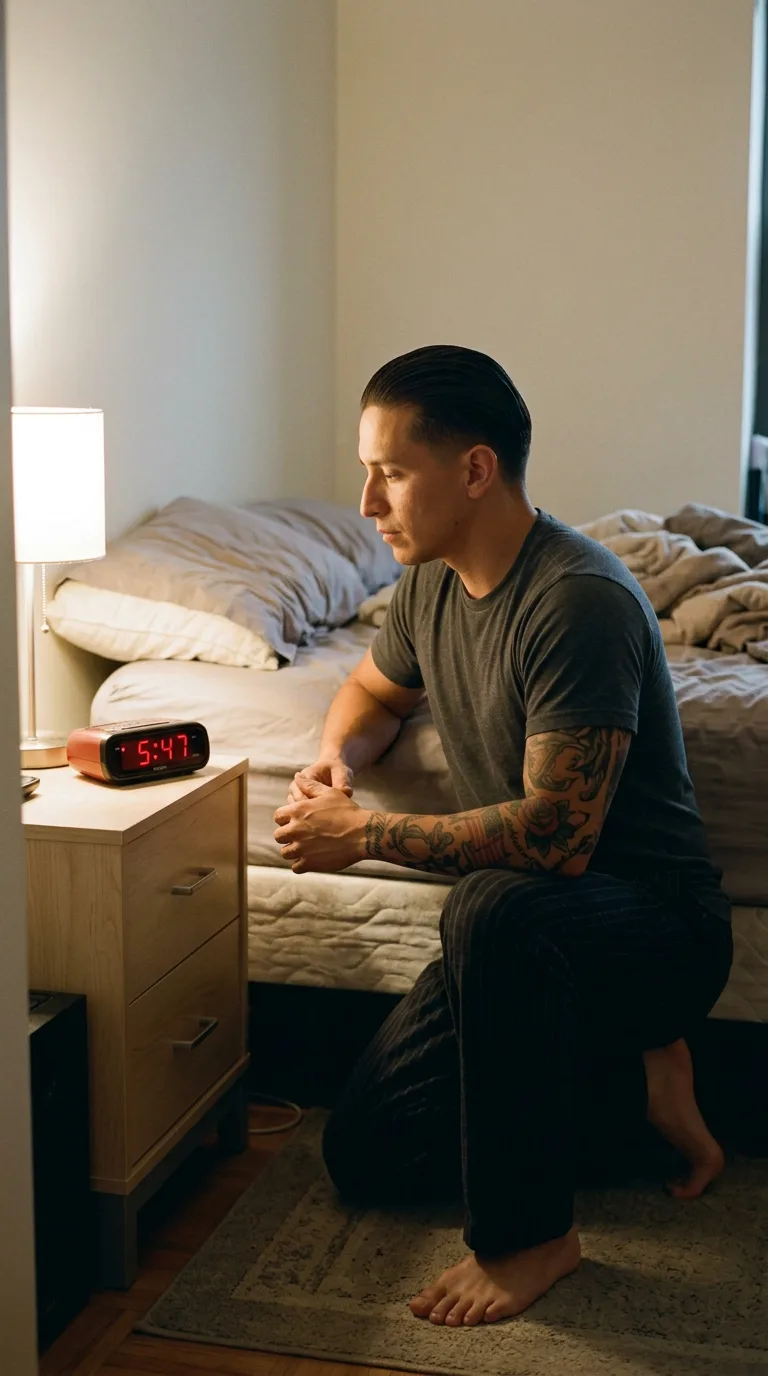
Rarest thing about him: Full sleeve — epic, 1 in 43
Season 0seed 377995823 · engine v10
Character card
lineage 8ZQHYV
His body-swap story
@paul.gervasi, wearing Damarion Iverson, rolled the wheel on and woke up as Nicolás Reyna, spent 6 minutes in him, then spun the wheel and woke up as Tyler Wysocki
The flour is still under Damarion's nails when you decide, and that's what tips it — not the burns on the forearm, not the ache from a 4 a.m. dough shift, but the flour, ground into the beds of fingers that aren't yours and never fully feel like they belong to you, five days in. You like the kid fine. You like the small apartment that smells like proofing yeast, you like the regulars who know his name, you like being nineteen again in a way that has nothing to do with age. But liking a body is not the same as wanting to stay inside its ceiling. Sunday, midday, light through a kitchen window you didn't choose, and the itch comes back the way it always does — not boredom exactly, more like standing in a room you've already memorized every corner of. You wash the flour off in the sink like it matters, dry your hands on a dish towel, and open the site on a cracked phone screen with a bakery-issue apron still tied around a waist you're borrowing. The wheel doesn't ask why. You spin it anyway thinking, *just to see.*
You get to the amen early. That's the last thing that is still your rhythm, your impatience — the half-laugh already forming, the shift of weight up onto the balls of bare feet, because kneeling this long makes the knees complain — and then it isn't your impatience anymore, it's a stop, a full stop, the kind a body makes when someone else's hand closes over the wheel of it. Halfway up. Down again. Forehead to the bedspread, and the smell that hits first is fabric softener and someone else's pillow, and the light through this window is a different color entirely — thin, gray-gold, an afternoon that has already spent itself. Pittsburgh light. You didn't know you knew that word for it yet. You just know it's not Seattle's.
The t-shirt is what talks first. Cotton gone soft with washing, and it gives you the man who bought it — three-pack from a big-box store, size medium, because he runs lean despite the gym — and under that, faint, a locker room, weights racked wrong, a partner laughing at him for something. Then the carpet under your knees, cheap pile, and it gives you the whole apartment in one pull: two bedrooms, one used for boxes, a couch he bought secondhand and never replaced, a crucifix on the wall by the door that his mother gave him and that he dusts without really looking at.
His name arrives with the nightstand clock, oddly, the numbers themselves — 5:47 read wrong, because it isn't morning, he set it for a shift that starts at six and never bothered fixing the display after the time change. Nicolás. Nico to the guys at the precinct. Reyna. It comes with the sound of his own voice saying it at roll call, flat, tired, used to it.
Kneeling like this is a habit older than the badge — his mother's voice underneath it, rosary beads clicking in a kitchen in Brookline, a woman who prayed like she was arguing with somebody she loved. He does it most Sundays before an evening shift, half out of guilt for skipping Mass, half because it's quiet and his apartment is otherwise never quiet enough. He doesn't finish the prayers most of the time. Says amen and means *close enough.*
The sleeve on his right arm comes alive when you shift your weight onto that hand — a hundred hours of needlework arrive all at once, but softened, because it was inked in his twenties in three long sittings with a friend of a friend in Lawrenceville, and the pain then is nothing next to the ache now, low-grade, chronic, a blood pressure medication he keeps meaning to take more consistently and doesn't. Anchor. Rose. An eagle he picked because his grandfather was Navy for four years and never talked about it. He remembers the buzz of the machine more than the design, remembers being twenty-four and thinking a sleeve would make him look like someone who couldn't be pushed around, and it worked, mostly.
The uniform isn't on him now, but putting it on this morning comes back anyway, unbidden, because his hands still know the order of it without thinking: undershirt, then the navy button-up, sleeve over the ink he's never once considered covering, belt heavy with the vest's weight distributed wrong so his lower back always complains by hour six. Boots double-knotted. Radio clipped. A nod at himself in the bathroom mirror that wasn't vanity, just checking the crooked nose was still crooked, still his — broken at nineteen in a bar fight he started over nothing, set by a doctor who didn't care much either way, and he'd decided a long time ago he liked it better wrong than right.
An ex-girlfriend surfaces from nowhere, from the pillow smell maybe — Selena, three years, ended eighteen months ago over nothing either one of them could name cleanly, and he still checks if she's read his texts sometimes, which he'd never admit to the guys at the station. He quit drinking the year they broke up, quietly, without telling anyone it was related, though it was.
He bites his nails. You feel the urge rise in the fingers now on their own, an old tic reasserting itself the second there's nothing to hold — he does it at red lights, at the end of double shifts, kneeling right here some Sundays when the praying isn't really praying, just a place to put his hands so they don't do that instead.
You surface out of all of it slowly, like coming up through water that was warmer than you expected, and you are kneeling on a stranger's carpet in a stranger's falling light, in a body five inches shorter than the one you left, thicker through the shoulders, younger by ten years and older in some other way you can't yet name.
You look at your hands. Nail beds bitten to the quick, ink climbing the right forearm in colors gone a little soft with a decade, no flour anywhere. You turn them over once like you're checking they're real, and something in the wrist still wants to reach for a rosary that isn't there.
You lift your eyes to the window, to the light that isn't Seattle's, and you say, out loud, to no one — "Okay. Okay, Nico" — and you don't know yet if that's an apology or just a name you're trying on.