Neil Oslowski
Fictional. Generated by AI — not a real person, and no likeness of one is intended.
40, bank teller in New York · rolled by @connor.waskiewicz · card — no film
History
who has worn him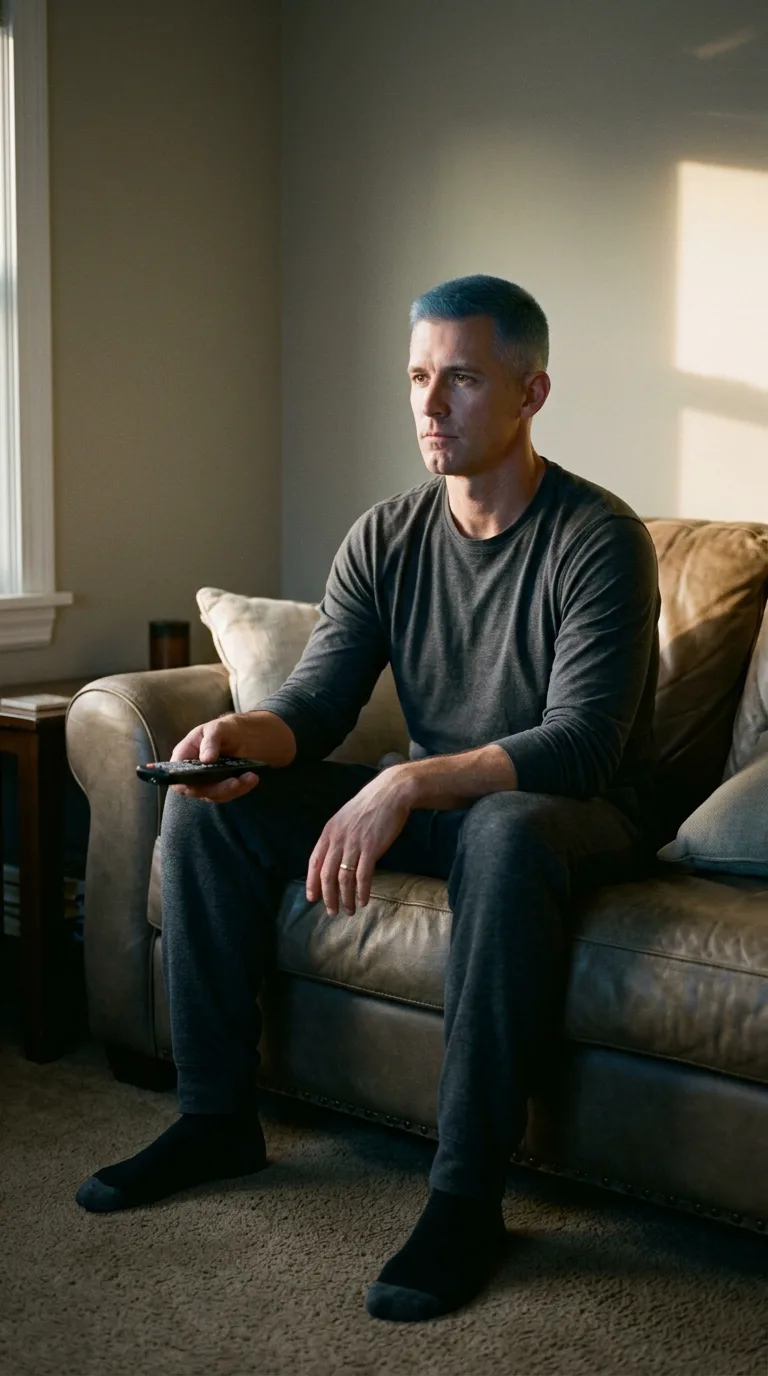
Rarest thing about him: 6'5" — rare, 1 in 229
Season 1seed 673607853 · engine v11
Character card
lineage 2NZHHJ
His body-swap story
@connor.waskiewicz, wearing Shawn Delancey, rolled the wheel on and woke up as Neil Oslowski
Shawn's apartment smells like Pittsburgh in the rain, like carpet that never quite dries, and his phone is buzzing on the counter with a name you don't recognize and don't care to. You've had him four hours and twenty-some minutes — enough time to eat his leftover pad thai standing at the fridge, enough to feel the ache behind his knee from a run he took yesterday that isn't yours to be proud of, enough to get bored of being twenty-four and compact and stationed somewhere you didn't choose. His hand keeps finding the base, flicking the channel without watching it. Keeps it moving. That's the itch tonight — not his life, which is fine, which is nothing, but the stillness of waiting in it. You open the laptop. The wheel is already loaded, spinning lazy and blue-white on the screen like it's been waiting for you too. You pay. You spin. You don't choose who — you never do — you just let it fall.
It falls on a couch in Brooklyn.
You arrive sitting upright, spine straight before you've decided to sit that way, a remote settling out of your grip onto a leather cushion arm like it was always going there. The television throws its bright cut-away light across a face that isn't moving the way it was a half-second ago — somewhere in the dark before you got here, this man was laughing, or about to, and now the mouth is closed and the breath is longer, slower, yours. Early evening outside a window you haven't looked at yet. Socked feet flat on a carpet that isn't his carpet, not really, not anymore. The body under you is big — you feel that first, the sheer reach of it, knees further from the couch back than you're used to, shoulders wide enough that the gray shirt sits loose instead of close. Something on the left hand, small and metal, catches light when the screen flickers.
The couch leather is worn soft under your palm, and that's the first door — a Sunday, years back, picking this exact couch out of a showroom with a woman's hand in his, her laughing at him for taking twenty minutes to decide on a color. Deb. The name comes with the leather, easy as breathing. You stay there a second, in a furniture store that doesn't exist for you, then let the shirt take you further — this morning, his own hands pulling it over his head in a bedroom with the blinds half down, Deb already gone to drop the kids, him standing in front of the mirror running a hand back over hair he still isn't used to seeing blue, a birthday thing, a whim he liked more than he told anyone. The jaw under your fingers when you touch it, out of old habit more than need, is perfectly smooth — he shaved before his shift this morning, close, careful, the blade pulling around a chin that's always jutted forward a little more than other men's, enough that strangers' eyes catch on it before they catch on anything else about him. Neil. The name surfaces with the chin, the way it always has for him, since boyhood — people remembering the chin before the name, the name arriving after, like a caption.
The window at the teller counter comes back through the memory of standing — hours of it, every day, weight settling into the balls of his feet, a lower back that complains by three and has for years. Drawer open, bills counted twice because the first count never feels like enough, a customer's patience thinning while his hands, steady as they need to be for the job, move fast enough to end it. He likes the job less than he lets on at dinner. He likes the customers who remember his name less than the ones who stare at his chin and never ask it. He likes, more than either, coming home to this exact dark room, lights off, Deb already down or reading upstairs, the kids asleep, the television just for him, some rerun he's seen enough times that the laugh lines are muscle memory and nothing more.
The remote, still warm in memory though it's left his hand now, pulls one more thing loose — the two kids, a boy who has his height already at eleven and a girl who has Deb's whole face, both of them taught by him, patient at the kitchen table, to count change back correctly, to never shortchange anyone even by a nickel, because that's the kind of thing a bank teller father teaches without meaning to turn it into a lesson. A little put away, more than anyone at the bank would guess from the blue hair and the cleft chin and the easy voice at the window — money that isn't flashy because he's never wanted it to be. His hands, now, at rest on his knees, don't want to be at rest. They never have. Even sitting, even now, the fingers of the right one start to drum once against denim before you catch them, a man's whole life of hands that work money and won't go still.
You look down at them. Blunt fingers, a plain band catching the TV light, a faint white line on the first knuckle of the left hand you don't yet have the memory for. You turn the hand over once, like it might answer something, then look up into the dark room at nothing in particular.
"Hell of a Monday," you say, in his voice, to no one, and the television goes on without you watching it.