Nathan Cho Whitaker
Fictional. Generated by AI — not a real person, and no likeness of one is intended.
31, prison guard in Eastern Kentucky · rolled by @raymond.joseph.tahsequah · card — no film
History
who has worn him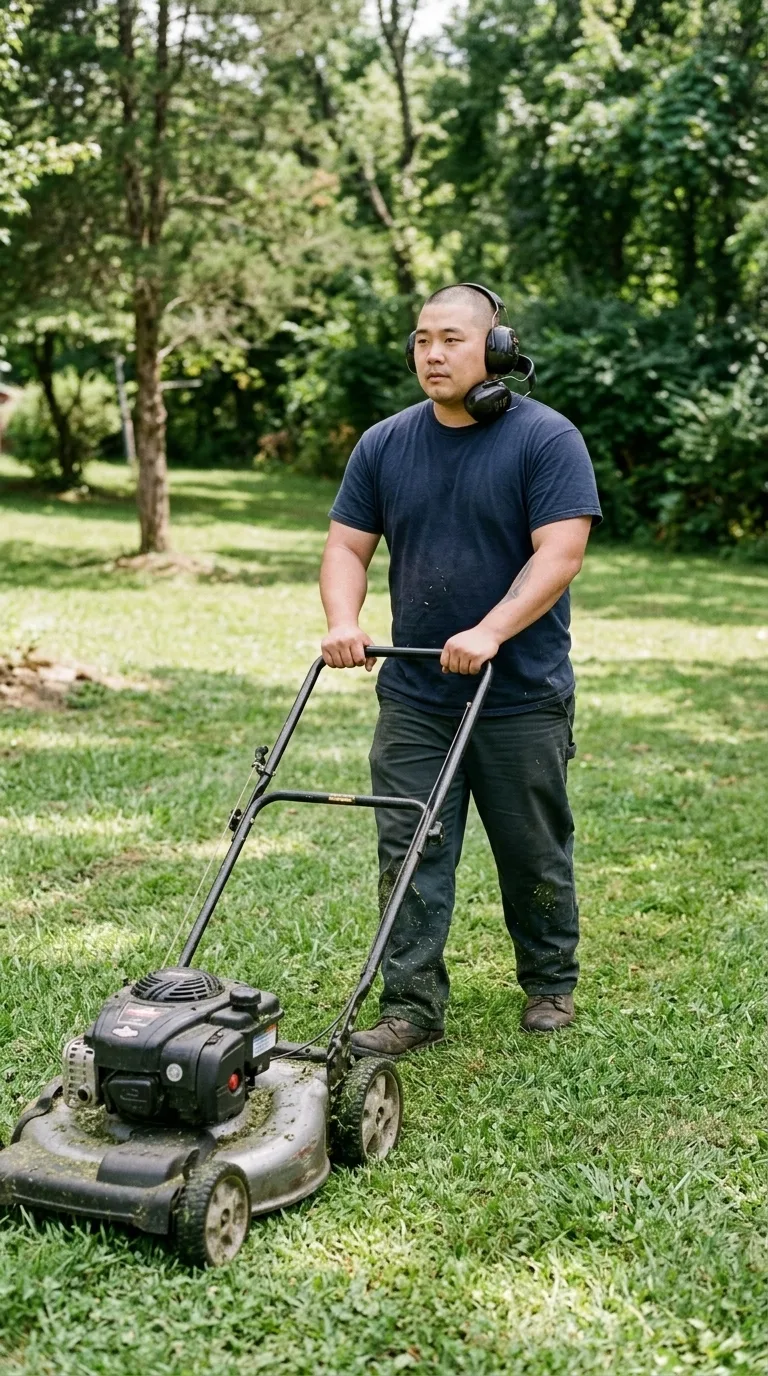
Rarest thing about him: Prison guard — common, 1 in 369
Season 1seed 1241625544 · engine v11
Character card
lineage KRRV1P
His body-swap story
@raymond.joseph.tahsequah, wearing Raymond Joseph Tahsequah, rolled the wheel on and woke up as Nathan Cho Whitaker
You are standing in a kitchen in Atlanta with a cold cup of coffee, in the body of a man who has been yours for three minutes, and already you are tired of how he stands. His knees are bad. His stubble itches. His phone is face-down on the counter, buzzing with work on a Sunday, and every buzz is a stranger asking him for something. You wanted to be someone. You are someone, and it feels like a coat that is a size too large. So you open the page with the wheel on it, and you do not finish the coffee.
The engine drops a note and catches.
You are halfway down a lawn. Green heat comes up off the grass. The bar of the mower is in both your hands, and the vibration runs up through the wrists into the elbows, a steady buzzing hum. One earmuff has slid off the left ear and the world pours in: birds, a creek somewhere below, and the engine, loud. Clippings are stuck to your shins. You are heavy and solid, the weight sits low in the hips, and your breath goes in deep and comes out slow. Your scalp is warm where the sun lands on the buzzed skin. Your jaw is smooth, the shave still fresh.
You put the earmuff back over your ear. It's easy, unhurried, your hand knows where it goes.
The shirt is damp against your spine, and the cotton gives you a morning. Standing at a closet, he pulls the navy tee off a hanger and thumbs a hole in the collar he keeps meaning to throw out. A small voice from the hall asks where the other sneaker is. He answers without looking, left of the couch, and he is smiling, a tired, easy smile. The pants are work pants, the knees gone soft, and in the pocket something small and plastic. A toy, a green soldier. Two kids. The feeling arrives before the faces do, a fullness under the ribs, like being owed something and having it paid daily.
The bar is rubber-gripped and worn smooth where his palms go. Through it comes a corridor, painted cinderblock, a gate that clanks, the keys on their retractable reel against his thigh. The smell of floor wax and old men. He does not hate the work. He is good at it because he is calm, and men who are calm get fewer fights. Fourteen hours, once, a bad night, and a man's voice calling him by name through a door. The memory is gray, and you let it go.
His knuckles want to crack. Your hands do it on their own, one fist closing around the other, a pop like a twig. The relief goes up the arm. Ex-smoker, says the habit, the hands still looking for the thing they used to hold.
Inside the left forearm the skin pulls when you flex. The tattoo. A face in black and gray, careful, realistic, and when you look the memory comes up through the skin: a chair, a needle humming, a woman's name for the man in the portrait. Her father. He wanted the face on him where he could look down and see it. The grief is clean and old and not yours. You hold it anyway, a stranger's heirloom.
There is a girlfriend. She laughs in the kitchen with her head back. There is a footbridge over brown water and green shade, the cable humming underfoot, the kids running ahead and him calling for them to slow down.
The mower idles in your grip. A crooked row lies behind you, a straight one begins ahead. You lift your hands off the bar and turn them over. Thick fingers, the knuckles still ringing, the portrait of a dead man looking up from the wrist.
You look up at the trees and say, to no one, "Okay. You're mine," and then, quieter, "For how long?"