Nathan Brandvold
Fictional. Generated by AI — not a real person, and no likeness of one is intended.
35, operations manager in Los Angeles · rolled by @connor.waskiewicz · card — no film
History
who has worn him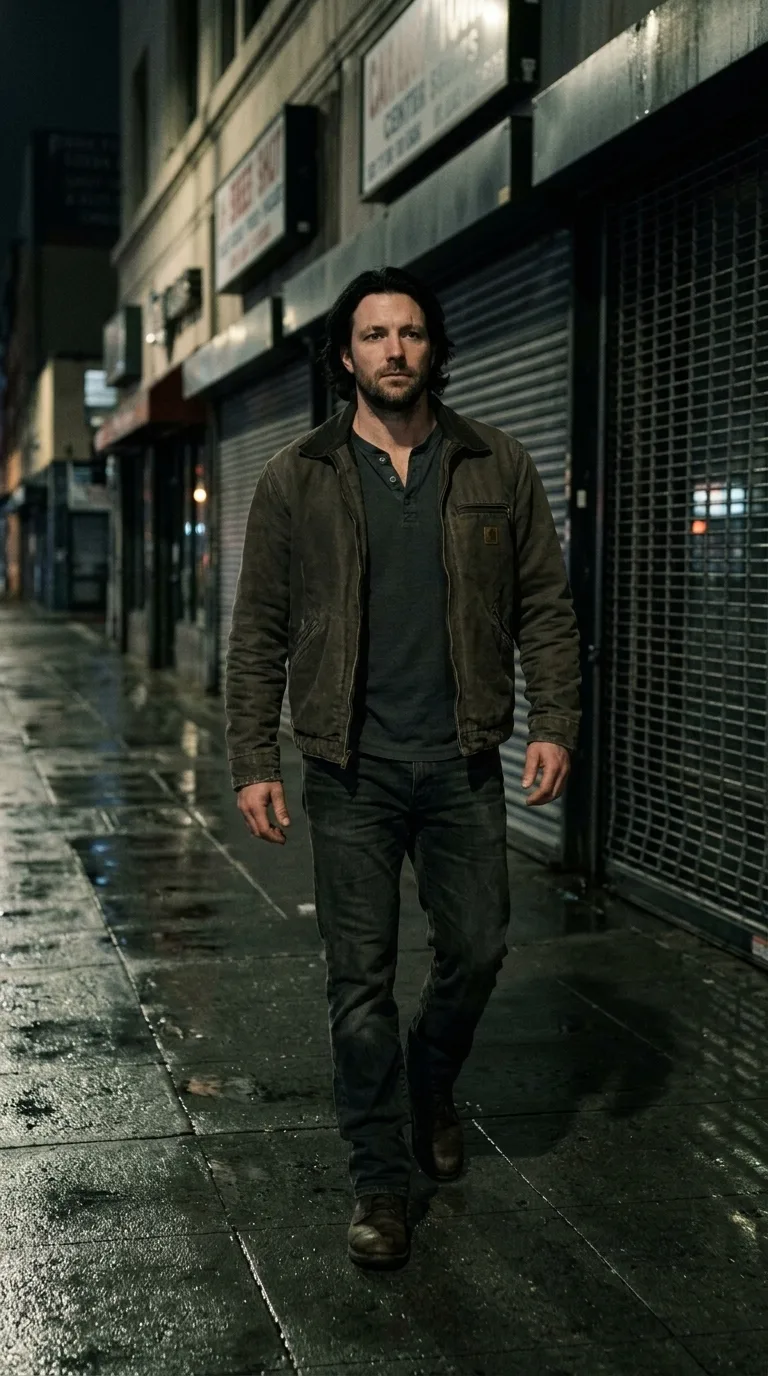
Rarest thing about him: Drunk, walking home the long way — common, 1 in 64
Season 1seed 2090196393 · engine v11
Character card
lineage 2NZHHJ
His body-swap story
@connor.waskiewicz, wearing Brett Halvorsen, rolled the wheel on and woke up as Nathan Brandvold, spent under a minute in him, then spun the wheel and woke up as Craig Lindqvist
The first thing I do, before the site, before the card, is flex Brett's hands. Nineteen years old, six minutes old to me, and already I am tired of them. They are fine hands. They are a student's hands, soft at the pad, a pen callus on the middle finger. He is lying on a dorm bed in the gray before a Tuesday starts, and the whole building is asleep, and I am sitting up with his phone lit against his face, and I cannot make myself want anything that is in his life. His textbook. The vending machine downstairs. The girl in the hall whose name he knows and I do not. I have worn him for six minutes and I have already read the whole of him, and there is nothing left to want.
Something in me goes quiet and wrong, the way it does. I will not say what. I type the address with his thumbs. The wheel is there, turning.
Pay. Spin.
The kerb is not where it should be. My foot goes out into air and comes down on wet road, and the whole weight of a big man tips forward, and my palm slaps onto the cold wet roof of a parked car and holds. Wet metal. Rain beading under my fingers. I am standing at two in the morning with my arm locked and my breath coming out thick and sweet with whiskey, and it is so much body. Six feet nearly. Shoulders that carry. Every street light has a halo.
My right shoe has stopped scuffing. I notice that. It seems to be something I would have wanted to keep.
Then the jacket. It hangs open, heavy canvas, and the collar rubs rough at the back of my neck where black hair lies on it, and the cold gets in at my chest. I pull it closed with one fist, and the fabric opens a door.
A hook in a hallway. This jacket, stiff and new, and a man's voice saying it will break in, it just needs some work. Work, he says, and laughs. My own father, his father, dead now, I feel it as a settled ache, no surprise left in it. Then the cuff, worn pale, and the winter he wore it to stand in a car park holding a child's small mitten because the child had thrown the other one somewhere. A girl, four, furious, laughing. She is the one thing in him that is bright all the way through.
I let go of the car. My thumb finds the inside pocket by habit and finds a keyring, and the metal brings a mezzanine: a steel walkway over a floor of forklifts and shrink-wrap, a radio on my hip, two hundred people moving boxes beneath me, and a calm that comes only when I can see every one of them. He is good at it. He is proud of it and would never say. The badge on his belt loop, the photograph on it a little too serious.
Under the jacket the henley is soft with washing. This morning he pulled it over his head in a bathroom with a window onto dry palms and the late sun on a stucco courtyard, and he was not hungover then, he was only tired. He looked in the mirror and touched the scar through his eyebrow with one knuckle, as he does, the way you check a lock. A rope swing, he was nine, a cousin laughing. He thinks of it kindly.
Why is he drunk? The jeans know. A wedding table, a bad toast, and a woman's name on a place card, an old girlfriend, the one who still matters, seated four chairs away and not looking. He drank to be slow enough to leave politely. He prayed in the car park, the short clumsy kind, forehead on the steering wheel, and then he walked, because he would not drive. His faith sits in him plainly, like a bone.
My feet are in his boots. Leather cracked at the flex, a left that has always pinched the little toe. His knees ache a little in the cold. His back is strong. His hands, when I lift them, are thick across the knuckle, rough at the palm from rails and strapping, and the left shakes a very little from whiskey.
I look at them. Turn them over. Wet light runs across the lines.
Then I lift my eyes to the empty street, and the corner ahead, and the way home that is not mine to take.
"Well," I say, in his low voice, and it is steady. "Let's see what you've got."
Somewhere behind my eyes the wheel is already turning, small and patient, and I do not know whether it is tonight, or years, or the next breath.