Nasser Khalil
Fictional. Generated by AI — not a real person, and no likeness of one is intended.
63, tow truck driver in Houston · rolled by @colin.hasbrook · card — no film
History
who has worn him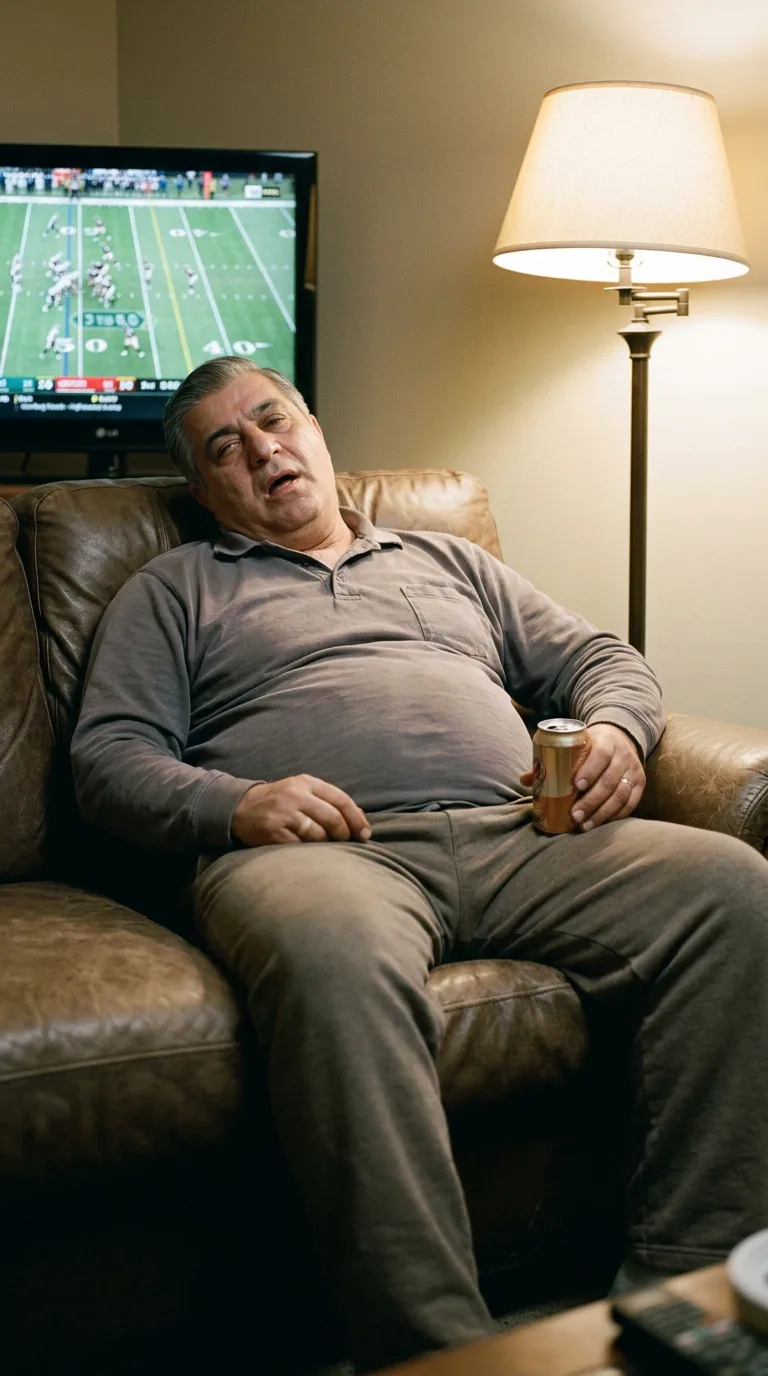
Rarest thing about him: Tow truck driver — rare, 1 in 106
Season 0seed 872489892 · engine v10
Character card
lineage 2NZHHJ
His body-swap story
@colin.hasbrook, wearing Marcus Delrio, rolled the wheel on and woke up as Nasser Khalil, spent under a minute in him, then spun the wheel and woke up as Danny Aguirre
---
Chicago is dark and the rectory is dark and the boy — he is thirty-three but you keep thinking *the boy* — is asleep down the hall where he should be, where you are not. You stand at the window in a body that was handed to you the last time you did this, four hours ago by its clock, and you feel the collar you are not wearing chafe at a throat that has never worn one. You said the thing tonight, the thing you say now that you know how, standing at the little altar with your hands out over people who don't know whose hands those really are. You felt nothing. That is the whole reason. Five hundred and sixty times you have gone looking for the feeling that isn't there, and today it was a priest's hands lifting bread that finally told you, plain as anything: it isn't here either. So you go back to the room with the laptop, the site with the wheel on it, vessel.cards, blue light on borrowed brown skin, and you spin it at an hour when the whole rectory is asleep and no one will ask what Father was doing awake.
The wheel lands and there is no in-between. One second you are standing at a dark window in Chicago; the next you are sitting forward on a couch in Houston with a can in your hand and a game on and a taste in your mouth that is not your own saliva but his, and the second half of a replay is looping on the screen — a man diving for a ball he already knows he missed — and your thumb, not thumbing anything you told it to, finds the volume button and lowers it two clicks out of something like habit.
The can is warm. That's the first thing that comes through, before anything else — the aluminum gone tacky-warm in a hand that has held a thousand warm cans on a thousand nights when going to bed felt like giving up on something that had already given up on you. The recliner leather is worn glass-smooth at the armrest under your other forearm, and touching it, you get: Thursday, or some Thursday, all of them folding into one — home before dark for once, boots by the door, the particular ache along the outside edge of the knees that comes from getting in and out of a cab all day, sixty, seventy times, up down up down. This body knows what standing on a hitch feels like in July heat coming off the asphalt in visible sheets. It knows the smell of brake dust and it likes that smell, the way some men like the smell of cut grass.
The remote is still in your other hand, half-buried under your hip, and it gives you nothing, but the shirt against your back — thin, cotton, soft in the way things go soft only after years of the same detergent — gives you a whole morning: standing in front of a dresser missing one handle, pulling this exact shirt over his head one arm at a time because the shoulder's been catching lately, tucking nothing in because there's no one left to tell him to tuck it in. A ring that isn't there anymore leaves a pale stripe on the finger, and when your thumb finds that stripe out of old habit — his habit, arriving in your hand like a reflex — you get her. Not a face first, a voice: telling him from the kitchen doorway, calmly, like she'd rehearsed it in the car, that she'd already found a place. Sixteen years gone by inches after that, not all at once. A daughter's number saved under a name with a heart next to it that he put there himself, badly, fumbling the emoji keyboard, and never took out.
Your jaw is loose, sleep-loose, mouth open the way it fell open twenty minutes into the fourth quarter, and the taste of the can turns into other tastes going backward — coffee too early, a cigarette he hasn't had in eleven years but whose absence still sits in his chest like a held breath, an antacid chewed dry at midnight most nights of his life. Reflux climbing while he slept sitting up, the body correcting for it without waking him, the way it's learned to. Your fingers, resting now against your own leg without your permission, find a thumbnail and start at it — the same motion his hand makes at every red light, every dispatch call that comes in wrong, every hour spent standing on a shoulder at 2 a.m. with hazards going and headlights coming on too fast in the side mirror. Your body — this stocky, soft-middled, tired body, five-seven and all of it lived-in — already knows how to brace a hook under a bent frame, already knows the particular grunt-and-heave of a chain going taut, already knows how to sleep sitting bolt upright in a cab waiting for the next call, and how, lately, more and more, it falls asleep like this instead: couch, game, can, alone, before he even means to.
The TV throws the replay a second time. On the couch his body finally answers to something — the goal, maybe, some noise the crowd makes — and sits up on its own timing, and your thumb finds the volume again with a precision that has nothing to do with you and everything to do with sixty-three years of a hand doing what it does. You watch the ball this time. Not the score. You don't know why that matters to him, except that it does, and now, for however long this is, it matters to you too.
You look down. The hand on the can has a pale line where a ring sat for a long time and doesn't anymore, and the nail on the thumb is bitten down past where it should be, and none of it is yours and all of it is, now, tonight, for as long as this lasts.
"Where'd everybody go," you say, to an empty room, in his voice, and you don't mean the score.