Nadim Farhat
Fictional. Generated by AI — not a real person, and no likeness of one is intended.
53, pastor in Houston · rolled by @marco.villagrana · card — no film
History
who has worn him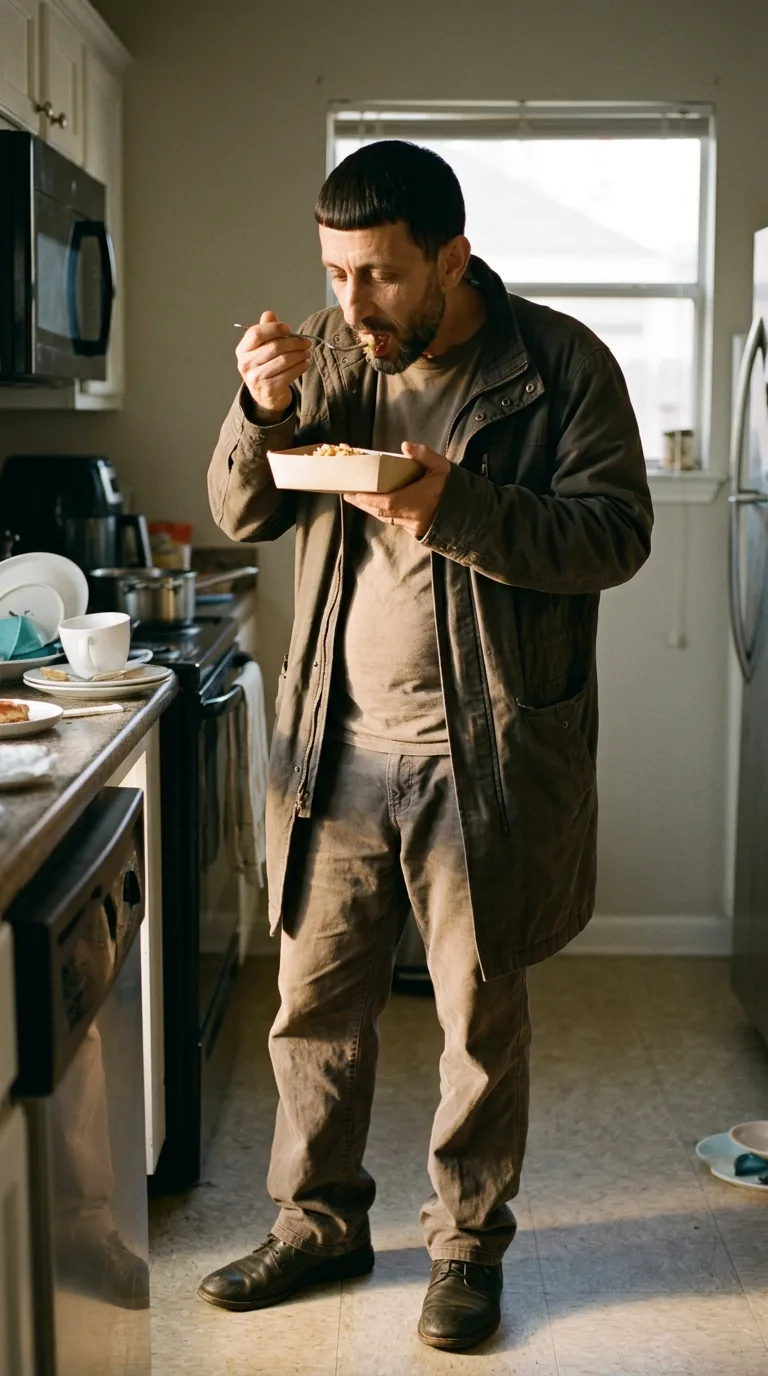
Rarest thing about him: Pastor — common, 1 in 432
Season 1seed 173810122 · engine v11
Character card
lineage LJL8SV
His body-swap story
@marco.villagrana, wearing Roy Halbrook, rolled the wheel on and woke up as Nadim Farhat, spent 4 minutes in him, then spun the wheel and woke up as Marcos Villalobos
Roy Halbrook's break room smells like burnt coffee and the fryer that never gets cleaned right, and you have been him for three minutes and you already know you're not staying. It isn't the freckles or the five-foot-five of him, small and quick and nothing you asked for. It's that somebody clocked out early and left the schedule short for tomorrow, and some other version of Roy — the real one, the one who was here for thirty-seven years before you took the wheel and sat down in him — would have to deal with it. You feel that coming like weather. You have a phone in his pocket that isn't yours, a life in this desert town that isn't yours, and the itch is already there, the one that always comes, the one that has nothing to do with Roy specifically and everything to do with the fact that you could be anyone else right now and instead you are standing under a fluorescent light counting someone else's inventory problems. You open the site on his phone with his freckled thumb. You don't finish the coffee.
The fringe is the first thing you feel — not see, feel, a straight black line of it pressing flat against a forehead that is not yours anymore, and then the weight of a body that carries itself differently, soft through the middle, heavier in the hips, a man's frame that has sat in pews and pulpits far more than it has moved. A fork is coming up. You feel your own hand — his hand — stop it a few inches from an open mouth, hover, and set it down against the side of a foam container with a small tap. The coat is still on. The kitchen is dim except for the window, which holds no daylight at all, only the black glass giving back a dim reflection of a man standing crooked-nosed and tired over his own counter.
The coat comes off first — his shoulders do it before you decide to, muscle memory sliding out of the sleeves, and touching the collar gives you a flash: this morning, gray light through venetian blinds, a woman's voice from the bedroom saying something about Marcus needing a ride after school, and his hands — Nadim's hands — buttoning this same gray shirt one button at a time, unhurried, because unhurried is how he starts every day whether he has time for it or not. The bottom button he leaves open, always has, some old habit from a different shirt in a different country decades ago. The jacket you don't remember putting on tonight, but the corduroy under your palm remembers itself: his good jacket, the one he wears to visit people in hospitals, worn smooth at the cuffs, a paperback-sized Bible-shaped weight it usually carries in the inside pocket, not there now because tonight was just the sanctuary, just the after-service handshakes, the emptying pews, Mrs. Okonkwo's grandson asking him about baptism, the light through the high windows going orange and then gone.
The container in your hand is macaroni going cold, and holding it gives you the last twenty years in pieces: a small church that grew slower than he prayed for; a wife, Dalia, whose laugh he can still hear better than most sermons he's written; three kids, the youngest still small enough to fall asleep against his shoulder during announcements, the oldest already taller than him and mortified by it. A rented house with a mortgage-sized hole where savings should be. An old girlfriend from before Dalia, from before all of this, whose name still surfaces sometimes at three in the morning for no reason he'd ever admit to anyone, not guilt exactly, just a door that never fully shut. He does not drink much. He has never smoked. When a deacon board meeting goes long or a hospital call goes badly, his jaw does the work his voice won't — you feel it now, the muscle there tight as a fist, an old habit worn into the bone. The nose under your fingers when you touch your own face, unbidden, is crooked from a stairwell fall at nineteen, in another city, in another life he doesn't talk about from the pulpit. The wedding band is thin gold, worn soft at the edges, and it carries an entire wedding day in one touch — Dalia's hand shaking, his own steadier than he expected it to be.
You eat the rest of the container in even mouthfuls because his body wants to and there is nothing in you resisting it, looking at nothing in the dark window, feeling how tired this frame is in a way that has nothing to do with muscle — a tiredness with thirty years and three children and a congregation's worth of other people's grief folded into it. Skinny-fat, his own doctor's phrase, unkind and accurate; nothing hurts exactly, but everything is soft where it used to be firm, and slow where it used to be quick, and he has stopped minding, mostly.
You set the empty container down. You look at your hands — his hands, dark-haired at the knuckle, the band catching what little light the window gives back — and you turn the left one over like it might tell you something about the man whose day just ended thirty minutes before yours will end for him.
"Not yet," you say, to the window, to no one, "not yet," and you don't know if you mean the next spin or the sermon he hasn't started for Sunday, and you let the not-knowing sit there, comfortable, unhurried, his.