Michael Corcoran
Fictional. Generated by AI — not a real person, and no likeness of one is intended.
58, electrician in Boston · rolled by @colin.hasbrook · card — no film
History
who has worn him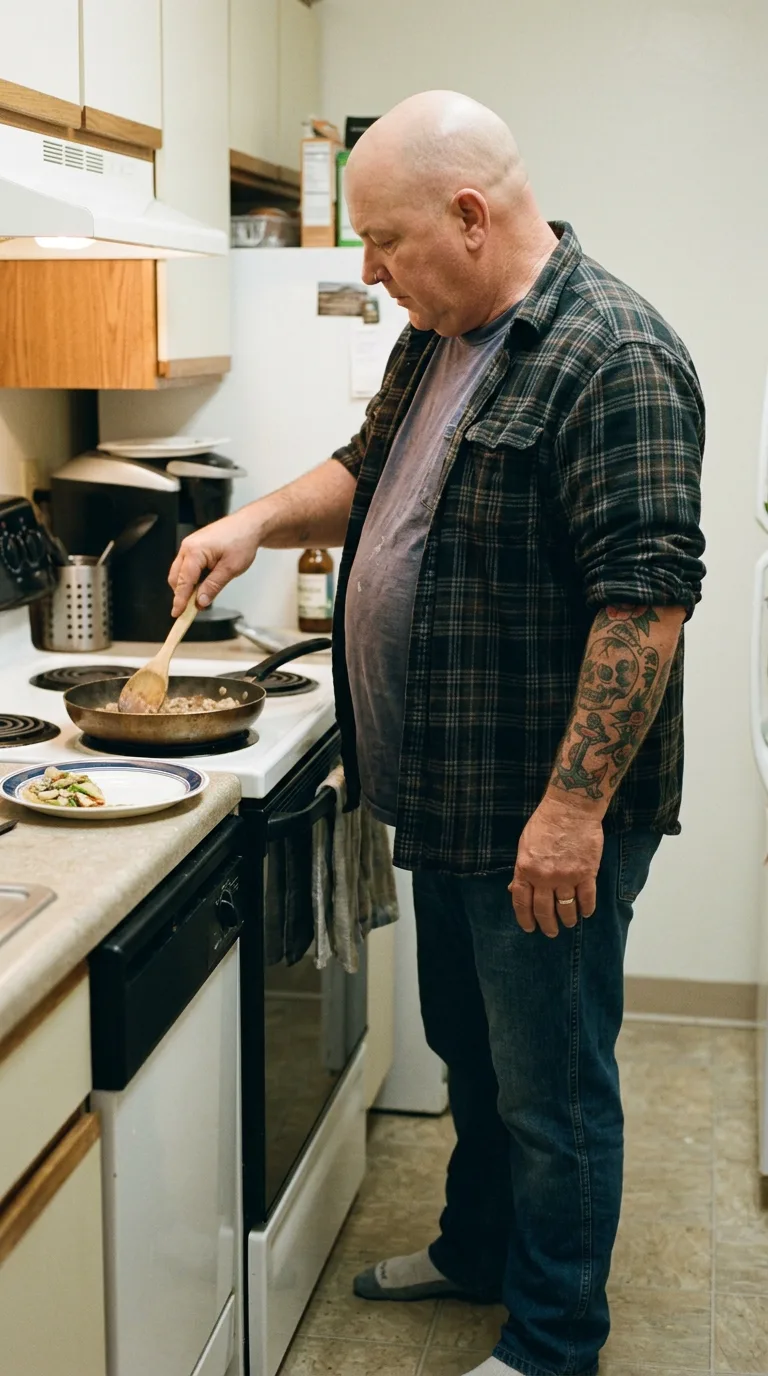
Rarest thing about him: Nose — legendary, 1 in 167
Season 0seed 1744843333 · engine v10
Character card
lineage 2NZHHJ
His body-swap story
@colin.hasbrook, wearing an unnamed body, rolled the wheel on and woke up as Michael Corcoran, spent under a minute in him, then spun the wheel and woke up as Colin Hasbrook
The Texas afternoon comes through the model home's blinds in stripes, and you stand in the kitchen you have been standing in for eleven months, feeling the ache that isn't yours settle into a stranger's knee. Fifty-nine years old, gray hair combed the way the agency likes it, blue eyes you never asked for. Skinny fat, they call it, the trainer's word, a body that photographs fine and folds like paper by 4pm. You have walked through this same show kitchen forty times this month alone, telling couples about granite they can't afford, and today, mid-sentence, gesturing at a faucet that has never run water, something in you just — stops caring what the sentence was. Eleven months in one skin is longer than you've gone since the second spin. The itch isn't boredom exactly. It's more like hunger that has learned patience. You tell the open house you need a bathroom break, you go sit in the beige laundry room that isn't real either, and you open the site on your phone with a thumb that has never once been yours.
The wheel spins. It always takes less time than a breath.
The spoon is already turning the other way in your hand before you understand you have a hand. Mushrooms, onions, low heat, a smell of butter going brown. Your back — his back — announces itself immediately, a low complaint along the lumbar that has clearly been there through decades of ladders and crawlspaces, and your knees agree with it. You are heavier than you have been in eleven months and it feels, absurdly, like relief, like a coat that actually fits. Salt comes off your fingers into the pan without tasting it, muscle doing what muscle has done ten thousand times. Then your free hand, on its own, reaches into the cabinet above the dishwasher and takes down a second plate and sets it next to the first one on the counter, and you don't yet know why, only that the body did it before you told it to.
The shirt is what opens first. Flannel, soft at the elbows from years of washing, and it comes with a whole cold morning attached — him standing in a bedroom with gray light through a triple-decker's back window, buttoning it slow because his shoulder was bad that day, thinking about the Sox game the night before and a customer on Dorchester Ave who wanted a whole panel redone by Friday and wasn't going to want the invoice. Mike. The shirt knows his own name before you do, stitched nowhere, just known. His wife's voice from another room that morning, telling him to eat something before he left, and him saying he would and not doing it, and that small domestic lie sits in the fabric like a stain that never washed out.
The tool belt isn't on him now, it's by the door, but your palm remembers its weight anyway, the particular give of the leather pouches worn to the shape of these fingers over twenty-some years, needle-nose pliers, a red-handled screwdriver he's had since before his first kid was born. Your right forearm carries it too — the half sleeve, skull and roses and an anchor, ink laid down thick and young at twenty-something in a shop that isn't there anymore, colors gone soft the way old flags go soft. He remembers getting it, the buzzing, a friend who isn't a friend anymore for reasons that still sit sour in his chest, a friend from before the wife, before the kids, before any of this kitchen.
The wedding band is small and plain and it opens the biggest room of all. Twenty-six years, give or take, of a woman who still, some nights, makes him laugh so hard his back seizes up and she has to help him off the couch, both of them wheezing. Two kids raised through this triple-decker, now gone into their own apartments and their own arguments. And under all of that, quieter, an ex from before her — the one who got away, he'd never say those words to anyone alive, but they sit in him anyway, an old room in the house he doesn't go into, just knows is there, door shut, paint still fresh in his memory of it. He loves his wife. That other thing isn't a betrayal of it. It's just weather that passed through a long time ago and never fully left the sky.
The floor under his socked feet is the linoleum he's stood on ten thousand evenings, the specific cold of it in November, the counter edge worn smooth where his hip leans against it every single night he cooks for himself because she's got her book club, her sister, her own life some evenings, and he likes it, actually, this particular hour, a pan and quiet and the Bruins pregame low on the radio in the other room. Second plate is for nobody. He does it every time anyway. Habit outlives the reason for it — some year, some version of this exact evening, there were two of them here for real, and his hands never got the memo that stopped.
His jaw is tight. It's been tight the whole time, some low-grade clench that isn't about anything, just the way this body holds itself, and now it's yours to hold too, along with the dull permanent complaint in both knees and the small stiff resistance in his lower back every time he shifts weight.
You look down at the hand still holding the wooden spoon, thick fingers, a nose ring's ghost of a memory tugging at your face though your fingers aren't anywhere near it, the ring on the other hand catching the stove light. You turn the hand over like it might have an answer for you on the palm.
"Hey," you say, out loud, to the empty kitchen, in his voice, easy and low and a little rough. "Who else is coming."
Nobody answers. You don't know yet how long you're staying to find out.