Mauricio Alberto Quintanilla
Fictional. Generated by AI — not a real person, and no likeness of one is intended.
44, teacher in Detroit · rolled by @daniel.jiahao.wu · card — no film
History
who has worn him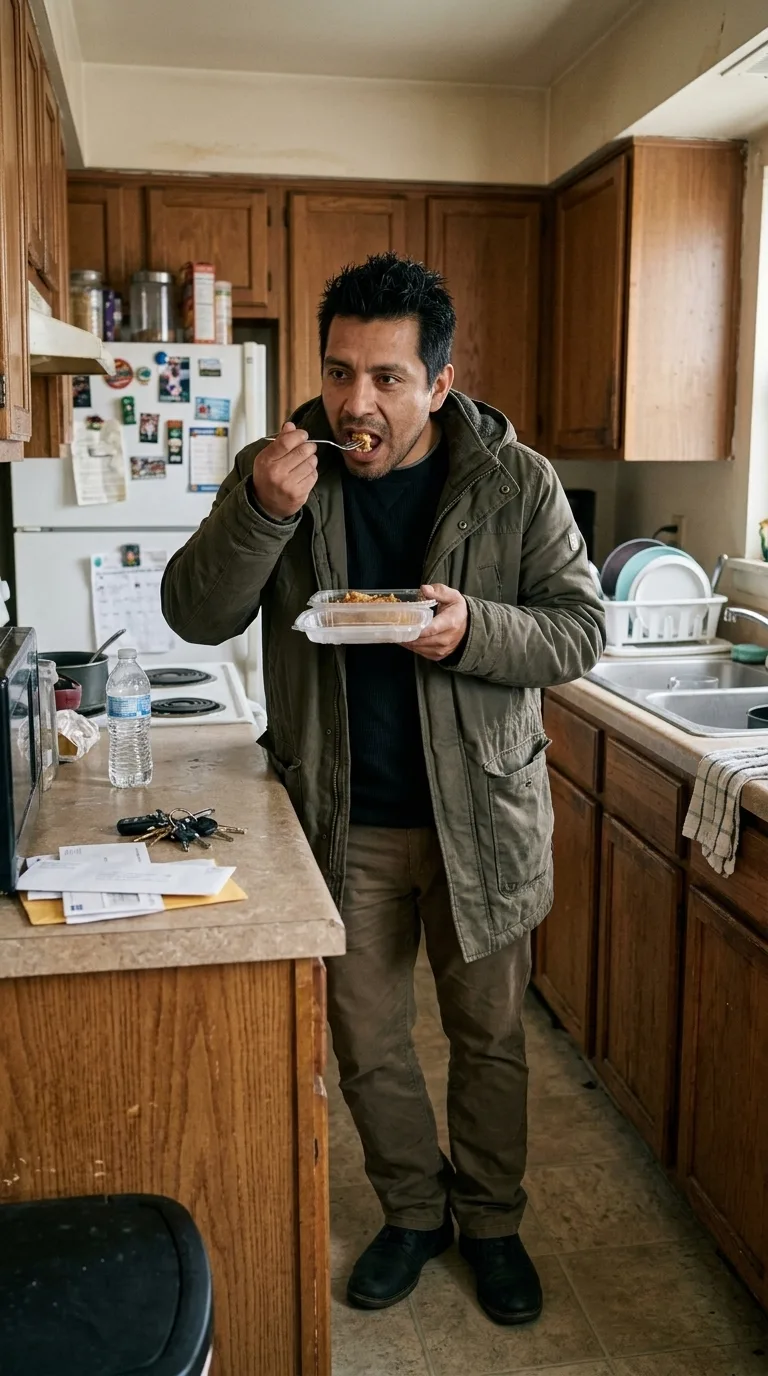
Rarest thing about him: Short and spiked up — common, 1 in 56
Season 1seed 871424805 · engine v11
Character card
lineage IXKM39
His body-swap story
@daniel.jiahao.wu, wearing Thomas Edward Brandel, rolled the wheel on and woke up as Mauricio Alberto Quintanilla, spent 10 days in him, then spun the wheel and woke up as Everardo Salinas Cantú
You are in Thomas Brandel's classroom, and the clock above the whiteboard says the period is almost over. Thirty-one sophomores are bent over a worksheet. Thomas has been a body for less than a minute, and it is already failing you. His knees are tired in the way of fifty-seven years standing on tile. His reading glasses ride low on a nose that has a habit of itching. The beauty mark by his mouth is something you keep touching with your tongue, from inside. The chalk dust on his fingers is dry and fine. You have no use for any of it.
Nothing is wrong with him. That is the shame of it. Someone has to say it, so you say it to yourself: a kid in the third row asked him a question about the Treaty of Versailles, and you felt nothing at all. Thomas would have felt something. His whole face started toward an answer and you were not behind it. You stood there borrowing his interest, and it showed. The kid looked at him oddly. A body that works is not the same as a body you want.
You lay his phone flat on the desk. The wheel is a page, a circle, a button, and your thumb knows where it is. The classroom hum goes thin. Seventeen.
The window is dark and the kitchen is cold, and there is food in your mouth.
Rice, something with peppers, a little too much salt. The fork is up at your lips and your jaw is already working. You are standing, with a heavy coat zipped to your chest and a plastic container in your left hand, its edge cutting into your palm. Your feet ache from standing all day. The refrigerator hums. There is no travel and no warning. Your breath goes in through a nose that has never been broken, and it smells of cumin and wet wool.
You swallow, and then you reach.
The coat first. The nylon is stiff at the cuffs, and the zipper's teeth are cold against your knuckles. A flash comes up that isn't yours: the coat on a hook by a school's side door in January, his own shoulders hunched while he waits for a bus-duty shift to end. He has worn it six winters. The left pocket has a hole he keeps meaning to sew, and a tired tenderness comes with the memory, the feeling of a man who keeps meaning to.
The container is warm. Behind it comes a Sunday: his mother's kitchen, a different pan, her voice saying *come eat, you're too thin*. He isn't thin. She said it anyway. Then he is thirty and she is gone and he is cooking her rice with the wrong amount of water, over and over, until a week of failed batches tastes close enough. You feel the grief come the way smoke does, sideways, in his chest, and it is not yours, and it stays.
The keys on the counter are heavy. When you touch them, your hand closes without being told. The brass one is the classroom. He lifts the ring to his thumb every day and counts to the second key, and your thumb does it. The mornings come back all together. The street of brick houses outside is low and gray. His boots are always a little damp. He is a teacher, and he is good at it. He keeps a folder of notes from students and never reads it aloud.
The floor is cold through the soles of his shoes. His back aches low on the left. Under his shirt a crucifix is not there, and yet you feel the habit of reaching for one: Mass on Sundays, back pew, alone. He quit drinking years ago and doesn't mention it. The kitchen is lonely and he has decided it is fine.
The shirt, under the coat: you feel the blue cotton collar he buttoned this morning, one button at a time, with the radio talking about snow, his fingers slow on the cuffs, rolling them twice. He looked in the bathroom mirror and thought *good enough*, and he meant it kindly.
The fork is still in your hand. You set it on the counter. It makes a small bright click.
You lift both hands into the window's reflection. Square palms, a callus on the right middle finger where the pen rests. They are warm and steady, and they belong to nobody now.
You look up at the dark glass, at the man in it.
"Hello, Mauricio," you say, and his voice is lower than you expected. It is a good voice. You wonder how long he lasts.