Mateo Ruiz Callahan
Fictional. Generated by AI — not a real person, and no likeness of one is intended.
28, chemist in Nashville · rolled by @owen.prescott · card — no film
History
who has worn him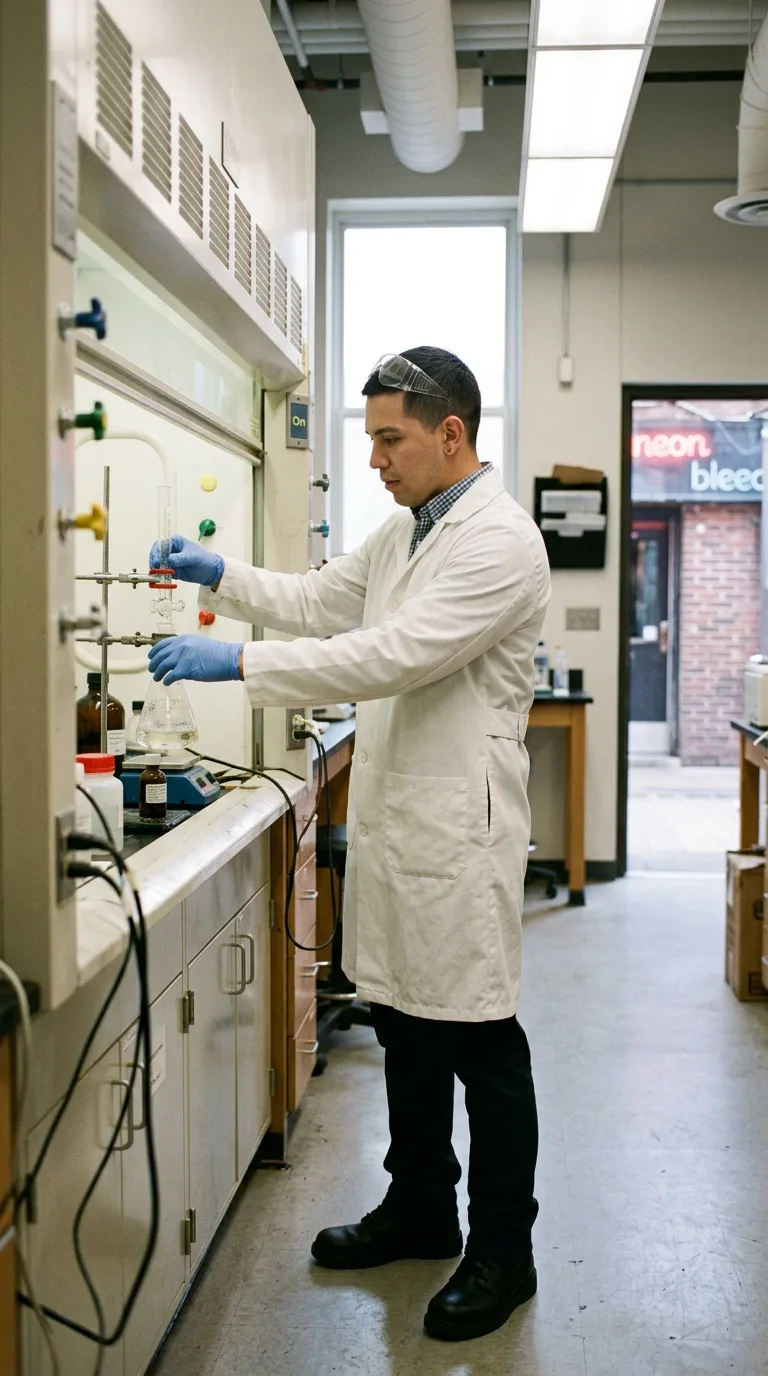
Rarest thing about him: Chemist — uncommon, 1 in 828
Season 1seed 924565647 · engine v11
Character card
lineage 5OR92V
His body-swap story
@owen.prescott, wearing Wyatt Kessler, rolled the wheel on and woke up as Mateo Ruiz Callahan, spent 1 minute in him, then spun the wheel and woke up as Malik Jerome Bryant
Wyatt Kessler's back hurts in the particular place a foreman's back hurts, low and left, where a year of lifting trusses has set like concrete. You sit on the tailgate in his truck bed lot with his coffee going cold in his big freckled-knuckled hand, and you know why you are here. Nothing is wrong with him. He is a good body. He is solid, he is warm, the beard is a nuisance and a comfort. But this morning a man on the crew asked you where the permit box was, and the answer was in Wyatt, somewhere, and you did not have it. You stood there with your mouth open in his face while the man waited. Seventy-eight spins, and you are still a guest who cannot find the bathroom in someone else's house. You thumb the page open. The wheel turns. You do not decide so much as let go.
The flask is in your left hand, or his hand, and the stand is in the right. The hood hums. Something is bubbling, and your wrist has already made a quarter turn that was wrong. The clamp is not seated. You see it, correct it slowly, and then you check the next ten motions one by one, though each one comes out perfect. He would not have needed to. You do.
Gloves. Blue nitrile, tight at the wrist, powder-dry against his skin. The glass is warm through them, and the warmth gives you something: a night shift, a night he did not want, his wife's voice on speaker saying the baby has a fever but it's fine, go, it's fine. He is tired in a way you can feel behind the eyes. Then the coat's cuff drags on your wrist, stiff cotton, and you get the morning in pieces, in his hands. Checked shirt, the blue one, buttoned wrong and redone in the dark of the hallway. His daughter's sock on the floor. His own boots, laced sitting on the edge of the bed so as not to wake anyone, left one first, always.
The ring turns on your finger when you flex it. Slightly loose in the cold of the hood. A flash: a courthouse steps, wind, a woman laughing so hard she has to hold his sleeve, and he is thinking, plainly, I did not know it would be this easy to be happy. It is not yours. It goes through you like someone else's name said in your sleep.
Your tongue finds the gap in your front teeth and it knows the gap, a lifetime of knowing it. At nine he whistled through it for his grandfather, who laughed. The studs in your ears are cold and small. Your feet ache in the black shoes, five foot five of him planted on old linoleum, compact and steady, a body that has never once been asked to be big. Through the open back door, neon bleeds red onto brick, and the alley smells of fryer oil and rain. He walks through that every night to the bus. He is saving, the number comes up in him like a pulse, careful, not much, enough. He has told no one he is afraid of it all being enough only once.
You set the flask down. You look at your hands, blue-gloved, steady, married. You turn them over.
Then you look up and say, quietly, in his voice, "Okay. Hello."
Somewhere under the hum is the question you can't quiet: how long.