Mateo Ruelas
Fictional. Generated by AI — not a real person, and no likeness of one is intended.
37, machine operator in Small-town Ohio · rolled by @caleb.dunham · card — no film
History
who has worn him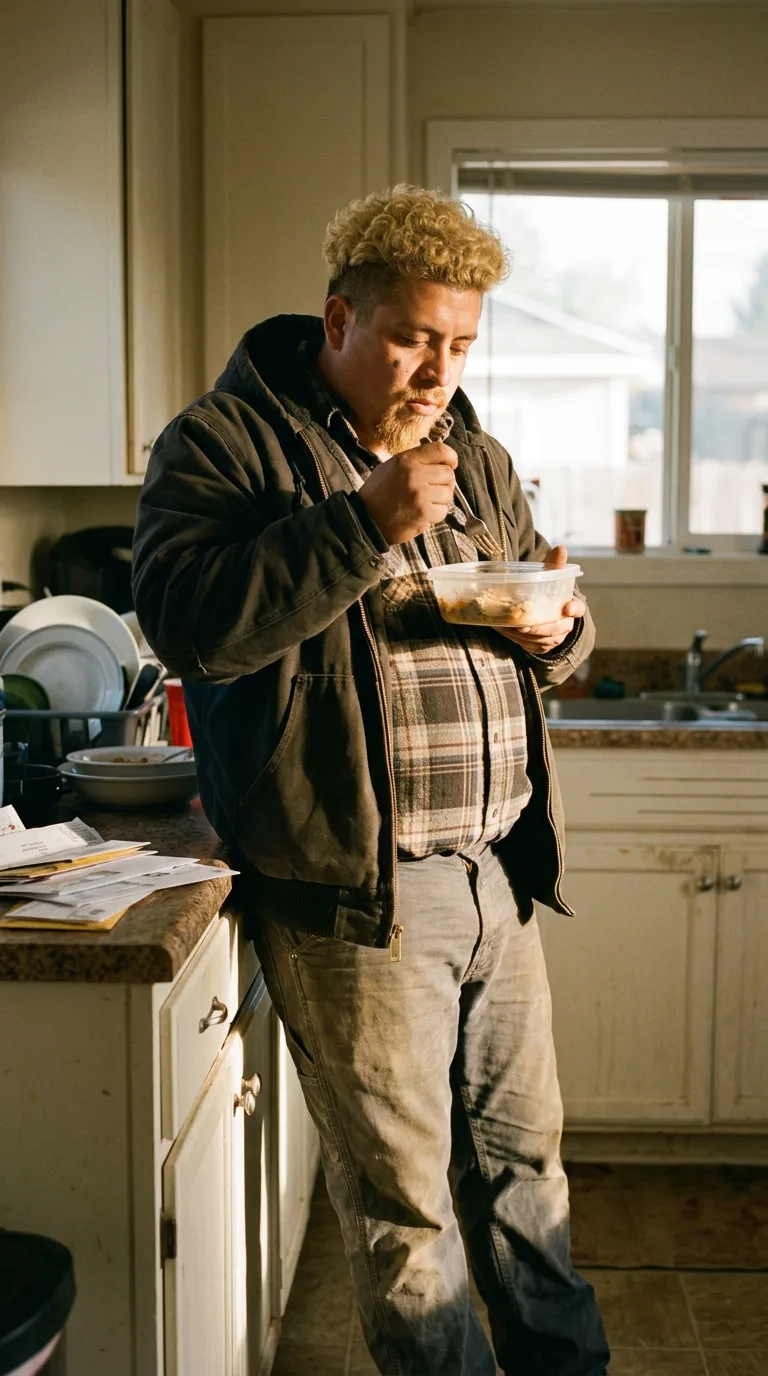
Rarest thing about him: Eating standing up at the counter — common, 1 in 31
Season 1seed 1480983919 · engine v11
Character card
lineage 9IC4OB
His body-swap story
@caleb.dunham, wearing Marco Villareal, rolled the wheel on and woke up as Mateo Ruelas, spent 3 minutes in him, then spun the wheel and woke up as Gordon Pruitt
You are leaving Marco Villareal because he can't reach.
It is a small thing. The top shelf at the office, the one with the good monitor arms, and you have been standing under it for two days and nineteen hours with five foot five of muscle and a clean mind, and it keeps you an inch short of everything. Tonight a woman in the next row laughed at the way you jumped for the box. It was kind and it wasn't. You said nothing, drove home with his black stubble itching, his cleft chin, his good quick brain, and sat in the car in his driveway, and you knew you would not say this out loud to anyone, so you opened the page. The wheel is already turning. His thumb is steady on the trackpad. You think: taller, anything, and you let go.
The kitchen arrives all at once, with the light low and gold through the window over the sink.
You are standing. A fork is halfway to your mouth, and a plastic container sits in your left hand, warm through the lid-less rim, rice and something red. The coat is still on. It is heavy canvas with a hood and a lining that holds the heat of a body that has been outside. Your leg is bouncing. You did not tell it to. The heel taps the tile, quick, patient, a habit older than you.
Then the weight of him settles: a belly that rests against the counter edge, thighs thick from standing at a machine, shoulders sore in the way of a long day. Curly hair springs on your head. You can feel the goatee on your chin and the bare skin of the cheeks above it. There is a small dark dot high on one cheek that you can't feel at all, and somehow you know it is there.
The coat collar is rough against your neck, and a day comes up through it. Five a.m. Hanging the coat on the hook by the door, the hook loose in the wall, a promise to fix it. Then the line, the extruder, plastic spooling out in a hot pale ribbon and the whine that sits in the ears all day, which is why there are foam plugs on a cord in the shirt pocket. A man named Dale on the next line telling the same story about his truck. Nobody said anything about the plant closing, and everyone thought it. You feel that, the dull coin of dread under the ribs.
The fork is cold metal and your fingers fold around it correctly. Under your thumb it opens something: a girl in a car, laughing, a long time ago, hair in her mouth. The old girlfriend. The feeling is not love exactly. It is the ache of a door left unlocked in a house nobody lives in. Then two kids, a boy and a girl, small on a couch with their shoes on, and a tenderness so large and so tired that your eyes sting. Weekends. He has them weekends. The rest of the week the kitchen is this quiet.
The flannel against your chest is soft from washing. Sleeve by sleeve, the morning comes: the left arm first, the cuff buttoned with a clumsy thumb because the button is loose. A glance at the mail piled on the counter and a look away from it. He put the jeans on sitting on the bed edge, leg bouncing, wincing at the left knee. He crossed himself at the little crucifix by the door, not thinking, the way you touch a light switch. Mass on Sundays with his mother, who still lights the candle for his father. He thought of that this morning, buttoning, and was calm.
The counter edge is cool against your hip. Under the mail there are three envelopes with red print. You know without reading that the number on them is a number he has been carrying for months, and also that it is survivable, and that he has told no one.
Your jaw works. The food is salty and good, and the flavor of it is his, his mother's, a Sunday.
You set the fork down. You pull the coat off and sit, and your knees take the chair with a small groan that is not yours. Then you lift your hands from the table and look at them: wide, thick across the knuckle, with the calluses of the line, a faint pale crease where a glove has rubbed all day. They are heavy, warm, patient hands. They are not Marco's. You turn them over. Palms up, they look like they are holding something.
You look up at the dark window and your reflection looks back: curls, goatee, the mole. A stranger's face holding perfectly still.
"Okay," you say, and his voice is lower than you expected, rough with the day. "Okay. Let's see."
Your leg is still bouncing. You wonder how long you will have it. You wonder when the wanting comes back.